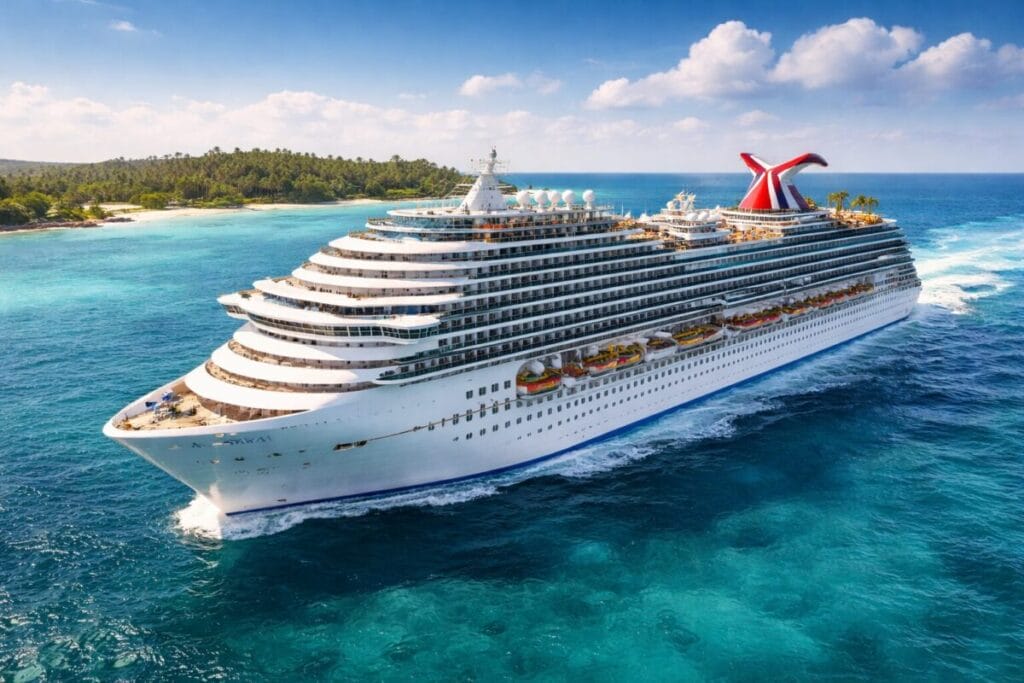
Carnival Firenze, a 135,500-gross-ton cruise ship originally launched for Costa Cruises, celebrates its fifth anniversary this year. Since its completion at the Fincantieri Marghera shipyard in Italy, the vessel has undergone a dynamic journey that mirrors the evolution of the cruise industry itself—marked by innovation, resilience, and global repositioning.
From its inception, Carnival Firenze was designed as a floating tribute to Italian heritage, inspired by the rich artistic and cultural legacy of Florence. Its interiors, public areas, and culinary spaces were crafted to deliver Renaissance-era elegance aboard a contemporary vessel. However, what was initially a targeted strategy for the booming Chinese market soon became a global case study in adaptability, as shifting market conditions and global events redirected the ship’s journey.
From Italian Design to Global Deployment
Originally built for Costa Cruises and intended for the Asia-Pacific region, Carnival Firenze was part of a wave of cruise ship orders meant to capitalize on growth in China’s outbound travel sector. The ship’s design reflected an Italian aesthetic, tailored to international audiences seeking a refined European experience.
However, its completion coincided with a historic pause in global cruising. As the industry faced widespread travel suspensions, Carnival Firenze’s debut was delayed, and its deployment strategy had to be reconsidered. In 2021, the ship entered service with coastal itineraries in Italy, aligning with government guidelines and public health measures that prioritized domestic travel.
These early sailings gave passengers an opportunity to rediscover Italy’s scenic coastlines, while allowing operators to gradually reintroduce cruising. The itineraries featured culturally rich ports, aligning naturally with the ship’s Florence-inspired design and offering a seamless bridge between heritage and leisure.
Expanding Horizons Across Europe and Beyond
As international travel resumed, the vessel extended its footprint across the Mediterranean, calling at ports in Spain, Malta, and France. These multi-country journeys helped re-establish cruise tourism across Europe’s major coastal destinations, contributing to regional tourism recovery and boosting passenger confidence.
Demonstrating exceptional flexibility, Carnival Firenze later took on seasonal deployments in the Middle East, South America, and the Canary Islands, adapting its itineraries to meet demand and capitalize on infrastructure readiness. These strategic movements highlighted the vessel’s value as a versatile asset in an industry learning to adapt to constantly changing global conditions.
A New Identity Under Carnival Cruise Line
One of the most pivotal moments in Carnival Firenze’s history came with its transfer from Costa Cruises to Carnival Cruise Line, under a broader brand realignment strategy. Before joining its new fleet, the vessel underwent a multi-million-dollar refurbishment in Europe. While it retained its Italian soul, updates were made to align with Carnival’s brand philosophy—emphasizing fun, vibrant energy, and immersive onboard entertainment.
Rebranded as Carnival Firenze, the ship debuted in the U.S. West Coast market in 2024, sailing out of Southern California. It quickly attracted attention for its fusion of European design and American-style cruise offerings. The ship’s repositioning brought a fresh dynamic to Carnival’s short-cruise lineup, offering 4- to 6-night sailings to Baja California and the Mexican Riviera.
These itineraries were carefully crafted to appeal to both seasoned cruisers and first-time guests. Shorter sailings combined with Carnival’s signature entertainment created an accessible, experience-rich option for domestic travelers. The deployment also responded to a rising trend in the cruise market—flexible travel durations that cater to varying guest schedules without compromising on experience.
Looking Ahead: New Markets, New Stories
In the next phase of its journey, Carnival Firenze is set to reposition again—this time to South America, followed by its entry into one of the world’s most competitive cruise regions: the U.S. East Coast. Scheduled to begin service from Miami in early 2027, the ship will take on new itineraries across the Caribbean, solidifying its role in Carnival’s global deployment strategy.
By entering Miami’s bustling cruise market, the ship will gain access to a broader demographic of international travelers. Its unique blend of European sophistication and Carnival flair offers something distinctive among Caribbean itineraries—particularly as travelers seek culturally enriched cruising experiences in addition to sunny getaways.
Reinvention in an Evolving Cruise Landscape
The five-year journey of Carnival Firenze reflects a broader transformation within the cruise industry. Modern ships are no longer designed to serve a single region or market. Instead, they are engineered to be flexible platforms capable of transitioning between destinations, brands, and travel trends.
Carnival Firenze’s evolution—from a Chinese-market-focused vessel to a transcontinental cruise product—demonstrates how adaptability is becoming a hallmark of successful fleet management. In today’s global tourism environment, ships must evolve with shifting consumer demands, health landscapes, and regional preferences.
Celebrating a Legacy of Innovation and Versatility
As Carnival Firenze celebrates its fifth year, it stands as a living symbol of reinvention. From its artistic beginnings in Italy to its rebirth as a Carnival flagship, the vessel has consistently adapted to change while delivering memorable guest experiences. Its trajectory not only honors the enduring appeal of cruise travel but also highlights how innovation and flexibility can ensure a ship’s relevance well beyond its maiden voyage.
In an industry defined by movement, transformation, and discovery, Carnival Firenze’s story is far from over. As it sets sail toward new destinations, the vessel carries with it the lessons of the past five years—proving that the most enduring cruise experiences are built not just on design, but on the ability to evolve.
For more travel news like this, keep reading Global Travel Wire