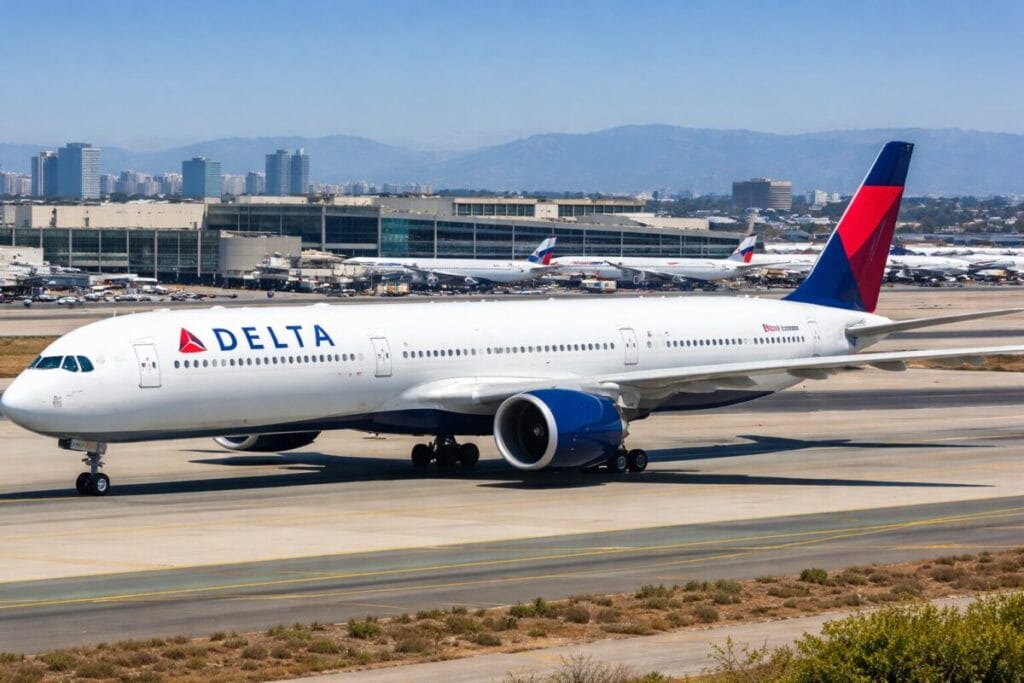
Delta Air Lines is preparing to launch the Airbus A350-1000 into its international fleet, becoming the first North American carrier to do so. This move signals an aggressive shift in long-haul strategy, with major implications for aviation, global tourism, and hospitality. While American Airlines and United Airlines continue to rely on their current widebody lineups, Delta’s bold investment gives it a competitive edge at a time when international travel demand is rising.
Delta’s Move Signals a New Era in Long-Haul Travel
The Airbus A350-1000 delivers increased capacity, better fuel performance, and enhanced comfort. These features make it well-suited for long international sectors where seat demand remains strong. The aircraft can carry significantly more passengers than previous widebody types, yet burn less fuel. This combination strengthens profitability on routes between major global hubs.
Delta plans to deploy the aircraft beginning in 2026, giving the carrier time to align new routes with seasonal travel peaks and tourism patterns. The airline’s focus on premium cabins matches current trends in business and leisure travel, as more international passengers seek comfort and better amenities.
Pressure on U.S. Competitors
American Airlines and United Airlines have not adopted the A350-1000. Their current fleets rely mainly on Boeing 777 variants and the 787 Dreamliner. While both aircraft families remain capable, neither offers the same blend of space, quiet cabin experience, and fuel performance found in the A350-1000.
This gap could limit seat availability on high-demand routes such as trans-Pacific and trans-Atlantic sectors, where tourist arrivals have been climbing. Without new capacity, older fleets may struggle during peak travel seasons. Higher fuel burn also places pressure on operating margins, especially as airlines navigate environmental policies and rising sustainability expectations.
Stronger Tourism Connectivity Across Continents
Delta’s A350-1000 fleet expansion strengthens links between global tourism markets. Direct flights reduce travel time and eliminate long layovers, which are often barriers for leisure travelers. Cities such as Paris, London, Tokyo, Seoul, and Sydney are expected to benefit from increased frequencies and higher seat counts once the A350-1000 enters service.
More direct access means more tourists. Tourism boards in Europe and Asia continue to highlight direct airlift as a key growth driver for visitor arrivals. In the United States, gateway cities like New York, Los Angeles, and Atlanta may also see higher inbound volumes as connectivity improves. This trend supports federal and state tourism objectives to increase international visitation and spending.
Hospitality Sector Stands to Gain
Hotels, resorts, and tourism operators depend heavily on reliable long-haul airlift. Larger aircraft with premium seating attract higher-spending travelers, especially from Asia and Europe. These tourists stay longer and spend more on accommodations, dining, and entertainment.
Destinations that rely on U.S. tourism, such as Japan and Australia, may experience a boost as direct seat capacity increases. Likewise, American cities with strong cultural, entertainment, and business tourism sectors benefit when flight availability rises. Major tourism markets like New York, Orlando, Los Angeles, Las Vegas, and Miami remain well positioned to capture additional demand.
Comfort Features Enhance the Passenger Experience
Tourist comfort is a major selling point for the Airbus A350-1000. Its modern cabin design is quieter, brighter, and healthier. Larger windows allow more natural light, reducing travel fatigue. Optimized air filtration and higher humidity levels help passengers arrive feeling more alert.
Delta’s cabin product is expected to include upgraded lie-flat seating, redesigned economy spaces, and next-generation in-flight entertainment. Food and beverage improvements also enhance the travel experience, particularly on flights longer than ten hours. As long-haul leisure travel grows, these factors influence airline selection as much as price.
Environmental and Sustainability Benefits
The A350-1000 offers lower fuel burn per seat than older widebody types. This reduces emissions and aligns with sustainability goals promoted by governments and tourism authorities. Sustainable aviation policies continue to influence tourism planning, particularly in Europe and Asia, where environmental standards are tightening.
Delta’s investment helps future-proof its global fleet as regulatory pressure increases. It also appeals to environmentally aware travelers, a segment that has expanded since the pandemic era.
Future Route Potential and Industry Outlook
With the A350-1000, Delta gains flexibility to open new international routes. Potential expansion opportunities include secondary European cities, emerging Asian markets, and Pacific destinations that previously lacked suitable capacity. More direct routes shift tourist flow patterns, allowing travelers to reach distant destinations with fewer disruptions.
If American Airlines and United Airlines delay widebody modernization, they risk losing international market share. Both carriers may need to reassess fleet plans to remain competitive in tourism-driven long-haul markets.
Conclusion
Delta’s adoption of the Airbus A350-1000 represents a strategic leap forward for U.S. aviation. It strengthens America’s international tourism links, boosts hospitality demand, and raises expectations for long-haul travel comfort. With global tourism rebounding and travel spending rising, Delta is positioning itself at the forefront of international connectivity. The question now is how fast American Airlines and United Airlines will respond as the race for long-haul passengers intensifies.
For more travel news like this, keep reading Global Travel Wire