
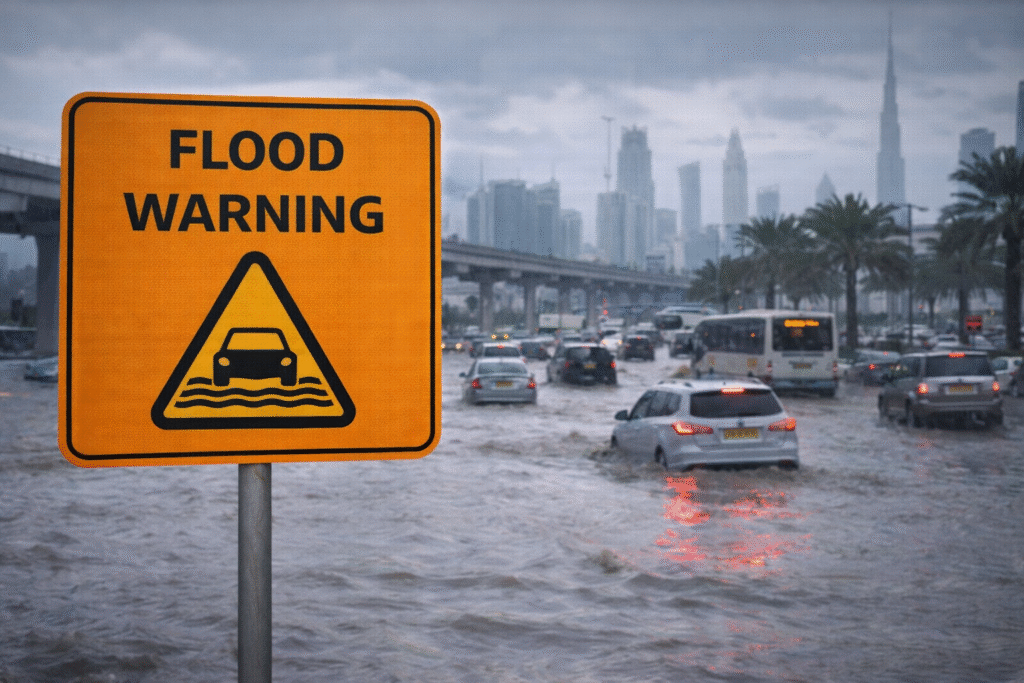
Dubai is facing one of the most severe weather events in its recorded history as torrential rain has triggered widespread flooding across the city and neighboring emirates. The United Arab Emirates is currently experiencing its heaviest rainfall in 76 years, an extraordinary event for a country known for its arid climate and limited annual precipitation. The unprecedented storm has overwhelmed infrastructure, disrupted daily life, and prompted urgent safety alerts from authorities.
Heavy rainfall has continued across Dubai and Abu Dhabi, submerging roads, flooding residential areas, and causing significant travel disruptions. Drainage systems, designed for infrequent rainfall, struggled to cope with the volume of water, leading to standing floods on major highways, underpasses, and city streets. Emergency services have been deployed across affected areas as officials urge residents and visitors to remain indoors unless travel is absolutely necessary.
Emergency Alerts Issued Across the UAE
Authorities activated national and local emergency response systems as conditions worsened. Police and civil defence teams sent alerts directly to residents’ mobile phones, advising people to stay indoors, avoid flooded areas, and follow official guidance closely. Drivers were warned to stay off roads where possible, as visibility was reduced and road surfaces became increasingly dangerous.
In Dubai and Abu Dhabi, officials specifically cautioned against travel to beaches, valleys, and open desert areas, which are highly vulnerable to flash flooding. The unstable weather conditions were forecast to persist through Friday, with officials warning that rainfall intensity could vary across neighborhoods, making the situation unpredictable.
Flash Flood Risks and Secondary Hazards
Beyond surface flooding, authorities highlighted additional risks including flash floods and landslides in elevated or hilly regions of the country. Valleys and wadis, which can rapidly fill with water during heavy rainfall, posed a particular danger. Residents were warned not to approach these areas under any circumstances.
Urban disruptions have also been widespread. Several roads and tunnels were temporarily closed, public transport services experienced delays, and emergency crews assisted stranded motorists. Businesses in low-lying areas were advised to secure properties and ensure safety measures were in place to reduce damage from rising water levels.
Impact on Travel and Tourism
The historic storm has had a notable impact on tourism and travel across the UAE. Dubai International Airport and other regional airports experienced delays and schedule disruptions due to adverse weather and ground conditions. While airport operations continued, passengers were advised to check flight statuses regularly and allow extra time for travel.
Tourism activities, particularly outdoor attractions, were heavily affected. Desert safaris, beach activities, and outdoor events were postponed or cancelled for safety reasons. Some popular tourist sites temporarily closed as authorities focused on risk management and public safety.
Hotels and tour operators adjusted schedules to accommodate guests affected by the storm, while emergency services prioritized assistance to residents and visitors in flood-prone areas. The situation highlighted the vulnerability of outdoor tourism activities during extreme weather events, even in destinations not traditionally associated with heavy rainfall.
Government Response and Coordination
The UAE government moved swiftly to manage the crisis, coordinating efforts between police, civil defence, transport authorities, and municipal services. Emergency crews worked around the clock to clear flooded roads, rescue stranded individuals, and restore essential services.
Increased patrols were deployed to critical junctions and high-risk locations to manage traffic and prevent accidents. Authorities also conducted safety inspections in older neighborhoods and areas with limited drainage capacity to identify and address immediate risks.
Public communication has been a central focus of the response. Regular updates were issued to keep residents informed of weather developments, road conditions, and safety measures. Officials emphasized cooperation with emergency teams and strict adherence to advisories.
What Residents and Visitors Should Expect
Although rainfall intensity is expected to gradually ease, authorities warned that localized flooding could continue in certain areas, particularly low-lying neighborhoods, underpasses, and valleys. Residual water accumulation may take time to clear, and road conditions could remain hazardous even after rain subsides.
Residents and tourists have been urged to remain vigilant, avoid unnecessary travel, and monitor official updates. Those staying in flood-affected areas were advised to keep emergency supplies on hand and follow instructions from local authorities.
A Rare Climate Event for the Region
The scale of this storm underscores the growing impact of extreme weather events worldwide. For the UAE, where such rainfall is rare, the floods serve as a reminder of the importance of preparedness and resilient infrastructure. Authorities have acknowledged the exceptional nature of the event and reaffirmed their commitment to public safety and rapid recovery.
Conclusion
Dubai and the wider UAE are navigating a historic weather emergency as the heaviest rainfall in more than seven decades continues to disrupt daily life, travel, and tourism. With widespread flooding, emergency alerts, and ongoing safety risks, authorities are urging caution and cooperation from all residents and visitors.
As conditions gradually stabilize, emergency teams remain on high alert, prioritizing safety and recovery efforts. Until the situation fully improves, vigilance remains essential, and following official guidance is critical to ensuring personal safety during this unprecedented storm.
For more travel news like this, keep reading Global Travel Wire