Emirates has launched a strategic shift in its inflight food program, introducing whole-plant vegan cuisine across several major international routes. This move reflects a broader trend in global travel dining, where passengers seek healthier and more natural meal options during long journeys. The Dubai-based airline is positioning itself as an industry leader by aligning culinary offerings with modern dietary expectations while keeping cultural authenticity at the forefront.
Return to Natural Ingredients
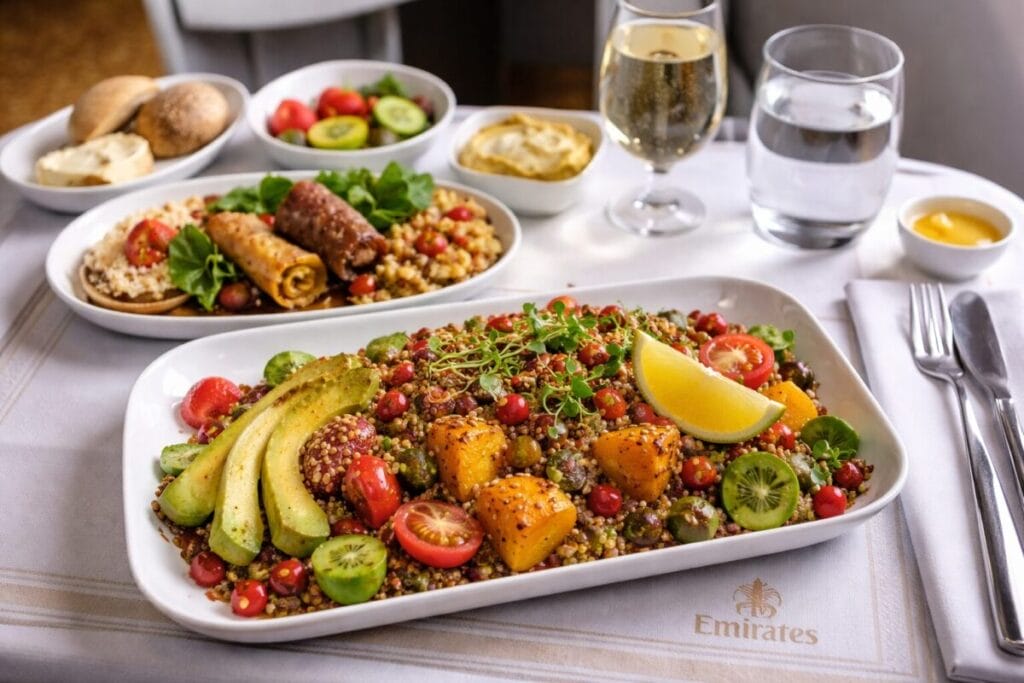
The new vegan program marks a clear departure from earlier menus that relied on imitation meat and engineered plant-based eggs. Instead, recipes now emphasize legumes, vegetables, grains, nuts, seeds, and fruit in their natural forms. Emirates chefs argue that such ingredients deliver superior texture, flavor, and nutritional value without the processing involved in laboratory-designed substitutes. The airline believes that whole-plant cuisine better meets traveler expectations for cleaner eating while keeping meals light for high-altitude digestion.
Fresh Global Inspiration for Travelers
To guide recipe development, Emirates has turned to time-tested food cultures that have long embraced plant-forward cooking. Mediterranean mezze, Levantine salads, Asian noodle bowls, and hearty vegetable stews from different regions have served as templates. These cuisines have demonstrated for centuries that satisfying meals do not require modern meat substitutes. Airline chefs have used these traditions to build meals that remain relevant for travelers who value both comfort and cultural flavor during their journey.
Presentation has become a key priority in this culinary redesign. Colorful ingredients and recognizable textures help ensure that vegan meals no longer feel like an afterthought. Instead, they are treated as premium choices that appeal to vegan and non-vegan travelers alike. This is a significant evolution in the airline dining landscape, where vegan meals have long held a utilitarian reputation.
Shift From Early 2025 Strategies
The change in philosophy stands in contrast to the airline’s 2025 menu experiments. During that period, Emirates incorporated meat analogues such as vegan burgers, sausages, and mince produced by well-known companies specializing in replication proteins. A plant-based egg substitute was also tested for breakfast dishes. Those products helped ease passengers unfamiliar with vegan food into plant-based dining. However, the airline later concluded that long-term success would be built on authenticity and natural culinary roots rather than imitation.
Growing Scale and Supply Chain Adjustment
The shift to whole-food menus has required significant logistical planning. Emirates currently maintains an inventory of almost 500 vegan recipes served through a network extending to 140 global destinations. The airline reports that vegan options have increased by more than half in the last two years. To manage such scale, a phased rollout of the redesigned menu has begun, with full global implementation expected by 2027. This period allows for supplier agreements, ingredient sourcing, kitchen testing, and cabin crew training to ensure consistent standards across all classes of travel.
Passenger Demand on Major Tourism Routes
Tourism-linked demand has shaped the rollout. The United Kingdom ranks first in vegan meal pre-orders, followed closely by Australian tourism gateways such as Sydney and Melbourne. Bangkok, Frankfurt, and several popular holiday cities in Europe and Asia also show strong numbers. Other notable destinations include Mumbai, Bali, Singapore, and Manchester. Emirates reports that passengers from these routes often value wellness and food transparency as part of their travel experience. The trend suggests that vegan cuisine has moved beyond niche dietary identity into a mainstream tourism preference.
Health-Minded Travelers Driving New Choices
Not all passengers ordering vegan meals identify as vegan. Many travelers simply choose lighter meals during long-haul flights to reduce digestive discomfort at cruising altitude. Plant-based meals tend to be lower in saturated fats and easier for the body to process while sitting for long periods. This shift demonstrates a behavioral change in inflight dining, where practicality and comfort can outweigh ethical motivations. For airlines, this creates new opportunities to innovate menus without limiting audience reach.
Pre-Order Model With Route Exceptions
Despite the surge in demand, vegan meals are not yet integrated as standard items on every Emirates flight. Travelers still pre-order at least 24 hours before departure. However, select high-demand routes have begun offering vegan dishes within the main menu rotation, removing the need for advance requests. These routes often link the UAE to Europe, the UK, Southeast Asia, and Australia. The airline has stated that more routes will be added as passenger data supports the expansion.
Long-Term Impact on Tourism and Airline Cuisine
With wellness tourism and sustainable travel on the rise, Emirates sees plant-based dining as a permanent feature rather than a temporary trend. By emphasizing real ingredients over engineered replacements, the airline seeks to build trust with travelers who care about food origins, cultural identity, and health. The menu program also supports the UAE’s broader tourism ambitions, as culinary offerings play an increasing role in passenger satisfaction metrics and global airline rankings.
As implementation continues through 2027, Emirates expects stronger feedback loops from passengers and route markets. This will shape future inflight dining strategies and could influence competing airlines to pursue similar reforms. For now, the carrier’s shift toward whole-plant cuisine marks a meaningful evolution in how vegan travel dining is defined at altitude.
For more travel news like this, keep reading Global Travel Wire