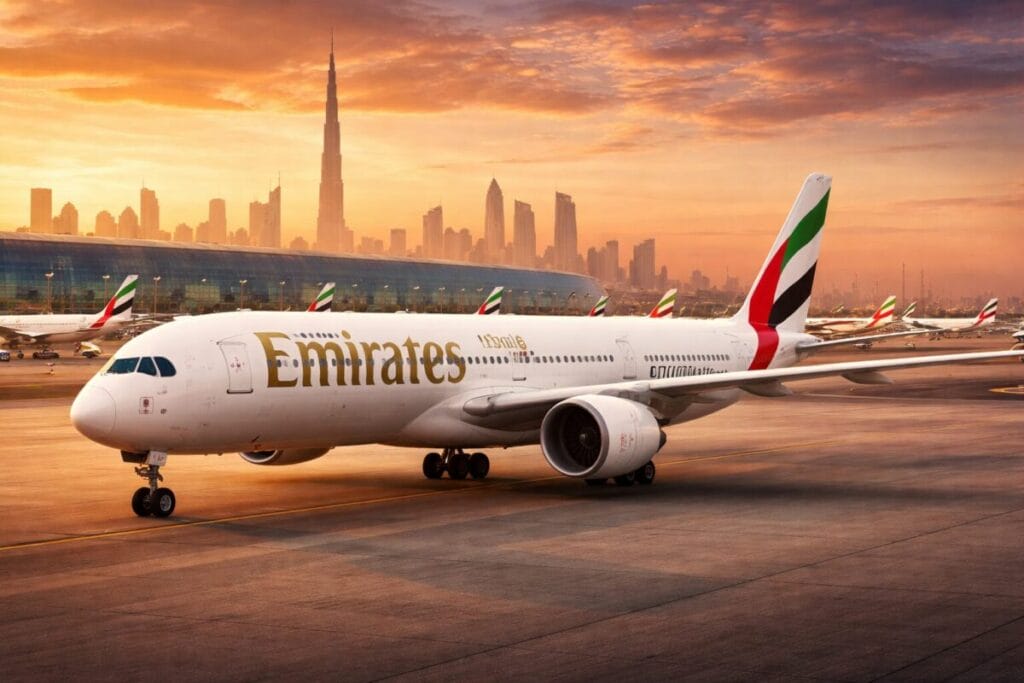
Emirates has announced a major step toward sustainable aviation by deploying the Airbus A350-900 on six key international routes. The airline plans to introduce the new aircraft gradually from late 2026. The rollout targets routes connecting Dubai with Addis Ababa, Copenhagen, Hanoi, Kolkata, Kuala Lumpur, and Tehran.
This move reflects a clear strategy. Emirates aims to improve fuel efficiency, reduce emissions, and deliver a more modern travel experience. The Airbus A350-900 will replace selected Boeing 777 aircraft currently serving these routes.
The airline continues to align its operations with global sustainability goals. Airlines worldwide are investing in next-generation aircraft to lower environmental impact. Emirates’ fleet upgrade places it firmly within this growing industry trend.
Why the Airbus A350-900 Matters for Sustainable Travel
The Airbus A350-900 is known for its advanced engineering and lower carbon footprint. It uses lightweight materials and modern aerodynamics to improve fuel efficiency. This results in reduced emissions compared to older wide-body aircraft.
Airlines value the aircraft for its quieter engines and improved operational range. These features allow carriers to maintain long-haul connectivity while lowering operating costs. Emirates sees the aircraft as a key tool for building a greener future.
Passengers will notice the difference too. The A350-900 features larger windows, improved cabin pressure, and advanced lighting systems. These elements help reduce travel fatigue, especially on long journeys.
Better air circulation and humidity levels improve overall comfort. Such upgrades reflect the growing demand for premium passenger experience alongside sustainability.
New Routes and Operational Changes
Emirates plans to deploy the A350-900 on specific routes based on demand and operational needs. Each destination plays a strategic role in the airline’s global network.
Dubai to Addis Ababa
The Addis Ababa route will see the Airbus A350-900 replace the Boeing 777-200LR starting January 2027. The aircraft will operate with approximately 298 seats. This route connects key business and tourism markets between the Middle East and East Africa. Improved fuel efficiency supports Emirates’ environmental targets while enhancing comfort for travelers.
Dubai to Copenhagen
From December 2026, Emirates intends to introduce the A350-900 on flights between Dubai and Copenhagen. Two daily frequencies are expected. The new aircraft will replace the Boeing 777-300ER. Travelers can expect quieter cabins and upgraded onboard amenities. The change also strengthens connectivity between Scandinavia and the Middle East.
Dubai to Hanoi
Hanoi joins the sustainable fleet expansion in January 2027. The Airbus A350-900 will operate instead of the Boeing 777-300ER. Vietnam continues to grow as a major tourism and business destination. Enhanced passenger comfort and efficient operations support increasing travel demand on this route.
Dubai to Kolkata
Kolkata will receive the Airbus A350-900 beginning October 2026 on flights EK570 and EK571. The aircraft will feature around 312 seats. India remains one of Emirates’ most important markets. The introduction of the A350-900 signals growing demand for modern, efficient aircraft on regional long-haul routes. Travelers from eastern India will benefit from improved onboard comfort and newer cabin technology.
Dubai to Kuala Lumpur
Emirates plans to operate the A350-900 on flights to Kuala Lumpur from December 2026. The aircraft’s higher capacity and fuel efficiency make it suitable for this busy Southeast Asian route. Malaysia continues to attract strong leisure and business traffic. The new aircraft helps Emirates meet demand while reducing environmental impact.
Dubai to Tehran
Tehran will see the transition to the Airbus A350-900 starting October 2026. The aircraft replaces the Boeing 777-300ER. Travelers can expect quieter cabins, upgraded seating, and improved overall efficiency. The route remains important for regional connectivity between the Gulf and Iran.
Enhanced Passenger Experience Drives Demand
Passenger expectations continue to evolve. Travelers now prioritize comfort, technology, and sustainability. Emirates designed its A350-900 deployment to meet these expectations.
The aircraft offers advanced cabin design and modern seating configurations. Lighting systems adjust to reduce jet lag. Improved noise insulation creates a calmer travel environment. The spacious layout enhances long-haul comfort.
These upgrades help Emirates maintain its reputation for premium service while supporting environmental responsibility.
Aviation Industry Moves Toward Greener Aircraft
The introduction of the Airbus A350-900 reflects a broader shift across the aviation industry. Airlines increasingly invest in aircraft that deliver lower fuel consumption and reduced emissions. Governments and international aviation bodies also encourage sustainable aviation practices.
Fleet modernization allows airlines to remain competitive. Newer aircraft provide both operational savings and improved passenger satisfaction. Emirates continues to adapt its fleet strategy to meet these changing industry dynamics.
What Travelers Should Expect Next
Although flight schedules show the upcoming aircraft changes, final operational confirmation may vary. Travelers should monitor booking details for updates as the rollout approaches.
The phased introduction highlights Emirates’ long-term vision. The airline seeks to balance growth with sustainability while maintaining strong global connectivity.
As the Airbus A350-900 enters service across these routes, Emirates strengthens its position as a leader in modern aviation. The shift supports greener travel while offering passengers enhanced comfort and improved efficiency.
For more travel news like this, keep reading Global Travel Wire