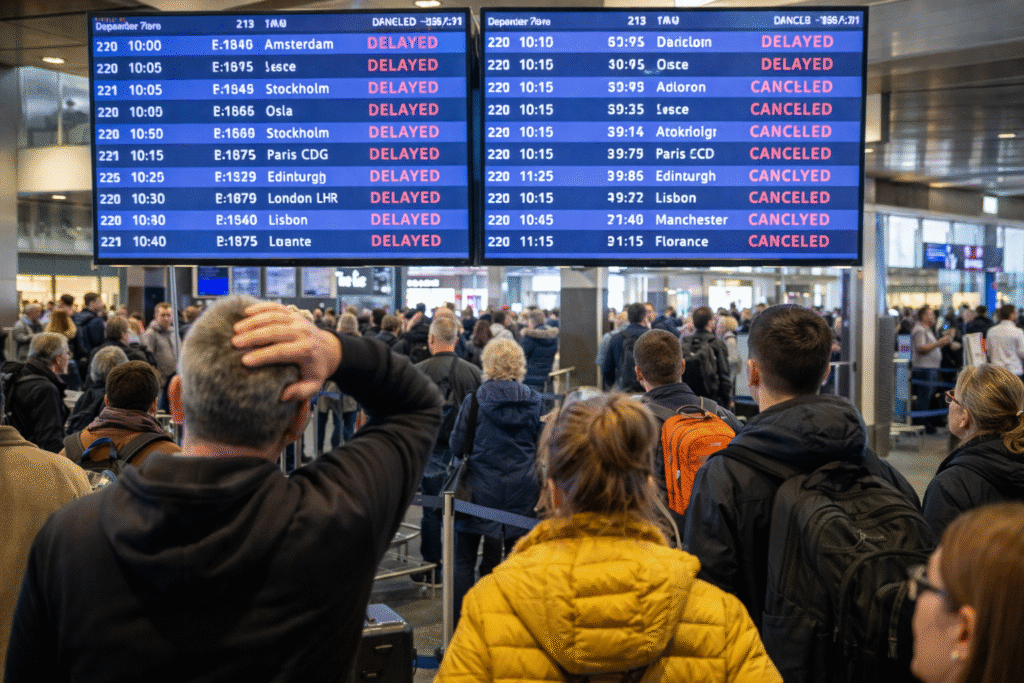
Europe’s holiday travel season was thrown into turmoil as widespread flight cancellations and delays left thousands of passengers stranded across multiple countries. A combination of harsh winter weather, air traffic control constraints, and operational pressures resulted in more than a hundred cancelled flights and well over a thousand delays, affecting travelers moving through major aviation hubs from Northern to Western Europe.
Countries including Hungary, Switzerland, Malta, Portugal, and France were among the hardest hit, while major airports in Stockholm, Oslo, Copenhagen, Amsterdam, Paris, Brussels, and London struggled to manage the ripple effects. The disruptions came at one of the busiest travel periods of the year, intensifying passenger frustration and creating congestion across terminals.
A Perfect Storm for European Air Travel
The scale of the disruption reflected a convergence of multiple challenges rather than a single event. Winter weather systems brought snow, ice, and reduced visibility to several regions, forcing airports to slow operations for safety reasons. De-icing requirements, runway limitations, and weather-related ground delays quickly cascaded into missed departure slots and aircraft positioning issues.
At the same time, air traffic management constraints further strained the system. Reduced staffing levels, temporary restrictions, and regional industrial action placed additional pressure on already crowded airspace. With holiday demand at its peak, even minor disruptions escalated rapidly into widespread delays.
Major Airports Under Pressure
Large international airports bore the brunt of the disruption. Paris, Amsterdam, Brussels, and London experienced heavy congestion as delayed inbound flights affected outbound schedules. Nordic hubs such as Stockholm, Oslo, and Copenhagen also reported high volumes of delayed departures, largely due to weather-related operational slowdowns.
Smaller regional airports were not immune. In some cases, limited runway capacity and fewer alternative routing options led to higher cancellation rates. Travelers found themselves stuck for hours, and in some instances overnight, as airlines worked to reorganize schedules and accommodate displaced passengers.
Airport terminals filled quickly as delayed travelers waited for updates, while ground staff and airline representatives worked under intense pressure to manage rebookings, baggage issues, and customer assistance.
Airlines Struggle to Maintain Schedules
The disruption affected a wide range of European and international carriers. Flagship airlines, low-cost operators, and regional carriers alike were forced to cancel flights or operate significantly behind schedule. Some airlines experienced delays affecting a substantial portion of their daily operations, highlighting how vulnerable tightly scheduled networks can be during periods of disruption.
Crew availability became a critical challenge, particularly as delays pushed flights beyond regulated duty hours. Aircraft rotation issues also compounded the problem, as planes arriving late were unable to depart on time for their next scheduled services. These operational bottlenecks contributed to further cancellations throughout the day.
Impact on Passengers
For travelers, the experience was marked by uncertainty and long waiting times. Many passengers reported missed connections, delayed holiday plans, and unexpected overnight stays. Families traveling for festive gatherings were particularly affected, while international travelers faced additional complications related to visas, onward travel, and accommodation.
Rebooking options were limited due to high seasonal demand, leaving some passengers with few immediate alternatives. Rail services and long-distance buses were quickly booked out on popular routes as travelers sought other ways to reach their destinations.
While airlines worked to provide assistance, the sheer scale of the disruption meant response times were slower than usual, adding to traveler frustration.
Economic and Tourism Implications
The disruption extended beyond individual inconvenience, impacting tourism and business travel across Europe. Hotels near major airports saw a sudden surge in demand from stranded passengers, while tour operators and destination services faced cancellations and rescheduling challenges.
For cities dependent on winter tourism and holiday travel, the disruptions highlighted the vulnerability of travel infrastructure during peak demand periods. The ripple effect was felt across connected destinations, underscoring how closely integrated Europe’s transport network has become.
Passenger Rights and Airline Response
European passenger protection rules require airlines to provide care, assistance, and compensation in certain circumstances. While weather-related disruptions may limit compensation eligibility, airlines are still obligated to offer meals, accommodation, and rebooking where applicable.
In the aftermath, several carriers announced internal reviews of their holiday operations, focusing on contingency planning, staffing resilience, and communication with passengers. Airports are also evaluating traffic management procedures to improve responsiveness during extreme weather events.
Preparing for Future Disruptions
The recent chaos serves as a reminder of the challenges inherent in holiday travel. Experts advise travelers to remain proactive by monitoring flight status regularly, allowing extra time at airports, and keeping flexible travel plans where possible. Understanding passenger rights and having contingency arrangements can help reduce stress when disruptions occur.
Travel insurance, especially during peak seasons, is increasingly viewed as essential protection against unexpected delays and cancellations. Alternative transport options, such as rail travel on shorter routes, may also provide greater reliability during winter months.
A Cautionary End to the Holiday Rush
As Europe’s aviation sector works to restore normal operations, the recent disruptions stand as one of the most challenging travel periods of the season. With thousands of passengers affected across multiple countries, the event underscores the need for stronger resilience planning amid rising travel demand and increasingly unpredictable weather conditions.
While airlines and airports continue to adapt, travelers heading into future holiday seasons are likely to approach European air travel with greater caution, flexibility, and preparedness.
For more travel news like this, keep reading Global Travel Wire