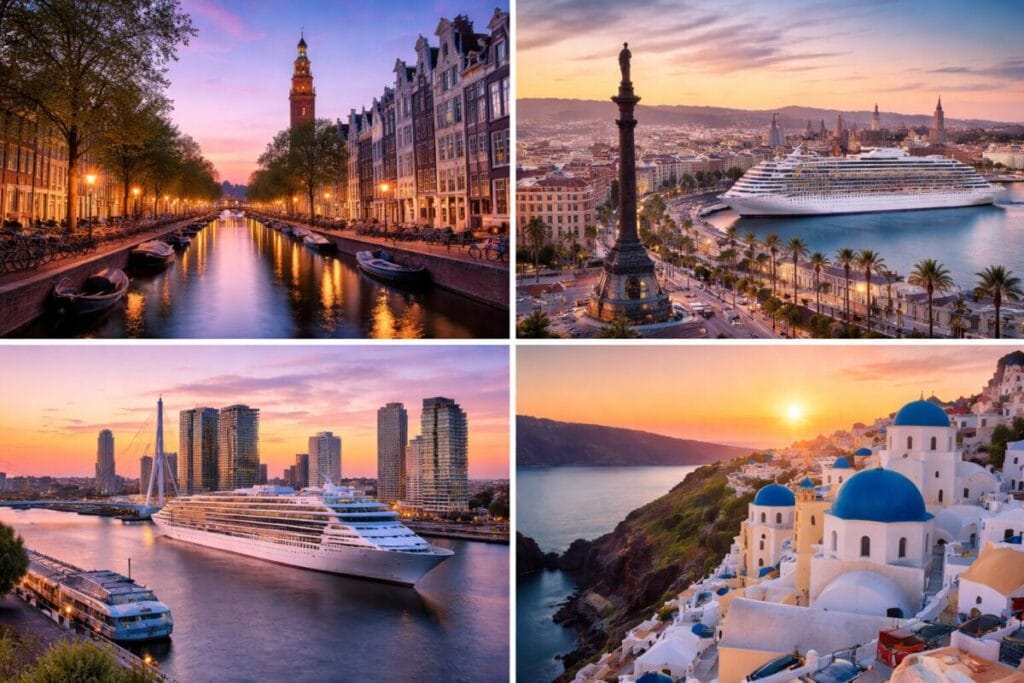
A major transformation is underway in Europe’s tourism landscape as leading destinations react to rising environmental pressures and the complex challenges of overtourism. Cities including Amsterdam, Barcelona, Rotterdam, and Santorini are taking bold steps to regulate or restrict ocean-going cruise ships, reshaping how millions of travelers may experience the continent in the coming decades.
Amsterdam Signals the Start of a New Tourism Model
Amsterdam, known for its artistic heritage, canals, and historic charm, has emerged as the most ambitious in its plans. Local authorities have proposed a full prohibition on ocean-going cruise vessels by 2035, a move that—if enacted—would make the Dutch capital the first major European city to implement such an extensive ban. The proposal follows concerns over air quality, waterfront congestion, and the strain created by mass tourism in compact neighborhoods.
The city has already approved measures to reduce the total number of cruise arrivals by half starting in 2026 and is working on a long-term plan to relocate the existing cruise terminal away from the city center. Officials in Amsterdam argue that cruise traffic contributes disproportionately to pollution compared to land-based tourism, while providing limited economic return to local communities.
Environmental groups welcome the proposal, noting the considerable emissions produced by large ocean liners. Although cruise tourism contributes to port fees and passenger spending, city planners contend that long-term sustainability and resident wellbeing must outweigh short-term financial gains.
Economic Calculations and Urban Redevelopment
Economic analysis suggests that Amsterdam could forfeit tens of millions of euros over the next decades by phasing out cruise ships. Yet the government estimates that relocating cruise infrastructure would cost significantly more than the revenue generated from the cruise sector. City leaders are already exploring ways to convert waterfront districts into new commercial, cultural, and residential zones, expanding public access along a coastline once dominated by industrial functions.
River cruises—generally smaller, quieter, and less polluting—are expected to continue under tighter regulations. Amsterdam has already capped annual river cruise visits and plans to enforce stricter berth management to curb congestion in peak seasons. Such measures reflect a broader European shift toward high-value, low-impact tourism rather than high-volume visitor flows.
Barcelona and Santorini Tighten Controls to Protect Heritage
Amsterdam is not acting alone. In Spain, Barcelona has implemented sector-specific restrictions to limit cruise ship berthing in central areas of the city. By redirecting vessels to more remote terminals and reducing the number of permitted calls, officials aim to relieve visitor pressure in historic districts such as La Rambla and the Gothic Quarter. Similar discussions are underway regarding seasonal caps, as summer crowds often overwhelm transportation systems and local businesses.
In Greece, Santorini has become a case study in managing overtourism within island environments. Known for its cliffside villages and iconic sunsets, the island receives cruise passengers far beyond its carrying capacity during peak seasons. Local authorities have introduced arrival quotas to prevent thousands of visitors from disembarking simultaneously, while also encouraging extended stays rather than short day-trip visits. Tourism officials emphasize that protecting the island’s fragile environment—from coastal ecosystems to traditional settlements—is essential for long-term economic resilience.
What This Means for Travelers and Cruise Lines
Cruise companies are now reevaluating routes, port partnerships, and fleet strategies in response to tightening regulations. Many are increasing stops in secondary ports such as Rotterdam, which boasts Europe’s largest seaport and strong tourism connectivity to Amsterdam through rail and excursion services. These alternative ports may become even more attractive as major capitals enforce stricter environmental standards.
For travelers, the immediate impact will be minimal. Most regulatory changes will not take full effect until after 2026, and major bans—such as Amsterdam’s 2035 deadline—remain subject to political approval. However, future travelers may encounter adjusted itineraries, longer transportation transfers to city centers, and potentially higher costs associated with sustainability compliance.
Meanwhile, the trend is creating new opportunities for tourists seeking more immersive and eco-friendly trips. River cruises along the Rhine, Danube, and Dutch waterways continue to grow in popularity, offering slower travel and deeper cultural engagement. Many European tourism boards are now promoting multi-day stays, rail tourism, and guided walking circuits as alternatives to high-impact day visits.
Toward a More Sustainable Tourism Future
Europe’s cruise restrictions mark a broader transition toward measured and sustainable tourism. As climate targets, resident rights, and cultural preservation gain political importance, cities are increasingly willing to redesign how tourism integrates with daily life. For Amsterdam, Barcelona, and Santorini, the message is clear: the future of tourism must align with environmental stewardship and community wellbeing.
For travelers, this represents an invitation to experience destinations more meaningfully—through longer stays, slower movement, and deeper cultural appreciation—ensuring that Europe remains both livable for residents and enriching for visitors.
For more travel news like this, keep reading Global Travel Wire