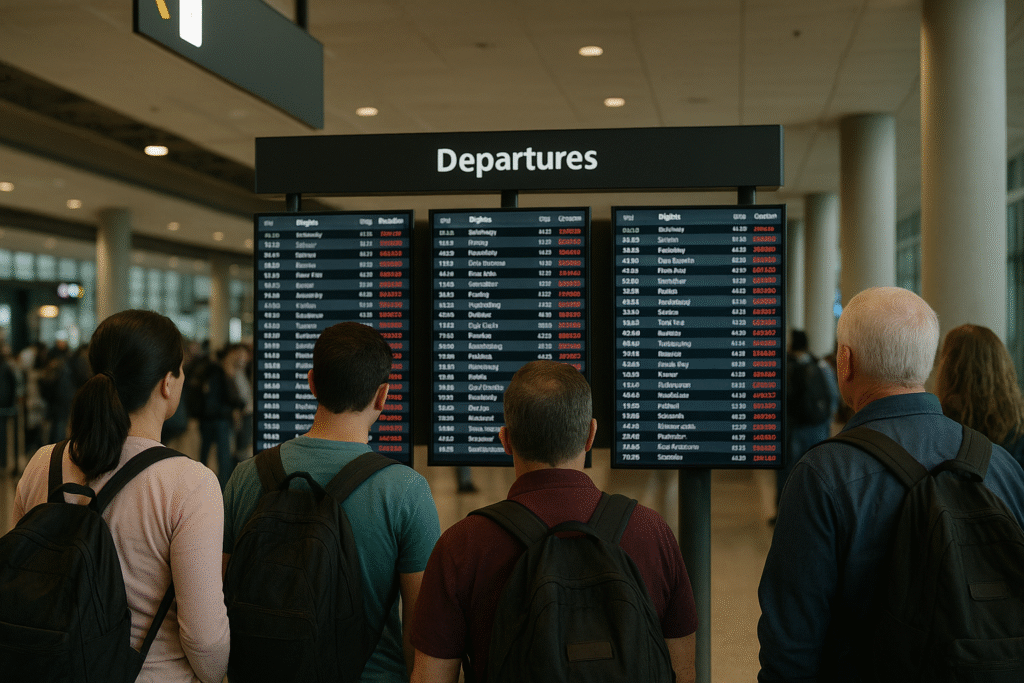
As the U.S. federal government shutdown drags on, the Federal Aviation Administration (FAA) has mandated flight-operational cuts at 40 of the nation’s busiest airports. The move forces major carriers to cancel and reschedule hundreds of domestic departures.
Starting early Friday, airlines must slash about 4 % of daily flights in affected hubs. That reduction will then ramp up toward 10 % by mid-November if the shutdown persists. Airlines including American Airlines, Delta Air Lines and Southwest Airlines are already cancelling departures and scrambling to adjust schedules.
Why the Cuts? Safety and Staffing Concerns
With air traffic controllers working without pay during the shutdown, the FAA flagged rising fatigue and staffing shortages as serious risks. Controllers’ inability to operate at full strength or with reliable support networks pushed the agency to act. The phased reduction starts at 4 % and could reach 10 % by November 14. If the shutdown continues, further cuts — up to 15–20 % — remain on the table.
Which Airports and Flights Are Affected?
The cuts apply to 40 high-volume airport markets across the U.S., including major hubs such as John F. Kennedy International Airport (JFK), Los Angeles International Airport (LAX), and Chicago O’Hare International Airport (ORD). While international routes remain largely unaffected, domestic flights are most vulnerable. Airlines report cancellations topping 1,000 on the initial day of the cuts.
Airlines Respond: Cancellations and Flexible Policies
In compliance with the FAA mandate, American Airlines cancelled about 220 flights during the opening phase. Other major carriers followed with similar adjustments. In response to customer disruption, airlines are waiving change fees and offering re-booking or refunds for impacted travellers. The message: expect uncertainty and build flexibility into your travel plans.
Hospitality Industry Also Taking a Hit
The travel sector beyond flight operations is feeling pressure. Hotels, restaurants and tourist-attraction businesses in major destinations are seeing declining inbound travellers. With fewer flights and growing delays, bookings are being cancelled or postponed. Cities like New York, Los Angeles and Las Vegas — long reliant on strong domestic visitor traffic — face a ripple-effect of disruptions across lodging, dining and entertainment.
What Should Travellers Do?
If you’re planning a U.S. trip via one of the affected airports, keep these tips in mind:
- Check flight status frequently. Use your airline’s app or website for real-time updates.
- Anticipate delays or cancellations. Arrive early, and build buffer time into your itinerary.
- Explore change & refund options. Thanks to the airlines’ waivers, re-booking or refund may come with no extra fees.
- Consider alternate travel modes. For nearby destinations, trains or road travel might avoid the worst of airport disruption.
- Modify bookings proactively. If your flight shifts, contact your hotel, tour provider or event venue ahead of time to adapt.
- Monitor the shutdown situation. Resolve depends on federal funding discussions and could pivot rapidly.
Looking Ahead: Travel After the Cuts
As the reductions ramp from 4 % toward 10 %, the cascading effects will intensify. Delays at security checkpoints, engine-room staffing gaps, and fewer flight options will make peak travel periods more unpredictable. For travellers, flexibility now is essential.
For the travel and tourism industry, the challenge is clear: reduced air-capacity means fewer visitors, which means softer revenue and shifting dynamics in major destination markets. Stakeholders from airlines to hotels are navigating uncharted territory as the shutdown lingers.
Bottom Line
The FAA’s decision to reduce flights at 40 major U.S. airports marks a significant disruption for travellers and the tourism sector alike. While safety is cited as the driving force, the result is clear: expect cancellations, delays and broad ripple-effects in travel planning. If you’re heading to or within the U.S., the most effective tool you have is flexibility. Stay informed, be ready to adjust, and keep options open as the shutdown’s impact unfolds.
For more travel news like this, keep reading Global Travel Wire