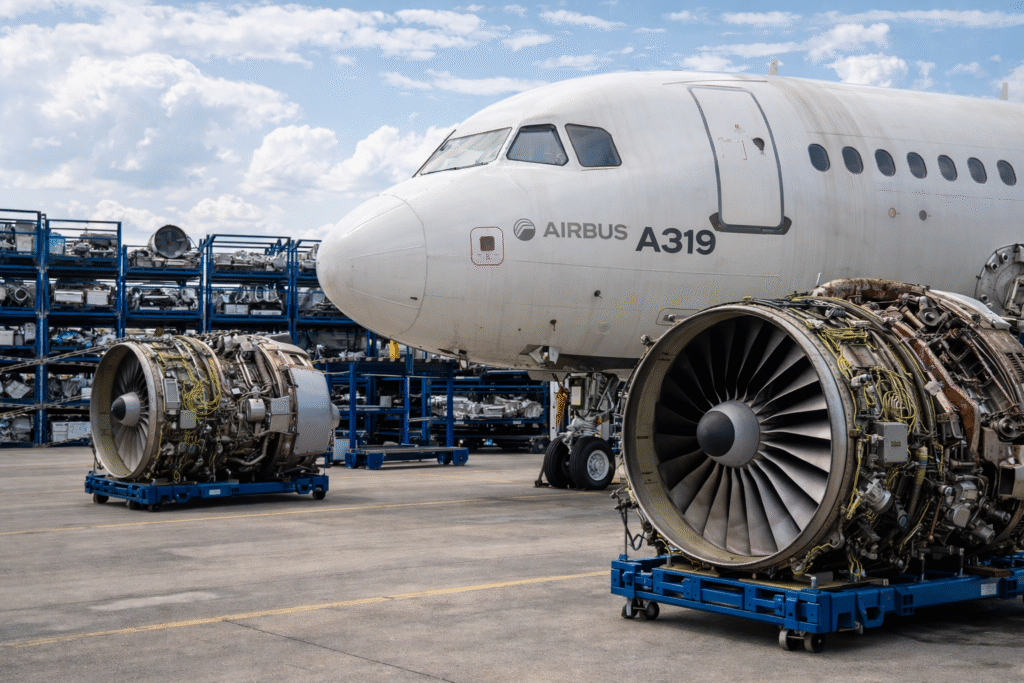
Global tourism continues to rebound, and the aviation sector remains the backbone that connects travelers, destinations and tourism economies. In a strategic effort to support airlines and maintenance providers, GA Telesis has expanded its aircraft disassembly program by supplying flight-ready components from two Airbus A319 aircraft. This move strengthens operational efficiency across the aviation ecosystem and reinforces the company’s leadership in the aftermarket support segment.
For destination tourism to flourish, airlines must maintain reliable fleet performance, minimize flight disruptions and ensure operational continuity. GA Telesis’ initiative helps meet these demands by addressing a growing global need for high-quality used serviceable materials. With many airlines facing parts shortages and extended maintenance timelines, the availability of critical components is now central to maintaining consistent flight schedules.
Supporting Airline Fleets Through Strategic Disassembly
The Airbus A319 disassembly project falls under GA Telesis’ Flight Solutions Group, known for managing asset optimization and lifecycle supply for global operators. Through advanced disassembly practices, the company converts retired or aging aircraft assets into viable components that support airline maintenance programs. Materials extracted from these aircraft are carefully processed, inspected and certified before being redeployed into active fleets around the world.
This strategic approach benefits both the aviation and tourism sectors by reducing aircraft downtime. Airlines rely heavily on prompt access to engines, landing gear, avionics and structural components to maintain safety and meet flight demand. As international travel increases, especially for leisure and business tourism, dependable fleet operations are crucial for maintaining passenger confidence and supporting tourism-dependent destinations.
Timely Component Access Prevents Flight Disruptions
Time is one of the aviation industry’s most valuable resources. Flight delays caused by maintenance bottlenecks can trigger cascading effects, from missed connections to cancellations, ultimately impacting tourism spending and traveler satisfaction. Access to flight-ready materials helps airlines mitigate such disruptions by ensuring grounded aircraft return to service faster.
GA Telesis’ contribution to this process is significant. The company’s aftermarket programs offer airlines an alternative to purchasing brand-new components, which often require long lead times and higher upfront investment. In an era when airlines are balancing sustainability, operational cost control and tourism-related service demand, used serviceable materials provide a practical and efficient solution.
Executives at GA Telesis have highlighted that smarter supply chain strategies allow customers to stay ahead of maintenance requirements. By expanding component availability, the company gives airlines and maintenance, repair and overhaul providers the ability to anticipate long-term fleet needs rather than reacting to shortages.
Boosting the Aviation Ecosystem that Powers Tourism
Tourism relies on a vast network that extends beyond airlines. Hotels, tour operators, cruise lines and destination marketing organizations all depend on efficient air connectivity. Aircraft component shortages can ripple across this network, hindering passenger flows and reducing tourism spending in affected regions.
The aviation aftermarket plays a critical role in maintaining this flow. GA Telesis’ global footprint spans dozens of locations across multiple continents, providing airlines with logistics support, component distribution and around-the-clock AOG (aircraft on ground) services. These capabilities keep fleets moving and ensure that tourism corridors remain open and economically viable.
Furthermore, the demand for used serviceable materials is rising as airlines modernize their sustainability strategies. Extending asset life through component reuse aligns with environmental goals while reducing waste — a priority that tourism boards and governments increasingly recognize.
Leadership in Lifecycle Management and Innovation
GA Telesis has positioned itself as an industry leader in aviation lifecycle solutions. The company integrates parts distribution, inventory management, engine overhaul, leasing, financing and component MRO into a unified service model that supports the full aircraft lifecycle. This vertical integration allows airlines to streamline supplier relationships and reduce maintenance complexity.
Advanced technology also plays an important role. Digital tracking tools, predictive analytics and maintenance optimization platforms are becoming essential for airlines seeking greater fleet reliability. Tourism authorities have acknowledged that digital transformation in aviation contributes to more predictable travel experiences, fewer delays and enhanced traveler satisfaction.
The expansion of the company’s Airbus A319 disassembly program underscores the growing alignment between operational needs and market demand. Airlines and MRO providers benefit from a wider pool of components, while tourism stakeholders benefit from more stable air transport capacity.
Looking Ahead: Aviation as a Driver of Tourism Growth
As the world enters a new phase of travel recovery, aviation remains central to economic expansion in tourism markets. Efficient fleet management ensures that destinations remain connected and accessible. Strategic aftermarket initiatives, such as that of GA Telesis, help safeguard global mobility and support the resilience of international travel.
By delivering flight-ready Airbus A319 components, GA Telesis reinforces its role as an essential partner in aviation supply chains. The initiative enhances airline readiness, strengthens maintenance networks and ultimately contributes to the continuity of global tourism — where reliability, connectivity and safety remain paramount.
For more travel news like this, keep reading Global Travel Wire