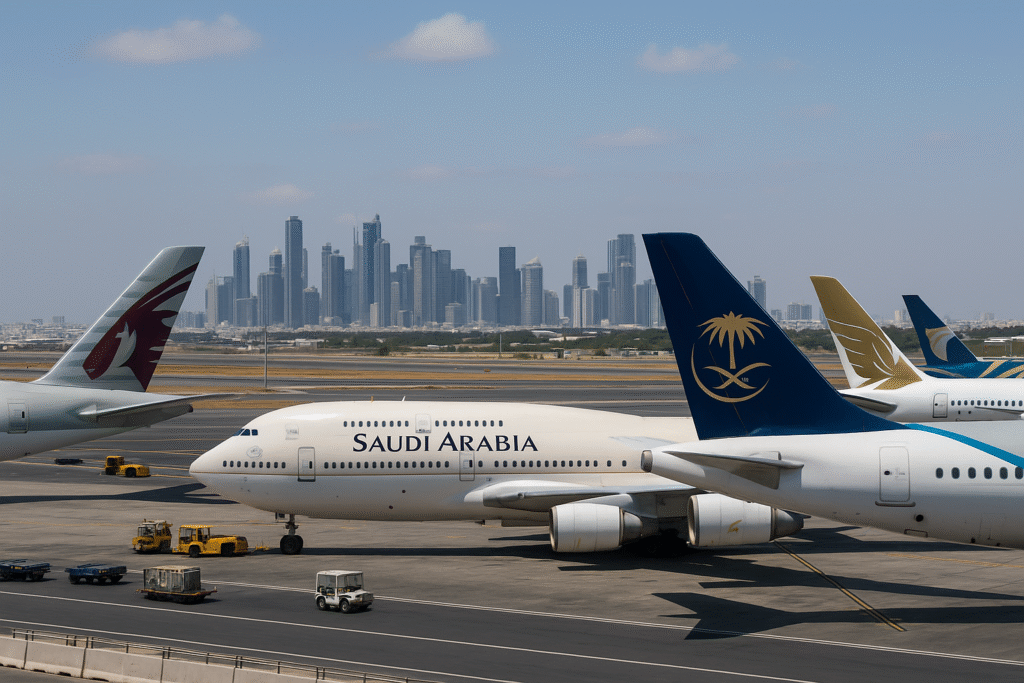
The Gulf Cooperation Council (GCC) region is experiencing a remarkable rebound and expansion in travel activity, with Bahrain, Qatar, Saudi Arabia and Oman leading the charge. Recent data signal a new era of regional mobility, aviation growth and tourism investment across the Gulf, part of the broader shift toward post-oil diversification and global connectivity.
Massive Travel Growth Across the Region
Latest insights indicate that Bahrain recorded a staggering 208 % year-on-year rise in total travel activity, making it the fastest-growing market in the GCC. Meanwhile, Qatar posted an almost 199% increase, underpinned by new air-routes and Doha’s rising position as an events destination. Saudi Arabia, for its part, achieved a growth rate of 36%, driven by expanded airport capacity and ambitious national tourism strategies. Oman also stands out with an increase of around 89%, benefitting from enhanced connectivity through Muscat International Airport and its heritage-and-beach appeal.
The sheer magnitude of these jumps reflects multiple converging factors: pent-up travel demand, liberalised visa regimes, new aviation routes and major tourism-infrastructure investment. The region’s leading aviation hubs are rapidly evolving from transit stops to destination magnets in their own right.
Strategic Drivers Behind the Boom
1. Infrastructure and Connectivity
Saudi Arabia, Bahrain, Qatar and Oman have all substantially upgraded airport capacity, added new terminals, airline alliances or low-cost carrier operations, and improved slot availability for emerging routes. These enhancements scale the region’s ability to cater not only to outbound travel but also inbound tourism and transit traffic.
2. Economic Diversification
Saudi Arabia’s “Vision 2030” agenda is perhaps the clearest example of leveraging tourism for economic transformation. As the Kingdom opens up its culture, heritage and entertainment sectors, travel growth becomes a key metric of progress. The Gulf region more broadly is shifting from oil-dependency toward service-led economies, with tourism a central pillar.
3. Rising Premium Travel Expectations
As travel volumes surge, the nature of that travel is evolving. Premium services — such as airport lounges, fast-track services, upscale transit experiences — are becoming increasingly standard. For example, data show Bahrain leads globally in lounge usage rates among passengers, reflecting the growing demand for higher-end amenities. This shift is reshaping how Gulf travellers experience aviation and destination services.
Destination-by-Destination Highlights
Bahrain: With over 200% growth, Bahrain is not only recovering but repositioning itself as a regional aviation connector and tourism hub. Its central location in the Gulf, combined with strategic investments in hospitality and events, underlines its new role.
Qatar: Doha’s rapid rise is anchored in its events-ecosystem, business infrastructure and luxury tourism offerings. New route development and positioning as a global meeting point have driven its near-200% growth.
Saudi Arabia: While growth at 36% may seem modest in comparison, the Kingdom’s sheer size and strategic shifts make this a significant achievement. The increase reflects both outbound leisure/business travel and inbound tourism under policy reforms.
Oman: Known for its rugged landscapes, coastline and cultural heritage, Oman’s 89 % rise reflects an expanding wire of connectivity from Muscat and a growing appeal to premium holiday-makers seeking alternative Gulf experiences.
Implications for Travellers and Industry
For travellers, this surge means more choices, more routes and an evolving Gulf travel experience. However, it also means competition for slots on new routes and growing expectations for smoother airport experiences and elevated service. For tourism-industry stakeholders, the rise underlines the need to meet higher standards, scale premium offerings and tailor experiences that match the region’s shifting profile.
Meanwhile, established hubs such as the United Arab Emirates, while still very important, face increasing competition from neighbours. For example, the UAE experienced a modest 21% decline in certain outbound travel metrics compared to the region’s explosive growth — signaling a changing balance in Gulf aviation.
Challenges and Considerations
Rapid growth brings challenges: infrastructure must keep pace with demand; services must match rising expectations; and markets must avoid over-saturation. In addition, ensuring that tourism development is sustainable, environmentally sensitive and inclusive of local communities is essential. As Gulf destinations strive for premiumisation, they must also manage cost-pressures, regulatory complexity and global competition.
The Future of Gulf Travel
Looking ahead, the Gulf travel market is positioned for continued expansion. Outbound travel from the region is forecast to grow at a healthy compound annual growth rate (CAGR) over the next decade, driven by rising disposable incomes, expanding airline networks and the growth of experiential travel. The emergence of a “GCC Grand Tours Visa” (covering multiple Gulf states) will further ease travel flows and promote multi-country itineraries across the region.
Conclusion
The travel surge in the Gulf Cooperation Council region — especially in Bahrain, Qatar, Saudi Arabia and Oman — signals a strategic transformation. From infrastructure to policy reform to changing traveller behaviours, the region is redefining what travel in the Middle East can mean. For visitors, it offers new routes, premium services and fresh destination options. For the region, it offers economic diversification, global connectivity and enhanced tourism stature. As these Gulf nations chart their next chapter, the world’s attention is turning to the Arabian Peninsula not just as a transit corridor, but as a vibrant travel ecosystem in its own right.
For more travel news like this, keep reading Global Travel Wire