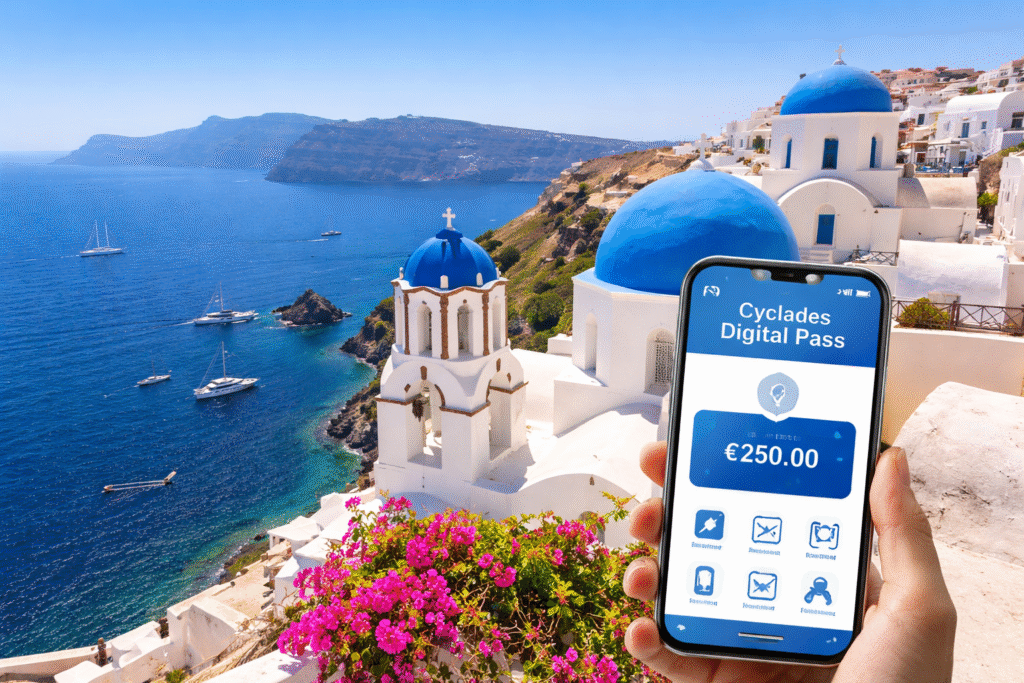
Greece is preparing to redefine the travel experience in the Cyclades Islands with the launch of a fully cashless tourism system in 2026. As international arrivals continue to rise and pressure mounts on island infrastructure, the Greek government is introducing the Cyclades Digital Pass, a unified payment solution designed to simplify travel, reduce congestion, and support sustainable tourism across some of the country’s most visited destinations.
From world-famous hotspots like Mykonos and Santorini to emerging favorites such as Paros, Naxos, Serifos, and Folegandros, the new system signals a major shift in how visitors will move, pay, and explore the islands.
A New Chapter for Island Travel
The Cyclades have long been synonymous with whitewashed villages, crystal-clear waters, and vibrant nightlife. However, record tourist numbers in recent years have brought challenges, including overcrowded ferry terminals, long queues, cash handling delays, and strain on local services during peak months.
The Cyclades Digital Pass is designed to tackle these issues head-on. It will allow travelers to pay for ferry tickets, accommodation, local transport, dining, attractions, and retail purchases using a single digital platform. Visitors will be able to access the pass through a mobile application or a digital card, eliminating the need to carry cash while moving between islands.
By centralising payments, authorities aim to create a smoother and more predictable experience for both tourists and local businesses.
How the Cyclades Digital Pass Works
The system functions as a prepaid, contactless payment solution. Travelers will be able to load funds onto the pass before or during their trip using international debit or credit cards. Balances can be topped up instantly, and transactions will be processed at real-time exchange rates, helping visitors better manage their travel budgets.
The platform has been developed in cooperation with financial institutions and technology providers to meet international security standards. Transactions will be encrypted, and users will have full visibility over their spending through the app, improving transparency and trust.
Importantly, the government has confirmed that while the system encourages digital payments, alternative solutions will remain available to ensure no visitor is excluded.
Faster, Smarter, and Less Crowded
One of the key goals of the Cyclades Digital Pass is efficiency. By removing cash transactions from high-traffic areas such as ferry ports and transport hubs, authorities expect significantly faster processing times. Boarding procedures are projected to become notably quicker, reducing queues that often dominate summer travel days.
Beyond payments, the system introduces intelligent travel management tools. Built-in analytics and artificial intelligence features will provide visitors with real-time insights, including suggestions for less crowded routes, off-peak ferry times, and alternative islands to explore. This approach encourages travelers to spread out across the region rather than concentrating solely on Mykonos and Santorini.
For tourists, this means a calmer, more authentic experience. For the islands, it helps protect local communities and natural resources from excessive pressure.
Supporting Local Businesses and Communities
The shift toward cashless tourism is also expected to deliver strong economic benefits. Digital payments typically lead to higher spending, as visitors find it easier to make purchases without worrying about cash availability. Small businesses, including family-run tavernas, boutique hotels, transport providers, and craft shops, stand to benefit from faster transactions and improved payment tracking.
Increased transparency also supports better tax compliance and reinvestment in local infrastructure. Over time, this can lead to improved public services, upgraded ports, better transport links, and enhanced visitor facilities across the Cyclades.
The system aligns with Greece’s broader strategy to promote sustainable and inclusive tourism, ensuring economic growth does not come at the expense of quality of life for residents.
Accessibility and Visitor Inclusivity
Special attention has been given to inclusivity. The digital pass will offer simplified options for older travelers and those less familiar with mobile technology, including virtual debit cards with basic features. Clear multilingual support and on-site assistance points are expected to help visitors adapt smoothly to the new system.
Data protection and privacy have also been prioritised, with strict safeguards in place to protect user information.
What Travelers Should Expect in 2026
Visitors planning trips to the Cyclades in 2026 can expect a more streamlined journey from arrival to departure. Pre-registration for the digital pass will be encouraged, allowing travelers to start their trip with payments already set up. Once on the islands, moving between ferries, hotels, restaurants, and attractions will be faster and more convenient.
The system also opens the door for discovering quieter islands and alternative experiences, helping travelers escape crowds while still enjoying the region’s iconic beauty.
The Future of Greek Tourism
The Cyclades Digital Pass represents more than just a payment tool. It reflects a wider transformation in how Greece manages tourism growth in a responsible way. By embracing digital innovation, the country is positioning itself as a forward-thinking destination that values efficiency, sustainability, and visitor satisfaction.
If successful, the Cyclades model could expand to other regions, setting a new benchmark for island tourism worldwide. In 2026, travelers to Greece’s Cyclades won’t just be visiting paradise—they’ll be experiencing the future of travel.
For more travel news like this, keep reading Global Travel Wire