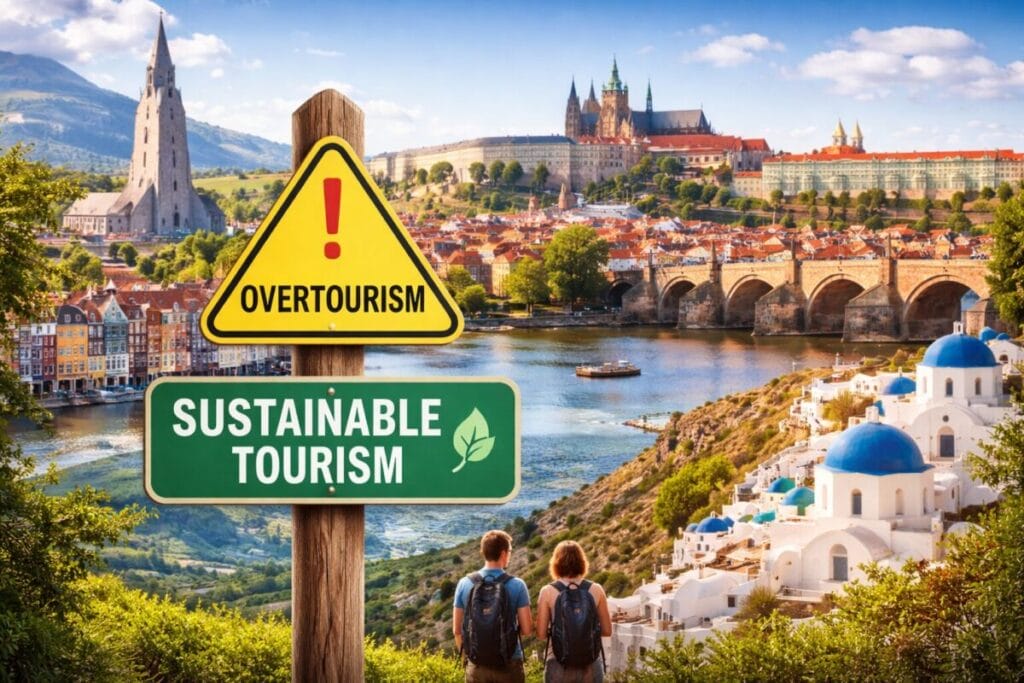
Europe’s hottest destinations are rewriting the rules of tourism. From Iceland to Greece, governments are tightening visitor controls, imposing fines, and introducing new sustainability rules. The goal is clear: protect fragile environments, ease pressure on local communities, and keep travel enjoyable for both residents and visitors.
Why Europe Is Getting Serious About Overtourism
Overtourism has transformed scenic islands, historic centers, and protected parks into congested hotspots. Rising social media exposure has played a major role. A single Instagram post can send thousands of travelers to a once-hidden location within weeks. This surge has strained infrastructure, pushed up housing costs, fueled noise complaints, and damaged natural areas.
Tourism remains a major economic pillar for Europe. But leaders worry that if visitor numbers continue unchecked, the very attractions that make these places special will be at risk. That concern has triggered a wave of reforms centered on sustainability, responsibility, and long-term destination management.
Iceland Targets Cruise Crowds and Nature Damage
Iceland is now one of Europe’s strongest voices in the sustainability shift. The country draws millions of travelers eager to see volcanoes, glaciers, and waterfalls. Visitor numbers now exceed six times the national population.
Cruise tourism has been a major pressure point. Iceland began imposing new per-passenger fees at ports and plans to reduce annual cruise calls by dozens of ships within the next few years. Officials want to slow down mass arrivals and favor longer, more meaningful trips over brief stopovers.
To protect fragile landscapes, Iceland also fines travelers who damage moss fields, volcanic terrain, and protected natural sites. Many violations stem from off-path photo attempts fueled by social media trends. Authorities have also limited overnight stays in high-traffic areas to prevent gridlock and spread visitation across less impacted regions.
All efforts point toward a single message: Iceland still welcomes travelers, but not at the expense of its environment.
Austria Balances Alpine Tourism and Housing Pressure
Austria faces its own tourism tension. The Alpine nation draws millions of skiers, hikers, and culture seekers every year. Demand for short-term rentals in Vienna and Salzburg created housing shortages for locals. Entire apartment blocks shifted from residential use to vacation rentals.
Austria responded with license requirements, registry rules, and fines for illegal rentals. Visitor taxes and stay caps in popular mountain regions help limit congestion, reduce alpine trail erosion, and protect wildlife habitats.
Eco-focused hotels, electric ski lift systems, and expanded rail networks now support the country’s goal of becoming a low-impact tourism leader.
Czech Republic Protects Prague’s Old Town With Entry Fees
Prague remains one of Europe’s most charming capitals, but its medieval center became overwhelmed during peak travel months. Lines at Prague Castle and the Old Town Square flooded narrow streets with tour groups.
To restore balance, Prague introduced entry fees at key heritage zones and limited short-term rentals in residential areas. Officials also launched campaigns encouraging travelers to explore regional towns and national parks outside the capital. This shift aims to support local economies without suffocating Prague’s historic core.
Netherlands Cracks Down With Its “Stay Away” Messaging
Amsterdam has become a symbol of overtourism. In recent years, its visitor counts surged beyond the city’s capacity. Housing prices soared while noise and late-night disturbances escalated.
The Netherlands took a bold step by launching its “stay away” campaign. The messaging targets party tourism and discourages those seeking alcohol and drug-driven experiences. Hotel construction caps, higher room taxes, and reduced cruise ship docking further limit uncontrolled visitor growth.
The city promotes slower, more cultural travel, highlighting museums, canal tours, and cycling routes beyond the busiest center districts.
Portugal Limits Rentals and Pushes Eco-Travel
Lisbon and the Algarve shifted from peaceful coastal hubs to top-tier global tourism magnets. Real estate investors converted residential buildings into vacation rentals, pushing residents out and changing neighborhood character.
Portugal responded with strict rental licenses, occupancy rules, and visitor caps at major monuments. The country also encourages year-round and low-impact tourism through hiking trails, birdwatching tours, and regional travel programs designed to spread crowds away from coastal hotspots.
Greece Controls Island Tourism With Caps and Environmental Fines
Greece continues to attract massive crowds to Mykonos, Santorini, Crete, and other iconic islands. The summer season often overwhelms ports, beaches, and archaeological sites.
New stay limitations and visitor caps now restrict arrivals during peak periods. Environmental fines target travelers who damage marine areas, litter, or disobey cultural rules at sacred sites. Public campaigns highlight sustainable activities such as village tours, traditional food experiences, and eco-conscious sailing trips.
A New Tourism Model Takes Shape Across Europe
Europe’s tourism strategy is undergoing a major reset. Instead of chasing record-breaking arrivals, governments now focus on value, sustainability, and quality of experience. Travelers are urged to respect local culture, rethink bucket-list priorities, and explore deeper rather than faster.
For tourists, the shift brings benefits too. Reduced crowds mean better access to landmarks, smoother transportation, and more authentic experiences.
The real question is how quickly the global tourism industry can adapt. If done right, Europe’s sustainability push could become a model for other destinations facing similar pressures.
For more travel news like this, keep reading Global Travel Wire