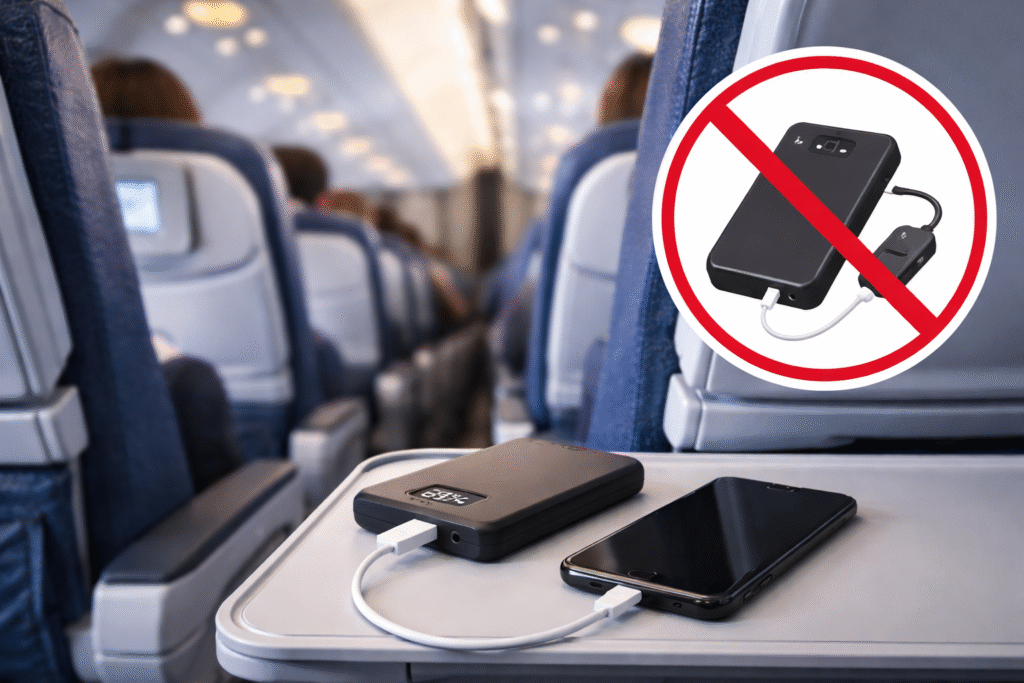
India has introduced stricter aviation safety rules for flights arriving from the United Arab Emirates, placing tighter controls on the use and handling of power banks onboard aircraft. The move reflects rising global concerns over lithium battery fires and reinforces India’s focus on passenger safety and in-flight risk reduction.
The new rules, issued by India’s aviation regulator, aim to reduce the chances of onboard fire incidents linked to portable electronic devices. With international air travel between the UAE and India remaining strong, the decision directly affects a large volume of passengers on short- and long-haul routes.
Why Power Banks Have Become a Safety Concern
Lithium-ion batteries power most modern electronic devices. While efficient, these batteries carry fire risks when damaged, overheated, or improperly handled. In recent years, aviation authorities worldwide have reported multiple incidents of power banks overheating or igniting during flights.
Aircraft cabins present unique challenges. Limited space, high passenger density, and restricted movement can allow a small battery malfunction to escalate quickly. Fires triggered by lithium batteries also burn intensely and can reignite even after suppression.
Recognizing these dangers, India has moved to tighten controls before incidents occur rather than responding after emergencies.
Key Power Bank Rules for UAE–India Flights
Under the new safety framework, passengers may carry power banks only under strict conditions. The most significant change is a complete ban on their use during flights.
Power banks cannot be used to charge mobile phones, tablets, laptops, or any other device at any point during the journey. Passengers also cannot recharge power banks using aircraft power outlets.
However, travelers may still carry power banks in cabin baggage, provided they remain with the passenger at all times.
Storage Rules Designed for Early Detection
Power banks are no longer allowed in checked baggage or overhead compartments. Instead, passengers must store them under the seat or in a personal bag that stays close.
This requirement allows cabin crew to quickly spot signs of overheating, smoke, or unusual smells. Early detection plays a crucial role in preventing small battery failures from turning into major safety incidents.
Checked luggage and overhead bins limit visibility. A fire in those spaces may remain unnoticed until it spreads.
Capacity Limits and Device Guidelines
Passengers may generally carry one power bank with a capacity of up to 100 watt-hours without special airline approval. Devices with higher capacity often require prior clearance, while batteries exceeding 160 watt-hours are usually prohibited.
Other lithium-powered items, such as cameras, drones, and spare batteries, must also travel in cabin baggage. Spare batteries should have protected terminals to prevent short circuits.
Smart luggage with removable batteries remains acceptable, but bags with non-removable batteries may face restrictions.
E-Cigarettes and Similar Devices Under Scrutiny
The rules also affect electronic cigarettes and vaping devices. These items may only travel in carry-on luggage, subject to airline approval. Passengers cannot use or charge them onboard.
This policy aligns with broader global aviation safety practices aimed at reducing ignition risks inside the cabin.
Airline Responsibilities and Passenger Awareness
Airlines operating UAE–India routes must actively inform passengers about the updated rules. Announcements, check-in reminders, and onboard messaging now form part of mandatory safety communication.
Cabin crew training has also received renewed focus. Crew members must recognize early warning signs of battery malfunction and respond quickly using appropriate firefighting equipment.
Airports are expected to support the effort by displaying safety advisories at terminals, security checkpoints, and boarding gates.
Alignment With Global Aviation Standards
India’s move reflects international aviation safety norms adopted across major global carriers. Several airlines serving the Middle East and Asia had already implemented similar restrictions following battery-related incidents.
By aligning domestic regulations with global standards, India reinforces its commitment to international safety cooperation while adapting to evolving passenger technology habits.
What Passengers Should Do During the Flight
Travelers should monitor their devices closely. If a phone, tablet, or power bank becomes hot, emits smoke, or releases a burning smell, passengers must alert the cabin crew immediately.
If a battery slips under a seat or into a tight space, passengers should avoid retrieving it themselves. Crew members have tools and procedures designed to handle such situations safely.
Safety Over Convenience
While the restrictions may inconvenience travelers accustomed to charging devices mid-flight, authorities emphasize that safety must take priority. Portable electronics are now an essential part of travel, but responsible handling remains critical in the air.
As lithium battery use continues to rise worldwide, proactive safety measures such as these play a vital role in protecting passengers, crew, and aircraft.
India’s updated power bank rules signal a firm stance on aviation safety, ensuring that high passenger volumes on UAE routes do not compromise in-flight security.
For more travel news like this, keep reading Global Travel Wire