
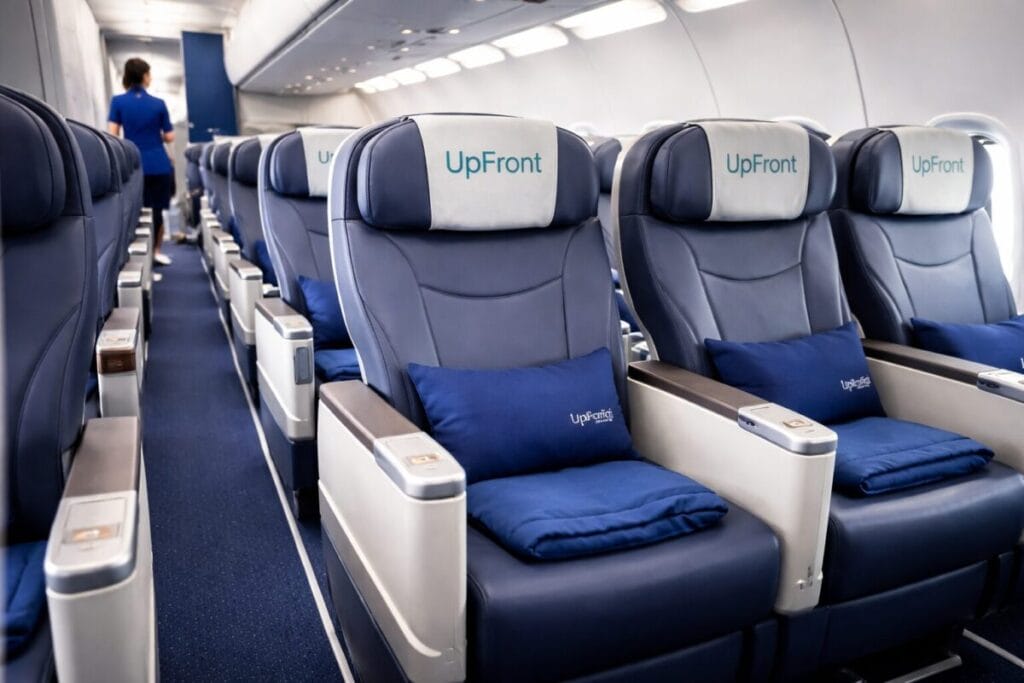
IndiGo has taken a decisive step to reshape economy-class flying in India. The airline has formally rolled out UpFront, a premium seating option within the economy cabin. The move signals a shift in how low-cost carriers address comfort, flexibility, and passenger expectations.
As Indian aviation heads into 2026, travelers are no longer focused on price alone. Comfort, reliability, and convenience now influence booking decisions. IndiGo’s new UpFront seats aim to meet this demand without crossing into full business-class pricing.
What Is IndiGo UpFront Seating
UpFront is a paid seating category located in the front rows of the aircraft. These seats offer noticeably more legroom than standard economy. The location also allows faster boarding and quicker exits after landing.
Passengers booking UpFront receive complimentary meals. This addition enhances onboard service for routes with longer flying times. The offering blends affordability with comfort, creating a middle ground between regular economy and premium cabins.
Why IndiGo Launched UpFront Now
The Indian aviation sector faced operational stress toward the end of 2025. Staff shortages and flight disruptions affected schedules across the industry. Airlines had to act fast to restore confidence.
IndiGo responded by strengthening reliability and improving passenger-facing services. UpFront plays a key role in that strategy. It shows a renewed focus on experience rather than volume alone.
The airline also recognized a growing group of travelers. These passengers want extra comfort but avoid business-class fares. UpFront directly targets this segment.
Designed for Business and Frequent Flyers
Corporate travelers often require flexibility. Meeting schedules change. Return plans shift. UpFront seats support this need with easier booking management and fewer restrictions.
Frequent flyers also value personal space. Extra legroom reduces fatigue, especially on longer domestic and regional international routes. The front-cabin position adds convenience without premium-class pricing.
This approach helps IndiGo retain passengers who might otherwise choose full-service airlines.
Cabin Design Without Heavy Modifications
IndiGo has not added physical dividers or new cabins. Instead, it uses smart seat allocation. The first rows now serve as UpFront zones.
This layout keeps aircraft weight low and turnaround times fast. Both factors are critical for low-cost operations. At the same time, the airline unlocks higher revenue per seat.
The strategy balances efficiency with comfort. It reflects modern airline economics.
Changing Expectations of Indian Travelers
India’s passenger base has evolved rapidly. Domestic air travel has expanded beyond metros. Tier-two and tier-three cities now contribute significant demand.
Many travelers now fly for work, education, and family reasons. Flight durations have increased. Comfort matters more than before.
Passengers are also more informed. They compare seat pitch, meals, and flexibility before booking. UpFront aligns with this shift in consumer behavior.
Premium Economy Trends in Low-Cost Aviation
Globally, low-cost carriers are introducing “premium-lite” products. These include extra-legroom seats, bundled meals, and priority services.
IndiGo’s UpFront follows this global trend but adapts it for the Indian market. Price sensitivity remains high. Value delivery is essential.
By offering comfort without excess luxury, IndiGo protects its low-cost identity while expanding appeal.
Impact on Brand Trust and Reliability
Passenger trust depends on consistency. IndiGo aims to rebuild and strengthen that trust through tangible improvements.
UpFront is not just a seat upgrade. It represents a broader service mindset. Better seating, meals, and flexibility signal long-term commitment.
As the rollout expands across the fleet, customer perception is expected to improve. Reliability combined with comfort strengthens brand loyalty.
Revenue Growth Without Fare Inflation
UpFront creates a new revenue stream. It increases average revenue per passenger without raising base fares.
This model allows budget travelers to continue flying affordably. At the same time, it monetizes comfort for those willing to pay extra.
Such segmentation supports sustainable growth in a competitive aviation market.
Operational Benefits for the Airline
The UpFront concept fits seamlessly into existing operations. Crew procedures remain simple. Aircraft utilization stays high.
There is no impact on turnaround times. Maintenance requirements remain unchanged. These factors preserve cost discipline.
The result is operational stability with improved customer satisfaction.
What This Means for Indian Aviation
IndiGo’s move may influence competitors. As passengers experience upgraded economy options, expectations will rise across the sector.
Other low-cost carriers may introduce similar products. This could redefine standard economy travel in India over the next few years.
The focus will likely remain on value, not luxury.
Future Outlook for IndiGo UpFront
The success of UpFront could lead to further refinements. Enhanced digital booking tools, improved meal options, and bundled services may follow.
IndiGo has signaled openness to innovation. Passenger feedback will shape future enhancements.
As travel demand grows in 2026, UpFront positions IndiGo strongly in both leisure and business segments.
Conclusion
IndiGo’s UpFront premium seating marks a clear evolution in Indian low-cost aviation. It responds to changing passenger needs with practical upgrades.
By blending comfort, flexibility, and affordability, IndiGo strengthens its market leadership. The initiative reflects a mature approach to modern air travel.
For Indian flyers, economy travel just became more comfortable—without losing its value edge.
For more travel news like this, keep reading Global Travel Wire