In a landmark announcement that could redefine trade across Eurasia, Iran and Turkey have unveiled a USD 1.6 billion strategic railway project linking the Iranian cities of Marand and Cheshmeh Soraya to the Turkish border near Aralık. This 200-kilometer corridor will act as a crucial bridge between Asia and Europe, forming one of the most important new freight routes on the modern Silk Road. The agreement, revealed during a joint press event on December 4, 2025, signals a renewed commitment by both nations to expand economic cooperation and fortify their roles in global logistics.
The new railway is designed to dramatically enhance freight capacity, reduce transport bottlenecks, and streamline cross-border trade. As China–Europe rail shipments continue to surge, this new corridor positions Iran and Turkey as key transit players, offering an efficient alternative to congested sea routes and lengthier land options. With construction expected to take three to four years, the project marks one of the most ambitious infrastructure collaborations in the region.
A Strategic USD 1.6 Billion Investment Closing a Critical Gap
The planned rail link comes at a crucial moment for global supply chains. As trade volumes grow between East and West, existing land routes have faced delays, complex border procedures, and fragmented rail networks. The Marand–Cheshmeh Soraya–Aralık railway closes a long-standing gap, creating a seamless connection that will substantially shorten transport times and reduce shipping costs.
With both governments prioritizing construction, the corridor will support high-capacity freight operations, making it easier for goods from East Asia to reach key markets in Europe via Iran and Turkey. Analysts believe that once completed, the line could shift a significant amount of freight from road to rail, increasing efficiency and reducing transport emissions.
Reviving the Silk Road: A Modern Connection Rooted in History
Iran has long emphasized the importance of restoring the ancient Silk Road through modern rail infrastructure. This new railway forms a centerpiece of that vision, turning Iran into a major logistics gateway linking China, Central Asia, and Europe. By reducing transit stops and simplifying freight movement, the corridor will make shipping faster and more economically viable across the trans-Eurasian route.
For Turkey, the project strengthens its position as a geopolitical hinge between Europe and Asia. The new line will reinforce the country’s Mediterranean and Black Sea ports, boost commercial activity, and support its ambitions to become a regional logistics powerhouse. The corridor will also align with Turkey’s efforts to expand its railway capacity and integrate more deeply with European freight networks.
Regional Benefits: Trade, Tourism, and Economic Growth
Both Iran and Turkey expect the railway to serve as a major catalyst for economic integration. Beyond improving bilateral trade, the corridor will enhance links with Pakistan, Russia, and China, supporting multimodal transport networks that combine rail, sea, and road routes across Asia.
The line will also reduce delays at border crossings and eliminate inefficiencies caused by fragmented infrastructure. As a result, it will provide a reliable logistics backbone for sectors including manufacturing, mining, energy, agriculture, and retail. Regional tourism may also see indirect gains as improved connectivity encourages easier movement across borders.
Early Signs of Success: Pilot Freight Operations Already Underway
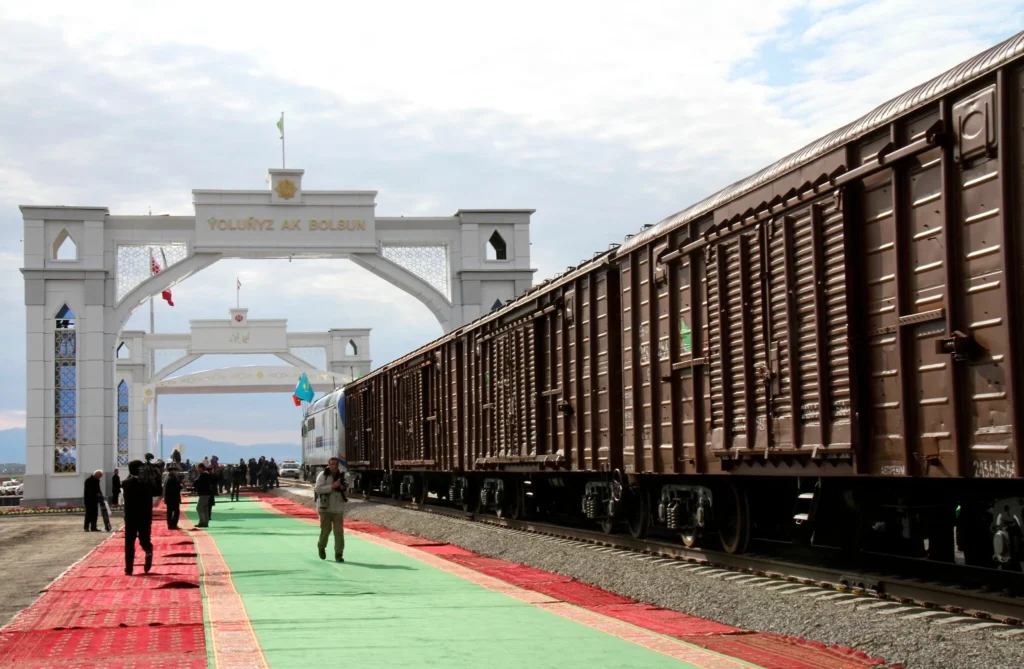
Even before the project’s construction began, early freight tests indicated strong potential. In November 2025, Iran dispatched a 27-car train carrying 1,500 tons of cement clinker to Turkey—one of the first significant freight movements between the two countries via the planned corridor. Officials say the pilot train demonstrated the feasibility of large-volume transport and confirmed the growing demand for direct rail links.
Forecasts suggest that once operational, the corridor could support up to 20,000 tons of freight per month, reflecting the region’s increasing shift toward rail-based logistics. These early pilot runs mark the beginning of a larger transformation of Eurasian freight patterns.
Strengthening Trilateral Relations with Pakistan
The Iran–Turkey railway announcement coincides with renewed trilateral efforts involving Pakistan. The three countries recently agreed to resume the Iran–Pakistan–Turkey container train, a key transcontinental freight service linking South Asia with Europe. This collaboration reinforces the broader strategy to build strong North–South and East–West corridors across the region.
Rail transport offers a stable and efficient alternative to maritime routes, which have been increasingly affected by port congestion and geopolitical tensions. Together, these initiatives support Iran’s wider goal of becoming a major logistics hub connecting the Persian Gulf, Central Asia, and Europe.
Transforming Eurasian Connectivity for the Future
When completed, the Marand–Cheshmeh Soraya railway will stand as one of the most important links in the modern Silk Road. The corridor will ensure uninterrupted rail travel from China to Europe, supporting faster, safer, and more dependable freight movement across the continent.
For Iran and Turkey, it represents far more than a railway project—it symbolizes a strategic shift toward greater regional cooperation, economic resilience, and infrastructural modernization. As global trade evolves and supply chains diversify, this corridor will play a pivotal role in shaping the future flow of goods between Asia and Europe.
The railway’s development marks a new chapter in Eurasian logistics, demonstrating how regional partnerships can create powerful new transit routes that connect markets, cultures, and economies across thousands of kilometers.
For more travel news like this, keep reading Global Travel Wire