
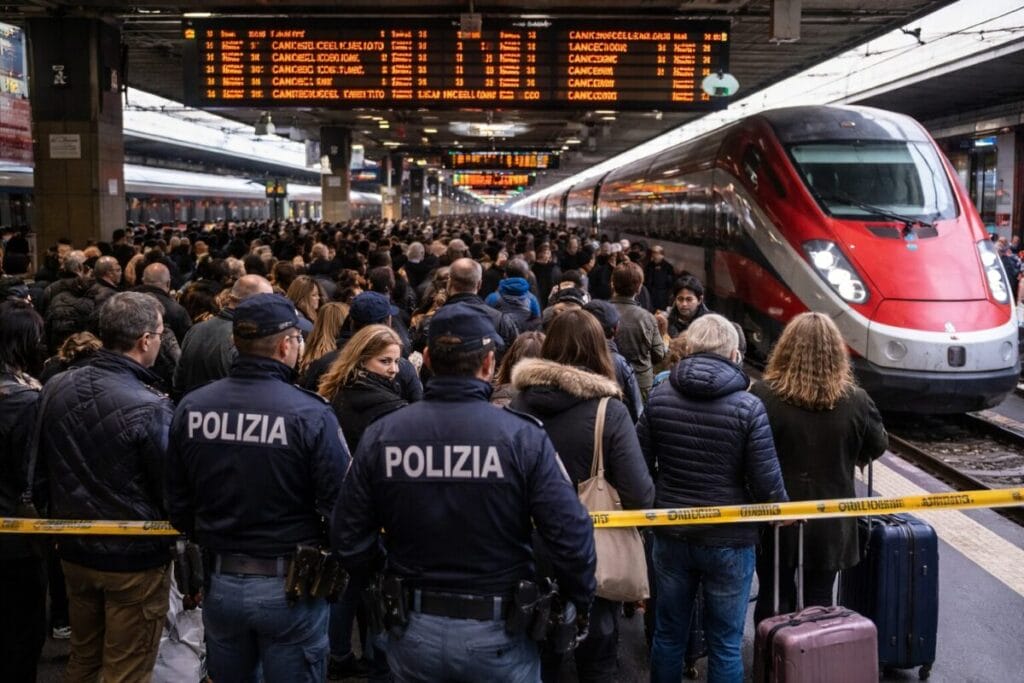
Italy’s rail network faced serious disruption after coordinated sabotage incidents targeted key transport routes during the opening of the 2026 Winter Olympics. Authorities issued travel warnings as thousands of passengers experienced delays, cancellations, and increased security checks across northern Italy.
The incidents created widespread chaos in major cities including Bologna, Venice, and Ancona. These locations serve as important tourism gateways and transport hubs for visitors traveling to Olympic venues. Officials responded quickly to stabilize the situation and protect passengers while investigations continue.
Coordinated Sabotage Targets Critical Rail Infrastructure
Authorities confirmed that multiple sabotage incidents occurred on February 7 and continued to affect services into February 8. Attackers damaged essential infrastructure, including cables used for monitoring train speeds. These actions disrupted high-speed, intercity, and regional rail services.
Bologna became the central focus of the disruption. The city acts as a key railway junction linking Milan, Venice, Florence, and the Adriatic coast. Damage at this hub triggered cascading delays across multiple routes. Some passengers faced delays exceeding two hours, creating congestion in stations and platforms.
Investigators also discovered a homemade explosive device near the Bologna railway system. Bomb disposal units removed the device safely, preventing further risk to travelers and staff. Meanwhile, another incident in Pesaro involved arson targeting a railway switch facility, which added to operational challenges.
Travel Chaos Affects Olympic Visitors and Tourists
The timing of the sabotage intensified its impact because the Winter Olympics attracted large crowds. Thousands of international visitors relied on rail transport to reach venues in Milan and Cortina. As delays spread across the network, many travelers struggled to maintain schedules.
Railway stations experienced overcrowding as passengers waited for updated departure times. Tourist groups and families adjusted plans, while travel operators arranged alternative routes. The disruptions highlighted how critical rail services remain for tourism in Italy.
Local tourism businesses reported immediate effects. Hotels near major stations received late arrivals and last-minute cancellations. Tour operators modified itineraries to avoid affected routes. Despite the challenges, many travelers continued their journeys by switching to buses or regional connections.
Government Raises Security Alert and Launches Investigation
Italian authorities quickly labeled the incidents as deliberate acts of sabotage. The government raised national security alerts to the highest level and increased surveillance at major transport hubs. Anti-terrorism police units worked alongside railway security teams to investigate the attacks.
Officials examined possible links to activist groups opposed to large international events. Although investigators have not confirmed responsibility, authorities continue to explore several leads. Security agencies aim to prevent additional disruptions during the Olympic period.
Railway operators implemented enhanced inspections and monitoring. Station staff conducted visible patrols to reassure passengers and maintain safety. Officials encouraged travelers to arrive earlier than usual to allow for security checks.
Rail Services Gradually Recover While Challenges Continue
Railway companies began restoring services later on February 7 after repair teams addressed damaged infrastructure. However, recovery required careful coordination to avoid further delays. Some routes operated at reduced capacity as technicians inspected tracks and systems.
Transport officials introduced revised timetables to manage congestion. Passengers received updates through station announcements and digital platforms. Although conditions improved, occasional delays continued into the following day.
Travel experts advised visitors to remain flexible when planning journeys. Authorities recommended checking train schedules frequently and allowing extra travel time. Many tourists adapted by exploring alternative routes or adjusting their itineraries.
Impact on Tourism and Regional Economy
The disruption affected more than daily commuters. Northern Italy relies heavily on rail transport to support tourism, especially during international events. Cities like Venice and Bologna attract visitors year-round, and reliable transportation plays a major role in their tourism appeal.
Local businesses felt immediate pressure as uncertainty influenced traveler decisions. Restaurants near railway hubs reported fluctuating visitor numbers, while cultural attractions experienced shifting schedules. Tourism boards worked to reassure visitors and promote safe travel.
Regional economies depend on smooth mobility during major events like the Winter Olympics. Transport disruptions can influence visitor experiences and long-term perceptions of accessibility. Officials therefore prioritized rapid restoration to maintain confidence among travelers.
Security Measures Intensify During High-Profile Event
Authorities introduced stronger security protocols at railway stations nationwide. Increased surveillance cameras, patrol units, and monitoring systems aimed to deter further sabotage attempts. Officials also coordinated with international partners to share intelligence related to threats against infrastructure.
Transport agencies emphasized clear communication with passengers. Updated announcements helped reduce confusion and guided travelers through changing conditions. Tourism authorities collaborated with transport operators to support visitors unfamiliar with local systems.
Experts highlight that major global events often require enhanced security planning. Italy continues to balance safety with efficient travel operations during the Olympics.
Future Outlook for Travel and Infrastructure Resilience
The sabotage incidents sparked discussions about infrastructure resilience and crisis response strategies. Government officials may invest more resources into monitoring systems, rapid repair capabilities, and cybersecurity protections. Improved coordination between transport operators and security agencies could strengthen preparedness for future challenges.
Urban planners and transport authorities also evaluate long-term solutions to reduce vulnerability. Advanced technology and predictive monitoring may help detect suspicious activities earlier.
Despite the disruption, Italy remains focused on delivering a successful Winter Olympics experience. Authorities continue to prioritize safety while restoring normal operations across the rail network. Travelers visiting the country during this period should stay informed, remain flexible, and follow official guidance for a smoother journey.
For more travel news like this, keep reading Global Travel Wire