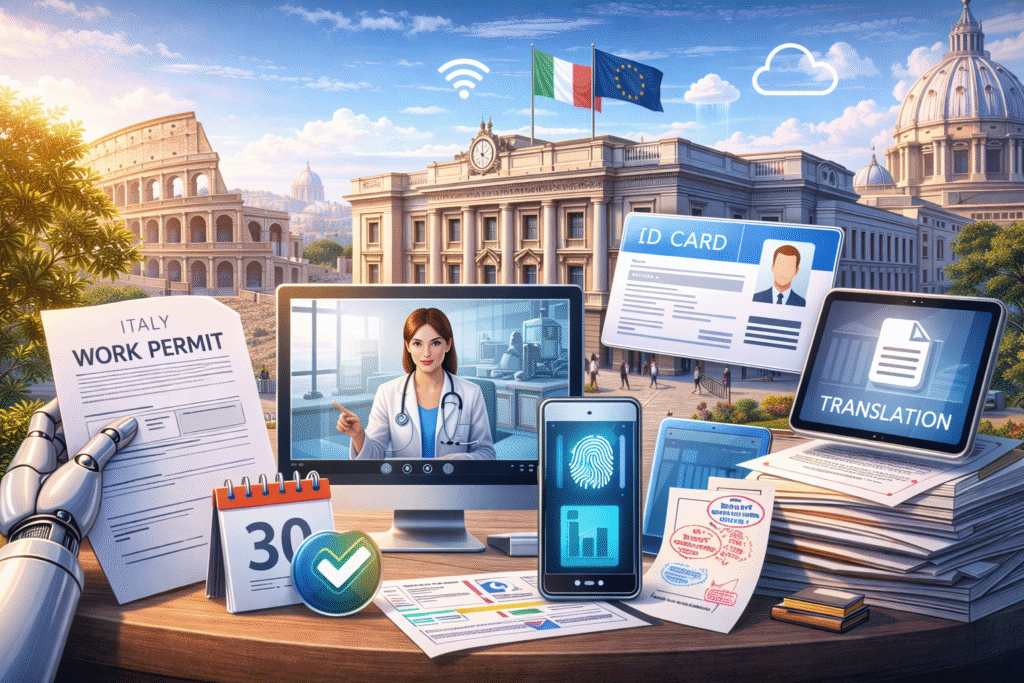
Italy has entered 2026 with one of the most ambitious public service overhauls in its modern history, positioning itself as a leader in digital governance and administrative reform across Europe. A sweeping simplification and digitalisation law, introduced at the end of 2025 and now fully in force, is transforming how bureaucracy, healthcare and work permits operate, with far-reaching implications for residents, expatriates, investors and long-stay visitors.
For decades, Italy’s complex administrative systems were often cited as a barrier to economic growth, foreign investment and talent attraction. Long processing times, paper-based procedures and regional inconsistencies created frustration for citizens and newcomers alike. The new reform directly tackles these issues, aligning Italy with broader European recovery goals while reshaping everyday interactions with public institutions.
Faster Work Permits Boost Global Mobility
One of the most impactful changes under the 2026 reform is the dramatic reduction in work permit processing times. Applications that once took up to three months are now required to be processed within 30 days, a shift that significantly improves predictability for employers and foreign professionals.
The reform places special emphasis on skilled workers, including professionals eligible for EU-level talent schemes and individuals who have completed vocational training supported by Italian initiatives abroad. By accelerating approvals and reducing administrative uncertainty, Italy aims to strengthen its appeal as a destination for international talent in sectors ranging from technology and engineering to healthcare and research.
Housing requirements have also been simplified. Employers are no longer required to submit extensive municipal certification proving accommodation suitability. Instead, they must demonstrate compliance with basic health and safety standards, eliminating a frequent source of delay and confusion for incoming workers.
Telemedicine Reshapes Healthcare Access
Italy’s healthcare system is also undergoing a digital transformation, with telemedicine now playing a central role in everyday care. Doctors are permitted to issue legally valid medical certificates for sick leave through video or phone consultations, a change that reflects evolving healthcare practices and lessons learned from recent global health challenges.
Patients with chronic conditions benefit even more from the reform. Digital prescriptions can now be issued for extended periods, in some cases lasting up to a year, reducing the need for repeated in-person visits. This approach eases pressure on clinics and hospitals while improving continuity of care for patients, particularly those living in rural areas or managing long-term conditions.
The broader integration of telemedicine is expected to enhance efficiency across the healthcare system, offering faster access to care while maintaining professional oversight and legal safeguards.
Pharmacies Become Local Health Hubs
Another notable shift involves Italy’s extensive network of pharmacies. Under the new law, pharmacies are evolving beyond traditional roles to become accessible community health centres. Pharmacists are now authorised to administer certain vaccinations to people aged 12 and over, as well as conduct screening tests for specific conditions such as Hepatitis C.
This expansion of services brings routine healthcare closer to the public, reducing the burden on hospitals and general practitioners. For travellers, seasonal workers and residents alike, pharmacies are becoming convenient entry points for preventive care and basic health services.
Digital Documents Reduce Paperwork Barriers
Administrative documentation has long been a challenge for foreigners navigating life in Italy, from residency applications to diploma recognition. The 2026 reform introduces full digitisation of several key processes, including official document translations.
Previously, sworn translators were required to appear in person at courts or registry offices, creating delays and added costs. Digital submission of certified translations now allows applications to move faster and more efficiently, particularly benefiting those applying for citizenship, professional recognition or long-term residence.
The reform also promotes interoperability between public databases, reducing repetitive requests for the same documents and minimising administrative duplication across departments.
Economic and Tourism Impact
While the reform primarily targets public administration, its effects extend into tourism and long-stay travel. Faster permits, streamlined documentation and improved healthcare access make Italy more attractive for digital nomads, seasonal workers, international students and retirees.
For the tourism sector, these changes support longer stays and repeat visits, especially from non-EU travellers who previously faced complex bureaucratic hurdles. Improved public services also enhance Italy’s reputation as a welcoming and well-organised destination at a time when competition for global travellers and talent is intensifying.
Challenges and Regional Consistency
Despite widespread optimism, some professional groups have highlighted the importance of consistent implementation across Italy’s regions. Healthcare unions and administrative bodies have called for clear technical guidelines to ensure uniform standards nationwide. Authorities have acknowledged these concerns and emphasised ongoing monitoring throughout 2026.
A Turning Point for Italy
Italy’s 2026 simplification and digitalisation law represents a decisive break from the past. By embracing technology, reducing administrative delays and modernising public services, the country is signalling a long-term commitment to efficiency, transparency and global openness.
For residents, workers and visitors, the reforms promise smoother interactions with public institutions and a higher quality of everyday life. For Italy itself, this transformation marks a strategic step toward greater competitiveness, resilience and relevance in an increasingly digital world.
For more travel news like this, keep reading Global Travel Wire