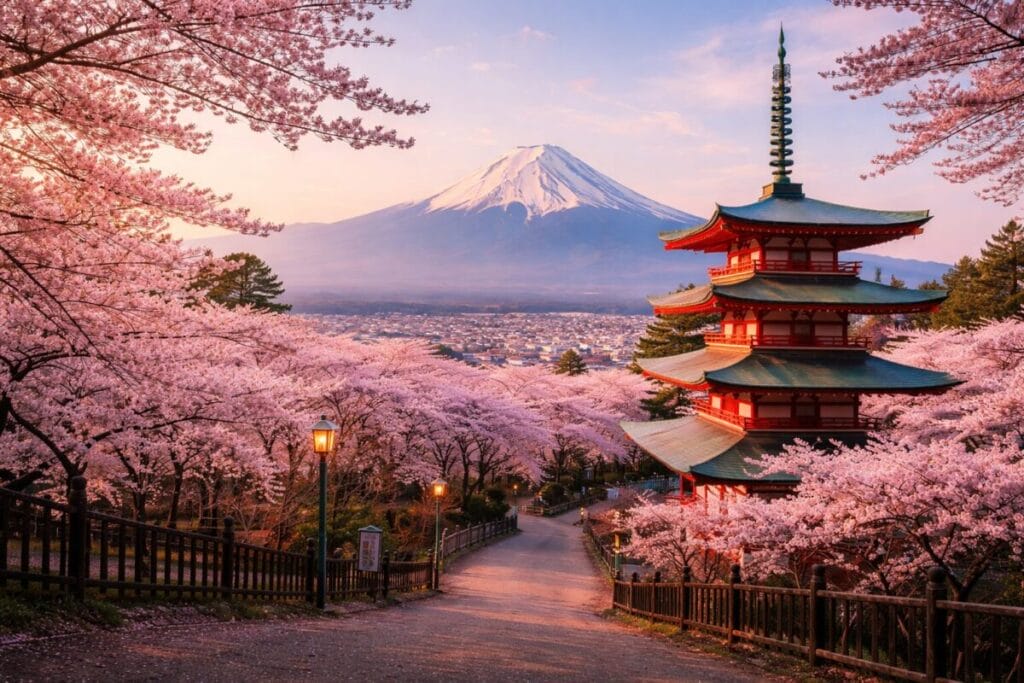
Japan’s decision to cancel a major cherry blossom festival near Mount Fuji in 2026 has triggered significant changes across the global tourism landscape. Travelers from the United States, China, South Korea, Taiwan, France, Germany, the United Kingdom, and several other countries are now adjusting spring travel plans.
The festival, once a central attraction during Japan’s sakura season, drew hundreds of thousands of visitors each year. Authorities canceled the event following rising overtourism pressures, safety concerns, and disruptive visitor behavior. The move signals a wider shift in how destinations balance tourism growth with local community wellbeing.
As a result, travel demand patterns, booking trends, and short-term rental markets are rapidly evolving.
Sakura Season: A Powerful Tourism Driver
Cherry blossom season remains one of the world’s most iconic travel experiences. Every spring, millions of visitors arrive in Japan to witness pink blooms across Tokyo, Kyoto, Osaka, and scenic regions near Mount Fuji.
In recent years, Japan experienced record-breaking tourism growth. International arrivals surged due to pent-up travel demand and strong global interest in seasonal experiences. Spring travel, fueled by sakura viewing, played a major role in this growth.
Many travelers planned entire trips around festival schedules, guided tours, and cultural events. When the festival disappeared from the calendar, it disrupted long-established travel planning patterns.
Short-Term Rental Markets Feel Immediate Impact
The cancellation quickly affected Japan’s short-term rental sector. Properties near popular viewing spots previously commanded premium prices during cherry blossom season.
Now, hosts face new challenges:
- Increased booking cancellations and changes
- Pricing instability due to uncertain demand
- Lower occupancy rates in highly dependent areas
Rental markets in Tokyo, Kyoto, and the Fuji Five Lakes region report noticeable shifts. Some property owners have reduced nightly rates or opened longer booking windows to attract guests.
At the same time, alternative destinations within Japan are seeing increased interest as travelers seek less crowded locations.
Airlines and Travel Operators Adapt to Changing Demand
Airlines and tour operators are also responding to the shift. Spring travel packages heavily marketed around cherry blossom festivals required rapid adjustments.
Key industry changes include:
- Higher rebooking requests from international travelers
- Flexible itinerary planning replacing fixed festival schedules
- Greater emphasis on independent travel experiences
Airlines have observed uneven demand patterns across key routes connecting Japan with North America, Europe, and Asia. Travel agencies are introducing alternative seasonal tours focused on nature, regional culture, and lesser-known destinations.
Transport Planning Faces New Uncertainty
Japan’s transportation network traditionally prepares for predictable surges during cherry blossom season. Rail services, airport operations, and local transit often expand capacity to accommodate large crowds.
Without the festival acting as a focal point, planners face new challenges:
- Unpredictable visitor flows across regions
- Potential underuse of temporary transport services
- Difficulty forecasting passenger volumes
Destinations that relied heavily on festival-related mobility infrastructure may experience operational adjustments as travel spreads more evenly across the country.
Event-Driven Tourism Shows Its Fragility
The situation highlights the risks of relying heavily on event-driven tourism. Seasonal festivals often generate concentrated travel demand, but they also create vulnerabilities when disruptions occur.
Global destinations are closely watching Japan’s decision. Some competing locations may benefit as travelers search for alternative spring experiences. Cities known for cherry blossom viewing or major cultural festivals could see increased bookings as a result.
Tourism planners worldwide are now reassessing strategies to reduce dependence on single flagship events.
Country-Level Travel Effects
Different source markets are experiencing unique impacts:
- United States: Many long-haul travelers planned trips around festival dates, leading to itinerary changes.
- China and South Korea: Regional travelers often used the festival for short visits, making cancellations more disruptive.
- Taiwan: Strong cultural ties to sakura viewing increase sensitivity to event changes.
- Europe (France, Germany, UK): Package tours centered on festival experiences now require redesign.
- Australia and India: Long-haul travelers are reconsidering destination choices for spring holidays.
These shifts reflect how deeply cherry blossom events influence global travel decisions.
Balancing Tourism Growth and Local Life
Local authorities based the cancellation on resident concerns. Overcrowding, traffic congestion, sanitation issues, and disruptions to daily routines prompted officials to reconsider the festival’s sustainability.
Japan has increasingly focused on responsible tourism management. National and regional strategies emphasize:
- Distributing visitors beyond major hotspots
- Encouraging off-peak travel periods
- Promoting lesser-known destinations
- Improving visitor education and crowd management
These measures aim to protect communities while maintaining tourism’s economic benefits.
Will Tourists Still Visit Japan for Cherry Blossoms?
Despite the festival’s absence, demand for cherry blossom viewing remains strong. Many travelers still plan to visit Japan during spring but with different expectations.
Key trends emerging include:
- Independent hanami experiences rather than organized festivals
- Exploration of smaller cities and rural landscapes
- Flexible travel planning rather than fixed event schedules
This transition may lead to more diverse tourism flows across Japan, reducing pressure on heavily visited areas.
A New Era for Spring Tourism
The cancellation marks a turning point for global travel dynamics in 2026. Event-driven tourism is evolving as destinations prioritize sustainability and resident wellbeing.
For travelers, the change encourages more personalized journeys and exploration beyond traditional hotspots. For the tourism industry, it signals the need for adaptability, diversified offerings, and resilient planning.
Japan’s cherry blossoms will continue to attract visitors worldwide. However, the era of massive festival-centered travel may give way to a more balanced and sustainable approach — one that reshapes spring tourism far beyond Japan’s borders.
For more travel news like this, keep reading Global Travel Wire