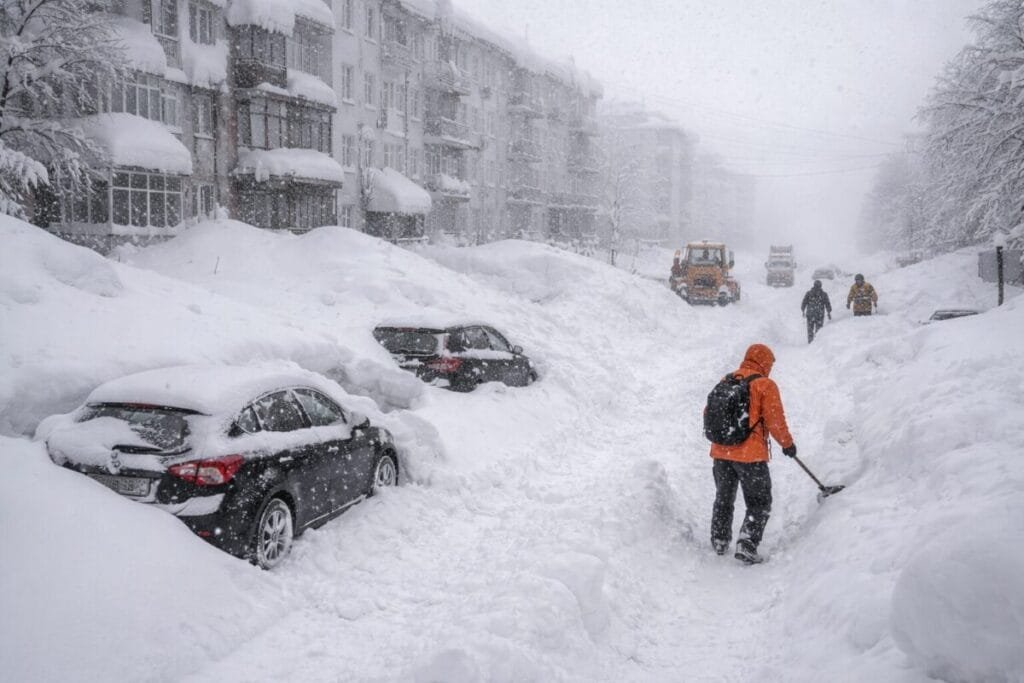
The Kamchatka Peninsula in Russia’s Far East is reeling from a historic snowstorm that has buried towns in unprecedented snowfall. The extreme weather began in early January and quickly escalated, creating snow depths rarely seen in decades. Entire neighborhoods are trapped under deep snow, and residents and visitors are facing severe travel disruptions.
This winter storm is one of the most intense in Kamchatka’s recorded history. Snow accumulations in many areas have exceeded two meters, with drifts even taller in places. Vehicles and homes are covered under massive snow piles, and daily life has nearly come to a standstill across the region.
Roads and Transport Halted
Transport networks across Kamchatka are in chaos. Major roads are blocked or buried under snow. Public buses and regular traffic have stopped in many areas, forcing people to use heavy equipment or off-road vehicles to move around in emergency situations.
Flights to and from the region have also been cancelled or delayed due to extreme conditions at airports. Many visitors are stranded as airlines struggle to operate under dangerous winter weather.
Local Emergency Declared
Authorities have declared a state of emergency in Petropavlovsk-Kamchatsky and surrounding districts due to the severity of the storm. City officials are focusing on clearing main roads and reopening vital routes. Emergency teams are working around the clock to restore access to essential services.
Officials are urging people to avoid travel unless absolutely necessary. With freezing temperatures and heavy winds continuing, conditions remain dangerous outside.
Daily Life Disrupted
Schools and universities across the peninsula are closed or operating online as snow piles cover campuses and block entrances. Many businesses have shut temporarily, with workers switching to remote operations where possible.
Residents report shortages of basic supplies in local shops. Essentials like bread, milk, and eggs are in short supply as delivery routes remain blocked.
In some towns, people are forced to dig out paths to reach streets or access supplies. Social media posts show dramatic scenes of residents clearing multiple feet of snow just to get outside.
Fatalities and Safety Concerns
The heavy snow has also caused tragic results. At least two people have died after being struck by snow falling from building roofs. These incidents highlight the dangers posed by extreme accumulation on structures.
Local authorities are warning about the risk of avalanches and falling ice and snow from rooftops. They are urging all residents to stay indoors and follow safety advice.
Impact on Tourism and Travel
Kamchatka is a destination known for dramatic natural scenery, volcanoes, wildlife, and outdoor activities. However, the snowstorm has brought tourism to a near halt. Roads into key attractions are impassable, and many planned tours and excursions have been cancelled.
Visitors already in the region are facing extended stays as transport options shrink. Hotels and tourism businesses are struggling with cancellations and reduced activity due to the snowstorm.
Tour operators have begun offering updates to travellers affected by the storm. Many are advising tourists to postpone trips until conditions improve.
Community and Rescue Efforts
Local emergency services and volunteers are working together to help communities cope. Snow removal crews are clearing main junctions first to reopen essential services. Volunteers are helping distribute food and basic supplies to those in need.
Authorities are urging people to check in on vulnerable neighbors, especially the elderly, and to avoid unnecessary travel in hazardous conditions.
Why the Storm Was So Severe
The extreme snowfall is linked to a series of powerful storm systems forming over the Sea of Okhotsk. These low-pressure systems brought heavy snow and strong winds across Kamchatka. Meteorologists note this pattern is unusual even for the typically harsh winters of the region, reflecting a rare combination of atmospheric conditions.
Historically, Kamchatka winters are cold and snowy, but the scale of this event far exceeds the usual snowfall. Snow depths now challenge records going back decades.
Lessons for the Future
This weather disaster highlights the need for better preparedness in regions prone to extreme conditions. Many property managers came under criticism for failing to remove snow buildup from roofs before the storm intensified, which may have contributed to roof collapses and other hazards.
Residents, authorities, and businesses alike may need to reassess winter readiness plans, including snow clearance, emergency supply chains, and rapid response systems.
Looking Ahead
As efforts continue to clear snow and restore normal life, Kamchatka remains under heavy snow cover. It may take days or weeks to fully reopen roads and services.
While life will eventually return to routine, the impacts on travel, tourism, and daily living will likely be felt longer. The snowstorm serves as a stark reminder of nature’s power and the challenges it can pose for remote and harsh winter regions.
Summary: Kamchatka’s extreme snowstorm has disrupted travel, trapped tourists and locals, and challenged infrastructure. Recovery efforts are underway, but conditions remain hazardous.
For more travel news like this, keep reading Global Travel Wire