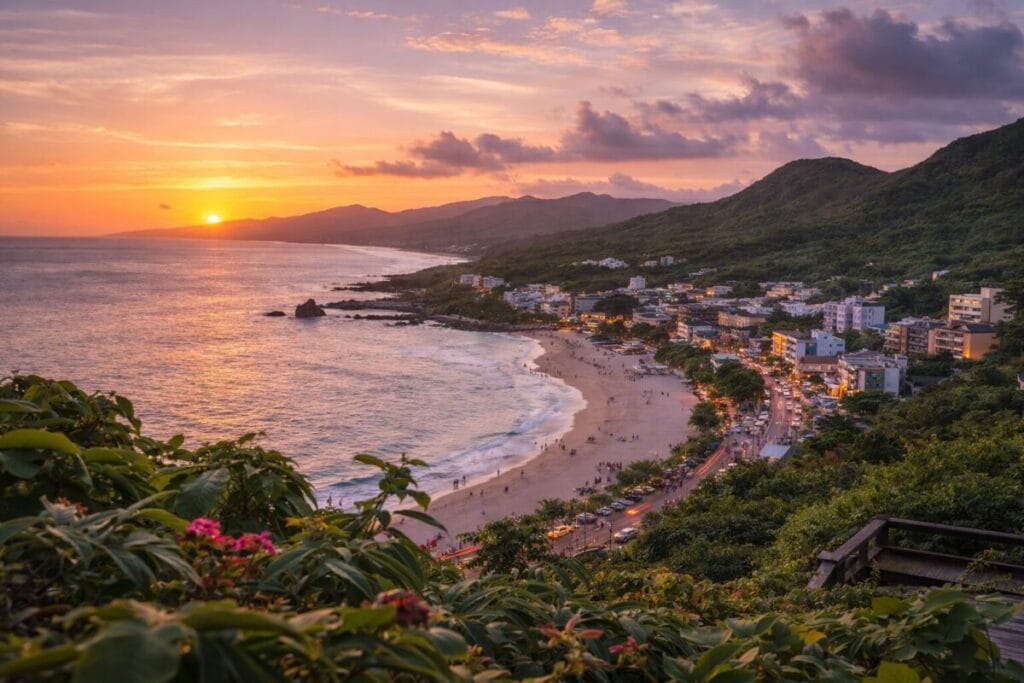
Kenting, one of Taiwan’s most iconic coastal destinations, is confronting its most significant tourism challenge in more than a decade as visitor numbers continue to drop for a second consecutive year. Located on the Hengchun Peninsula at Taiwan’s southern tip, Kenting has long been celebrated for its beaches, coral reefs, national parks and tropical scenery. Yet recent tourism data reflects a dramatic shift: only 2.139 million people visited the region in 2025, slightly down from 2.14 million in 2024 and dramatically lower than Kenting’s peak of over 8 million visitors in 2015. The decline has raised concerns among tourism stakeholders and prompted authorities to introduce new strategies aimed at revitalizing the region.
Local businesses have been among the most visibly impacted. Hotels, resorts, restaurants and recreational service providers that once thrived on a consistent flow of domestic and international tourists are now reporting lower occupancy and reduced revenue. Hotel performance has been especially strained, with only one Kenting property maintaining an average occupancy rate above 60 percent over the past year. Long-standing establishments have begun to shutter or reset their business models. Uni-Resort Kenting closed permanently after battling sustained losses, while Fullon Hotel Kenting, one of the area’s largest hospitality brands, has temporarily closed for extensive renovations intended to reposition the property for future market demand.
Changing Travel Patterns and Increasing Competition
Industry analysts point to a combination of factors behind Kenting’s downturn. Younger Taiwanese travelers are increasingly influenced by global travel culture and have shown a strong preference for overseas destinations such as Japan, South Korea and Southeast Asian island chains. Affordable airfare, improved travel infrastructure and social media-driven travel trends have made overseas trips more desirable for those seeking novelty or international experiences.
At the same time, online narratives have affected perceptions of Kenting’s appeal. Viral posts and commentary critiquing the region’s pricing, crowding or facilities have influenced domestic decision-making, even as many visitors continue to praise Kenting’s beaches, marine ecosystems and subtropical landscapes. The resulting shift has not only reduced visitor volume but also shortened the average length of stay for tourists who do choose to visit.
A New Tourism Strategy Based on Experiences, Sustainability and Longer Stays
To address the downturn and reposition Kenting for long-term success, authorities have introduced a comprehensive tourism transformation plan. The new approach moves away from the conventional “check-in tourism” model — in which visitors simply arrive, take photos and leave — and prioritizes immersive, educational and environmentally responsible travel experiences.
Infrastructure upgrades are a key element of the strategy. Improvements to park facilities, public spaces, transportation hubs, parking zones and service counters aim to streamline the visitor experience and reduce inconvenience. Enhanced visitor services, including multilingual support and intelligent tourism guides, are being incorporated to make Kenting more accessible to foreign travelers, especially as Taiwan works to boost inbound tourism from key markets in Northeast Asia, Southeast Asia and Europe.
Another major component involves promoting low-carbon and eco-friendly tourism along the west coast of the peninsula. With global travelers demonstrating growing interest in sustainability-focused itineraries, Taiwan is seeking to leverage Kenting’s natural assets — coral reefs, forests, wetlands and diverse wildlife — in a way that supports conservation and community-based tourism rather than mass consumption. Authorities hope that prioritizing environmental stewardship will encourage higher-value tourism and longer stays.
Reaffirming Kenting’s Long-Term Tourism Value
Despite current setbacks, tourism officials emphasize that Kenting’s natural landscape remains one of Taiwan’s strongest assets. From snorkeling and diving to forest trails and coastal drives, Kenting National Park continues to offer some of the country’s most biodiverse recreational spaces. The region’s tropical climate allows year-round travel, giving it an advantage over destinations limited to seasonal peaks.
The new strategy aims not only to restore visitor numbers but also to reshape how travelers engage with Kenting. By promoting guided marine tours, cultural activities, night markets, indigenous heritage experiences and educational excursions, authorities hope to deepen the emotional connection between Kenting and its visitors. In doing so, they aim to transition from volume-driven tourism to satisfaction-driven tourism, where return visits and longer stays create more stable economic benefits.
Taiwan’s Tourism Diversity Gains International Recognition
While Kenting works toward revitalization, other destinations across Taiwan are seeing renewed international attention. Taipei has continued to earn recognition for its blend of culinary culture, temples, museums, music venues and nature trails. Meanwhile, Orchid Island (Lanyu) has drawn global interest for its preserved cultural practices and Indigenous Tao (Yami) heritage. Its wooden canoe traditions, marine environment and remote island setting have been compared favorably with top coastal destinations across Asia and Oceania.
This broader rise in awareness demonstrates Taiwan’s expanding tourism identity. From metropolitan travel to remote island ecology, Taiwan is increasingly able to offer different styles of experiential travel, a trend that Kenting hopes to align with as it evolves.
Toward a Tourism Revival
Authorities, tourism operators and local communities now share a common goal: reestablishing Kenting as a premier coastal destination through innovation, sustainability and cultural depth. Encouraging meaningful engagement rather than fleeting visits may provide a pathway toward recovery. If successful, Kenting could not only regain its status among domestic travelers but also strengthen its appeal to a growing international audience seeking authentic, immersive and environmentally responsible travel experiences.
With upgraded infrastructure, reimagined branding and new tourism models emphasizing longer stays and experiential value, Kenting’s revival could mark an important milestone for Taiwan’s broader tourism transformation.
For more travel news like this, keep reading Global Travel Wire