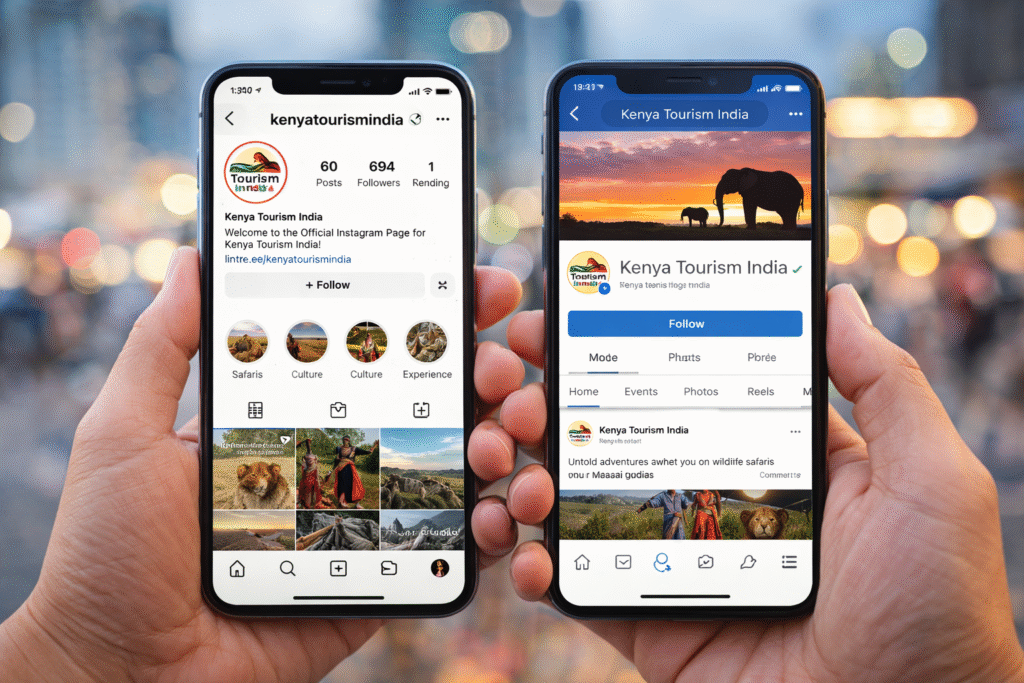
Kenya Tourism Board has unveiled a new set of India-centric digital platforms designed to strengthen its strategic engagement with one of its most important and fast-evolving source markets. By launching dedicated social media channels tailored specifically for Indian travel trade professionals, Kenya is reinforcing its long-term commitment to building deeper connectivity, clearer communication, and stronger commercial outcomes with the Indian tourism ecosystem.
The initiative reflects a growing recognition that India’s outbound travel market has matured significantly and now requires a more localized, responsive, and value-driven engagement model. Through platforms such as Instagram and Facebook, the tourism board aims to provide timely, relevant, and market-specific content that supports tour operators, travel agents, MICE planners, and media professionals across India.
A Digital Hub Designed for the Indian Travel Trade
Unlike generic destination marketing channels, the newly launched platforms are positioned as specialized digital resources for trade partners. Their core purpose is to function as a one-stop knowledge hub offering destination education, product updates, and practical selling tools tailored to Indian travelers’ preferences.
Content is being curated with a strong focus on usability. Travel professionals can expect access to ready-to-sell itineraries, experience-led storytelling, and product highlights that align with Indian consumer demand. These include insights into accommodation options, seasonal travel advantages, emerging regions, and themed journeys that go beyond standard safari offerings. By delivering content that can be directly integrated into travel planning and sales conversations, the platforms aim to shorten decision cycles and improve conversion quality.
In addition, the digital channels will be used to announce training programs, host webinars, and share updates on trade initiatives. This ensures that Indian partners remain consistently informed about new developments, policy updates, and opportunities within Kenya’s tourism sector.
India’s Market Evolution Shapes the Strategy
The decision to invest in India-focused digital engagement is strongly supported by recent market performance. Travel demand from India has shown steady growth, accompanied by a noticeable shift in traveler behavior. Rather than prioritizing short, budget-driven trips, Indian visitors are increasingly opting for longer stays, premium accommodations, and customized travel experiences.
This evolution signals a transition from volume-led tourism to value-driven travel. Indian travelers are now seeking private safaris, curated wildlife encounters, cultural immersion, and multi-destination itineraries that combine adventure with comfort. Honeymoon travel, luxury celebrations, and tailor-made family journeys are also gaining prominence.
The new digital platforms are designed to reflect this sophistication. Instead of broad messaging, the content strategy focuses on depth, personalization, and storytelling that resonates with an audience seeking meaningful and memorable travel experiences.
Expanding Kenya’s Image Beyond Safaris
While wildlife remains Kenya’s most iconic attraction, the tourism board is actively broadening the destination narrative for the Indian market. Through the dedicated digital channels, Kenya is being positioned as a diverse, multi-experiential destination that caters to a wide range of interests and travel motivations.
Alongside safaris, the platforms highlight Kenya’s cultural heritage, coastal retreats, island experiences, and wellness offerings rooted in nature. Soft adventure activities, scenic landscapes, and golf tourism are also being emphasized to showcase the country’s versatility. This expanded storytelling supports the idea that Kenya can appeal equally to adventure seekers, leisure travelers, wellness enthusiasts, and luxury holidaymakers.
Special attention is also being given to positioning Kenya as a destination for milestone celebrations and bespoke travel. From destination weddings to anniversary trips and exclusive group journeys, the messaging aligns closely with the experiential aspirations of modern Indian travelers.
Digital Engagement Supporting On-Ground Trade Relationships
Importantly, the launch of these India-centric platforms is not intended to replace traditional B2B engagement. Instead, it complements ongoing trade partnerships, roadshows, and face-to-face interactions. The digital channels serve as a continuous support system, ensuring that when Indian travel professionals engage with clients, they are equipped with up-to-date visuals, narratives, and product information.
This integrated approach strengthens confidence in selling Kenya and enhances the professionalism of trade engagement. By combining digital inspiration with informed selling, the tourism board aims to create a more cohesive and effective market presence.
Building Long-Term Value and Market Loyalty
Over time, these platforms are expected to foster a strong community of informed advocates for Kenyan tourism within India. As engagement grows, the channels will enable real-time communication, faster response to market trends, and greater adaptability to traveler feedback.
The long-term objective is not just increased arrivals, but sustainable growth built on quality experiences, longer stays, and higher economic impact. By maintaining a consistent and localized digital presence, Kenya ensures it remains top-of-mind for Indian travel planners and consumers alike.
This strategic move signals a forward-looking approach to destination marketing, one that acknowledges the importance of personalization, digital connectivity, and market-specific storytelling. As India continues to emerge as a powerhouse in global outbound travel, Kenya’s focused digital investment positions it strongly to capture future demand while strengthening bilateral tourism ties in a meaningful and sustainable way.
For more travel news like this, keep reading Global Travel Wire