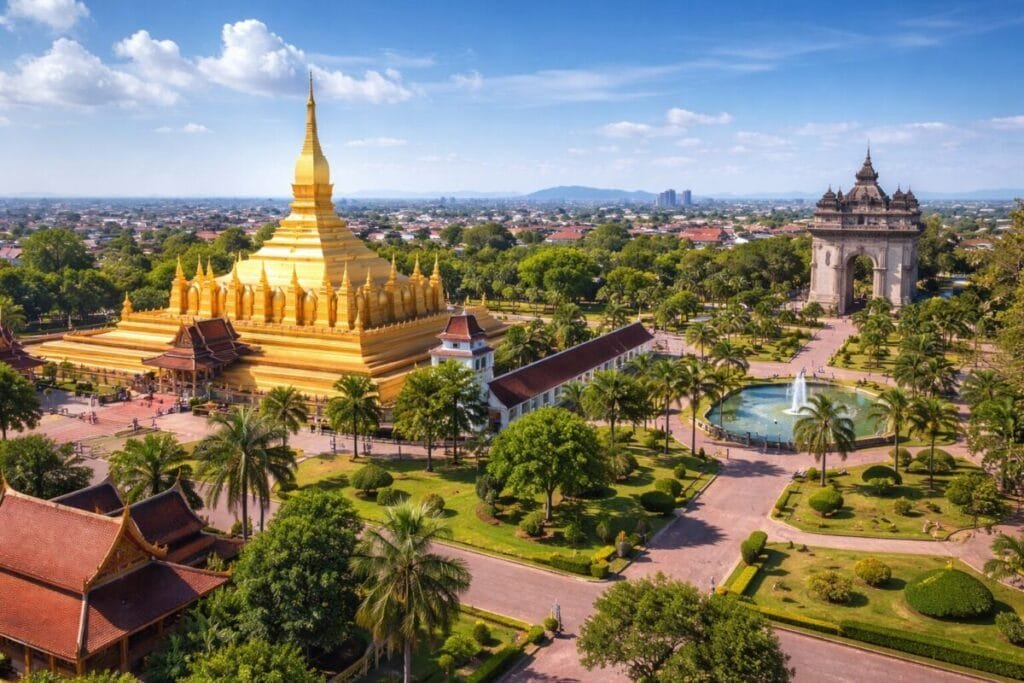
Laos celebrated a historic milestone in 2025 as Vientiane exceeded its annual tourism targets, welcoming more than 2.2 million visitors and generating over USD 621 million in revenue. The achievement outperformed projections — initially set at 2 million visitors and USD 600 million — marking the city’s strongest tourism performance to date and signaling a new chapter for Laos’ broader strategy to expand its presence as a competitive Southeast Asian destination.
The results also show substantial year-on-year development. In 2024, Vientiane recorded roughly 1.7 million visitors, contributing around USD 490 million in revenue. The leap to more than 2.2 million travelers in 2025 illustrates a notable rebound in global tourism interest and rising international awareness of Laos’ cultural heritage, infrastructure improvements, and hospitality offerings. For the country’s tourism authorities, the figures represent more than economic gains — they reflect the growing appeal of Laos as a cultural gateway in the region.
Cultural Landmarks Drive Visitor Engagement
Vientiane’s best-known cultural and historical landmarks played a crucial role in driving visitor interest. Tourism officials recorded more than 300,000 admissions across sites such as Patuxay, Pha Thatluang, Wat Sisaket, and Ho Phrakeo Museum in 2025, contributing approximately LAK 9 billion to the local economy. The city’s iconic monuments continue to attract both international travelers and regional tourists seeking authentic cultural experiences.
Pha Thatluang remains the most recognizable landmark in the city, serving as an important religious monument and symbol of national identity. Patuxay, widely compared to European triumphal arches, draws steady crowds seeking panoramic city views and historical insight. Meanwhile, the Ho Phrakeo Museum and Wat Sisaket offer visitors the opportunity to explore Laos’ artistic heritage, temple architecture, and Buddhist traditions. These attractions collectively strengthen Vientiane’s positioning on regional tourism circuits, with officials emphasizing culture as a central component of the city’s appeal.
Government Strategy Strengthens Tourism Foundations
The strong performance in Vientiane aligns with national tourism policies adopted by the Lao government aimed at enhancing infrastructure, improving service capacity, and streamlining transportation access. In recent years, improvements in road connectivity, airport facilities, and cross-border travel options have helped Laos attract a more diverse tourist demographic, including European leisure travelers, regional tour groups, and long-stay visitors.
The country’s tourism sector has also benefited from expanding hospitality offerings. New hotels, boutique accommodations, and guesthouses have opened throughout Vientiane and beyond, reflecting increased investor interest and growing confidence in the country’s tourism growth outlook. Local entrepreneurs have similarly played a role in the sector’s expansion, adding cafes, cultural markets, and tour services that help enhance visitor engagement.
National Tourism Outlook Shows Ambitious Growth Targets
The success achieved in 2025 forms part of a wider national growth trajectory. Laos welcomed nearly 4.6 million visitors across the country last year, reinforcing expectations that national tourism will continue accelerating over the next decade. The government has outlined bold goals for 2030, envisioning as many as 43 million tourist arrivals, including 22 million international visitors. Forecasts also project that the sector could generate as much as USD 13 billion in revenue — making tourism a key component of national economic development and diversification efforts.
Meeting these targets will require continued infrastructure expansion, increased workforce capacity, and enhanced international marketing. Tourism officials are expected to prioritize sustainable experiences, preserve heritage sites, and promote the country’s natural landscapes as part of a balanced development strategy. Industry analysts note that Laos is well positioned to benefit from regional demand for cultural tourism, slow travel, and nature-based excursions.
Diversifying Beyond the Capital
While Vientiane recorded record-breaking achievements, other travel hubs in Laos are preparing for similar growth. Luang Prabang, Vang Vieng, Champasak, and the Plain of Jars region are among the destinations slated for expanded tourism promotion. Luang Prabang, a UNESCO World Heritage city, continues to serve as an international travel magnet due to its well-preserved temples and colonial architecture. Vang Vieng’s combination of limestone mountains, river scenery, and adventure tourism has attracted young travelers, while Champasak and the Four Thousand Islands appeal to those seeking slower-paced travel and river-based exploration.
Authorities have also highlighted ecotourism, wellness tourism, and adventure travel as emerging areas of focus. Laos’ biodiversity, national parks, and protected forest regions are expected to play a significant role in attracting new visitor markets as global travel trends shift toward sustainability and nature-based experiences.
A Defining Year for Laos Tourism
The historic results achieved in Vientiane in 2025 confirm Laos’ growing momentum as a regional tourism competitor. By surpassing visitor and revenue projections while strengthening its cultural visibility, the city demonstrated the potential of Laos’ tourism sector to generate long-term economic benefits and global recognition. With ambitious targets set for 2030 and a clear strategy for sector development, Laos is poised to secure a stronger position within Southeast Asia’s tourism landscape.
For more travel news like this, keep reading Global Travel Wire