Manchester Airport has entered a defining chapter in its history, with 2025 marking a landmark year in its ambitious £1.3 billion transformation programme. Once known primarily as a busy regional gateway, the airport has now emerged as one of the UK’s most advanced and internationally connected aviation hubs, serving close to 32 million passengers in a single year and laying the groundwork for even greater growth.
The scale of the redevelopment reflects changing travel expectations, increased global demand, and the airport’s long-term vision to handle up to 40 million passengers annually by the end of the decade. From expanded terminals and premium retail to improved security processes and new long-haul routes, Manchester Airport’s evolution is reshaping how travellers experience air travel in the north of England.
Terminal 2 Takes Centre Stage
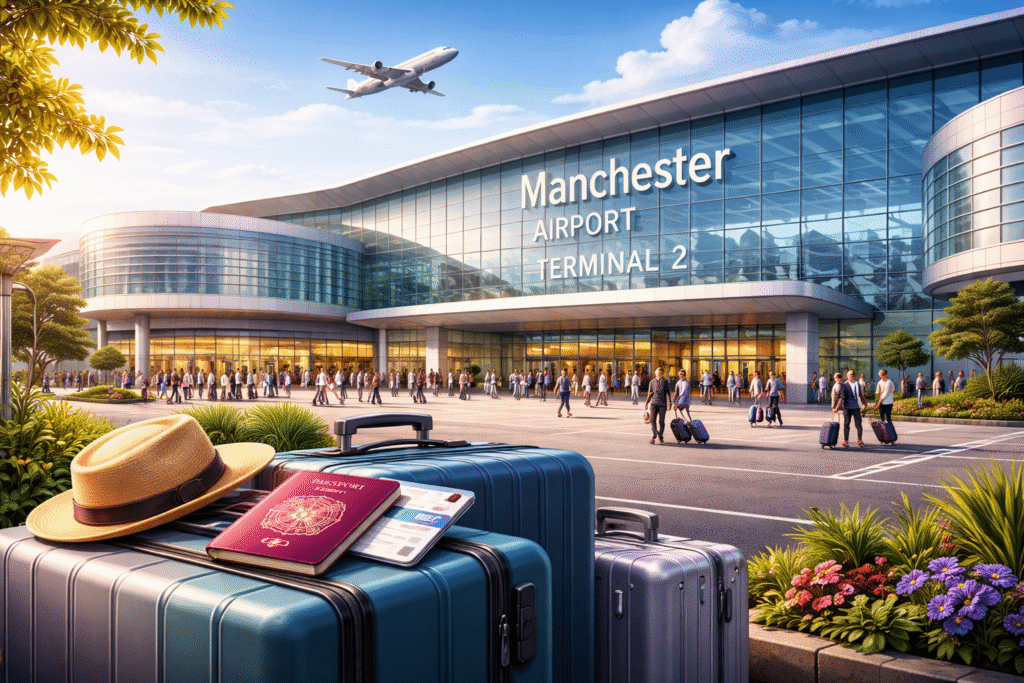
At the heart of the transformation is the expanded Terminal 2, which became fully operational during 2025 and now serves as the airport’s primary terminal. Designed with space, light and efficiency in mind, the new terminal offers a significantly improved passenger flow from check-in to boarding.
Travellers passing through Terminal 2 are greeted by a wide range of new retail and dining options that rival those found at major global hubs. High-street favourites sit alongside premium and luxury brands, giving passengers more choice whether they are seeking convenience, last-minute gifts or indulgent shopping experiences before departure.
New food and beverage offerings have also elevated the terminal atmosphere, with stylish cocktail bars, casual dining spots and relaxed seating areas designed to accommodate both leisure travellers and business passengers. The emphasis has been on creating a destination in its own right rather than simply a place to pass through.
Operational Shift Reshapes the Airport
As part of the wider redevelopment strategy, Terminal 1 ceased departure operations, a move that streamlined airport logistics and allowed airlines to consolidate operations more efficiently. The majority of flights now operate from Terminal 2, while Terminal 3 continues to handle selected carriers and short-haul services.
This operational shift has simplified wayfinding for passengers and created opportunities to modernise older infrastructure. Thousands of signs across the airport are being updated to reflect the new layout, ensuring clarity as the airport adapts to its new configuration.
Record Passenger Numbers Signal Confidence
Manchester Airport’s upgrades coincided with a surge in passenger traffic during 2025, with nearly 32 million travellers passing through its terminals. This milestone reflects both a strong recovery in global travel and growing confidence among airlines to invest in routes serving the region.
The airport’s expanding route network has strengthened its position as a northern gateway to the world. New and increased services to destinations across Europe, Asia and North America have improved connectivity for both leisure and business travellers, reducing the need to transit through London-based airports.
Long-haul growth has been a particular highlight, with enhanced links to major international cities supporting trade, tourism and cultural exchange while reinforcing Manchester’s role as a global city.
Looking Ahead to 2026 and Beyond
While 2025 marked a major achievement, the transformation is far from complete. Further enhancements planned for 2026 include the final stages of Terminal 2 development, additional luxury retail openings and the launch of new dining concepts, including a market-style food hall designed to showcase diverse cuisines.
Terminal 3 is also undergoing upgrades aimed at improving comfort and efficiency. New seating zones, refreshed interiors and the introduction of a large sports bar are expected to enhance the passenger experience, particularly for short-haul travellers.
Artwork installations celebrating the airport’s heritage will be introduced across public spaces, blending modern design with nods to Manchester Airport’s past and creating a stronger sense of place for travellers.
Technology and Security Improvements
Another notable development has been the installation of next-generation security scanners. These systems allow passengers to keep electronic devices inside their bags during screening, reducing congestion and speeding up the process. Although liquid restrictions remain in place for now, the technology positions the airport to adapt quickly should regulations change.
These advancements reflect a broader focus on efficiency and passenger wellbeing, particularly during peak travel periods when smooth operations are critical.
A New Benchmark for UK Airports
Manchester Airport’s transformation is about more than physical expansion. It represents a strategic shift toward becoming a world-class airport that balances capacity, comfort and connectivity. The investment has boosted regional economic growth, supported thousands of jobs and strengthened the UK’s aviation network outside the capital.
As the airport moves into 2026, its focus remains firmly on delivering a seamless, modern travel experience while preparing for continued growth. With new routes on the horizon, enhanced facilities nearing completion and passenger numbers climbing steadily, Manchester Airport is setting a new benchmark for how UK airports evolve in a rapidly changing travel landscape.
For millions of travellers each year, the journey now begins not just with a flight, but with an airport experience designed for the future.
For more travel news like this, keep reading Global Travel Wire