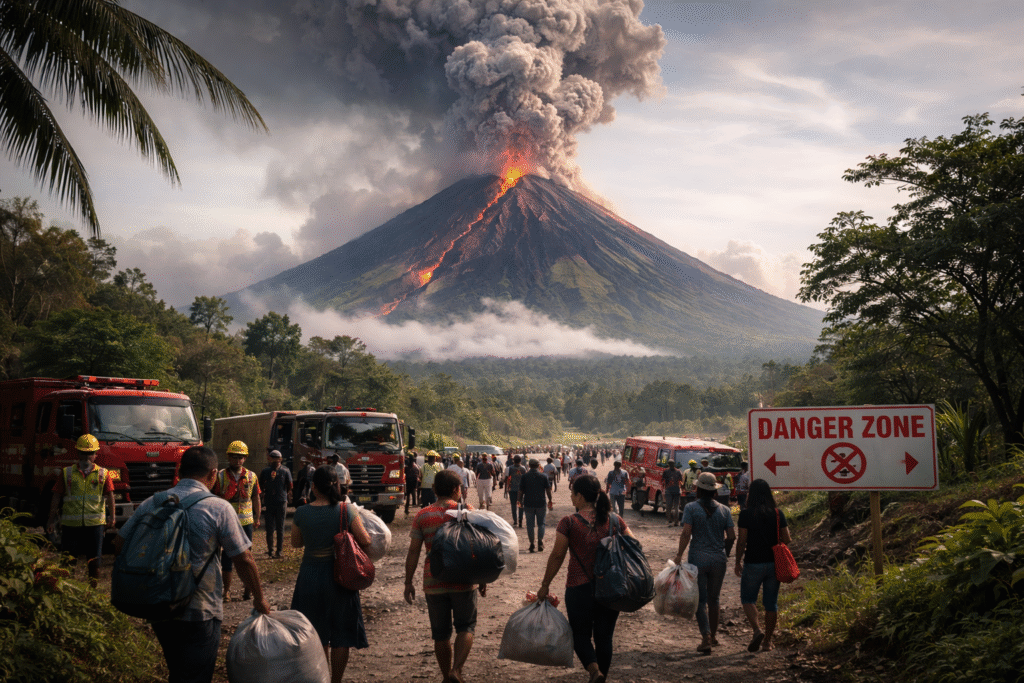
Mayon Volcano has once again surged to international attention as intensified eruptions prompted mass evacuations and new travel advisories. The iconic volcano, located in the province of Albay, began releasing hotter and more frequent pyroclastic material in early January 2026. The Philippine government raised the alert status to Level 3 as a precaution due to escalating hazards.
The latest volcanic activity has forced the relocation of nearly 3,000 people living around Mayon’s base. Authorities emphasized that the move seeks to prevent casualties as the volcano continues to release lava, gas, and intermittent rockfalls. Many of the displaced families have been temporarily moved to shelters and evacuation centers away from the declared danger zone.
Evacuation and Danger Zones Expanded
Officials established a six-kilometer radius around the volcano as a permanent danger zone. This area includes farmlands and small communities that have historically remained close to Mayon despite repeated warnings. The increase in volcanic activity prompted faster responses from disaster agencies, which coordinated evacuation routes, transportation, and emergency provisioning.
More than 600 additional residents living outside the immediate zone opted to leave voluntarily. Many believed it was safer to seek refuge early rather than risk being isolated by ashfall or lava flows. Local disaster units have kept supply lines open for food and medical support, ensuring evacuees can remain in shelters for extended periods if needed.
Impact on Tourism and Travel Behavior
The Philippines has long promoted Mayon as a major tourist attraction due to its near-perfect cone shape and dramatic landscape. Hiking tours, sightseeing platforms, and heritage parks make the volcano a popular draw for both domestic and international travelers.
However, current alerts have prompted the Department of Tourism to issue advisories urging visitors to avoid areas near the danger zone. Travellers are encouraged to monitor official updates and adjust itineraries to prevent exposure to volcanic hazards. The alert encourages visitors to delay activities such as hiking, drone photography, and sightseeing in areas surrounding the crater until volcanic activity stabilizes.
Inbound tourism to Albay may experience delays as tour operators adjust schedules and reroute bookings. Hotel accommodations outside the affected areas remain open, although some providers have temporarily suspended volcano-related excursions for safety reasons. Authorities have emphasized that tourists remain welcome in the country, provided they stay informed and avoid restricted areas.
Historical Perspective on Mayon’s Eruptions
Mayon is classified as the most active volcano in the Philippines. Geological records show over 50 eruptions since the early 17th century. The most devastating occurred in 1814, when suffocating mudflows buried several communities and caused more than a thousand deaths. Remnants of the historic Cagsawa church tower still stand today as a cultural monument and tourism site.
While the current eruption has not yet reached explosive levels, volcanic experts warn that behavior can shift rapidly. Mayon is part of the Pacific Ring of Fire, a vast region where tectonic movements increase the likelihood of earthquakes and volcanic eruptions. Because of this, local authorities maintain a permanent alert system and hazard maps for villages built around volcanoes.
Safety Tips for Tourists in the Philippines
Travelers heading to the Philippines in 2026 still have a wide range of safe destinations to explore. Beaches and cultural attractions in regions such as Cebu, Boracay, and Palawan remain unaffected. Major cities, including Manila, continue to operate normally, and transport hubs remain open.
Tourism officials recommend that travelers observe the following precautions while Mayon remains under Alert Level 3:
- Avoid all areas within the six-kilometer danger zone
- Check government advisories before planning outdoor trips
- Wear masks if exposed to light ashfall
- Keep travel insurance updated for natural hazards
- Follow local community instructions and evacuation protocols
These measures help ensure that tourists can continue to experience the country’s landscapes without unnecessary risk.
Government Efforts and Ongoing Monitoring
Multiple agencies, including the disaster management authority and volcanology institute, continue to monitor seismic patterns, gas emissions, and lava swelling at the crater. Real-time observation systems have been deployed to track changes that might indicate a more explosive eruption.
The tourism department is working closely with local governments to balance safety protocols with sustainable tourism flow. Updated bulletins are being disseminated to tour agencies, airlines, hotels, and transport operators to ensure consistent communication.
Conclusion: Staying Alert and Informed
The eruption of Mayon Volcano has become a stark reminder of the dynamic natural forces shaping the Philippines. While travel to the region remains possible, tourists are urged to remain cautious, informed, and respectful of all government guidance. With appropriate planning, visitors can continue to enjoy the country’s culture, hospitality, and natural beauty without compromising safety.
For more travel news like this, keep reading Global Travel Wire