







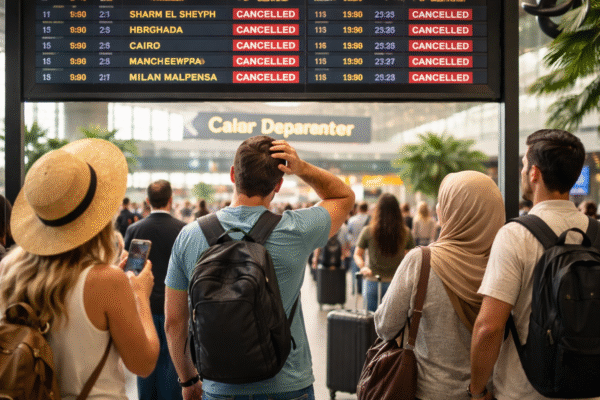







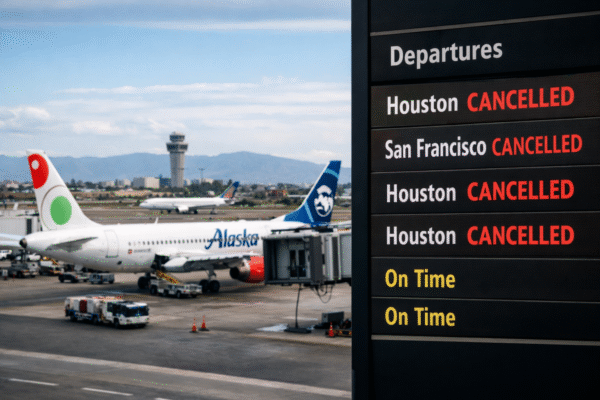
Air travel between Mexico and the United States faced renewed disruption on Wednesday as three key flights from Guadalajara and Cancun were cancelled. The affected services connected two of Mexico’s busiest airports with major U.S. hubs, Houston and San Francisco.
The cancellations involved Viva Aerobus, Alaska Airlines, and United Airlines. Together, they affected hundreds of passengers during an already busy travel window. These events highlight the ongoing operational strain on cross-border air travel, especially at high-traffic tourist and business gateways.
Guadalajara Airport Sees Houston Route Cancelled
Don Miguel Hidalgo y Costilla International Airport in Guadalajara recorded one major cancellation early in the day. Viva Aerobus flight VIV500, scheduled for departure to Houston, did not operate as planned.
The flight was set to leave at 6:20 AM local time using an Airbus A320 aircraft. Many passengers had planned onward connections in Texas or beyond. The cancellation forced travelers to seek same-day alternatives or adjust their itineraries entirely.
Guadalajara remains a critical gateway for western Mexico. It supports strong business, family, and tourism traffic to the United States. Even a single cancellation can trigger crowding at service desks and rebooking counters during morning peak hours.
Cancun Experiences Two U.S.-Bound Cancellations
Cancun International Airport faced greater disruption with two U.S.-bound flights cancelled on the same day. The airport handles one of the highest volumes of international passengers in Latin America, especially tourists returning to the United States.
The first cancellation involved an Alaska Airlines flight to San Francisco. The service was scheduled to depart in the evening but did not operate. Passengers bound for California faced limited same-day alternatives due to long flight times and high demand.
Earlier in the day, a United Airlines flight from Cancun to Houston was also cancelled. That route serves both leisure travelers and business passengers connecting through Texas hubs. The timing added pressure, as many travelers aimed to reach Houston before evening connections.
Summary of Affected Flights
Three flights were cancelled in total across two airports. All were international routes connecting Mexico with the United States.
- Guadalajara to Houston: Viva Aerobus morning departure
- Cancun to San Francisco: Alaska Airlines evening departure
- Cancun to Houston: United Airlines late-morning departure
The affected destinations included two major U.S. gateways that handle extensive domestic and international connections.
Impact on Passengers and Travel Plans
The cancellations caused immediate inconvenience for passengers with tight schedules. Many travelers faced missed meetings, lost hotel nights, or disrupted vacation plans. Families and group travelers experienced longer rebooking times due to limited seat availability.
Houston and San Francisco both function as major transit hubs. When flights into these cities are cancelled, the effects spread across multiple onward routes. Travelers heading to secondary U.S. cities felt the impact most sharply.
For leisure travelers departing Cancun, the cancellations added stress at the end of holidays. For business travelers leaving Guadalajara, the disruption affected weekday schedules and professional commitments.
Why Flight Cancellations Remain a Challenge
Mexico’s leading international airports operate near capacity during peak seasons. Cancun, in particular, sees heavy demand from North America year-round. Guadalajara also supports growing international traffic driven by manufacturing and technology sectors.
Several factors often contribute to cancellations. These include aircraft availability, crew scheduling limits, technical inspections, and air traffic congestion. Weather in departure or arrival cities can also disrupt tightly planned operations.
Cross-border flights face additional complexity. Airlines must align regulatory requirements, crew duty limits, and airport slot availability on both sides of the border.
Airline Response and Passenger Support
Airlines typically respond to cancellations with rebooking options and customer support. Most affected passengers were advised to contact airline service desks or mobile apps for updates.
Common remedies include placement on the next available flight, alternate routing through other hubs, or refunds for unused segments. Some passengers may also qualify for meal vouchers or hotel assistance, depending on fare rules and timing.
Clear communication plays a key role during disruptions. Airlines increasingly rely on digital alerts to update travelers in real time and reduce congestion at airport counters.
What Travelers Can Do to Stay Prepared
Travelers flying between Mexico and the United States can reduce disruption by planning ahead. Checking flight status before leaving for the airport remains essential. Flexible tickets and travel insurance also provide added protection.
Morning flights often offer better rebooking options if issues arise. Travelers with important connections may consider longer layovers or alternative hubs during busy seasons.
Keeping airline apps installed and notifications enabled helps passengers respond faster when schedules change.
Outlook for Mexico–U.S. Air Travel
Despite these cancellations, demand for travel between Mexico and the United States remains strong. Airlines continue to expand routes and frequencies, especially from leisure-focused airports like Cancun.
However, the latest disruptions show that operational resilience remains a work in progress. Airports and carriers are investing in staffing, infrastructure, and technology to reduce cancellations and improve reliability.
As peak travel periods continue, passengers should expect occasional disruptions. Staying informed and flexible remains the best strategy when flying from Mexico’s busiest airports to major U.S. destinations.
For more travel news like this, keep reading Global Travel Wire