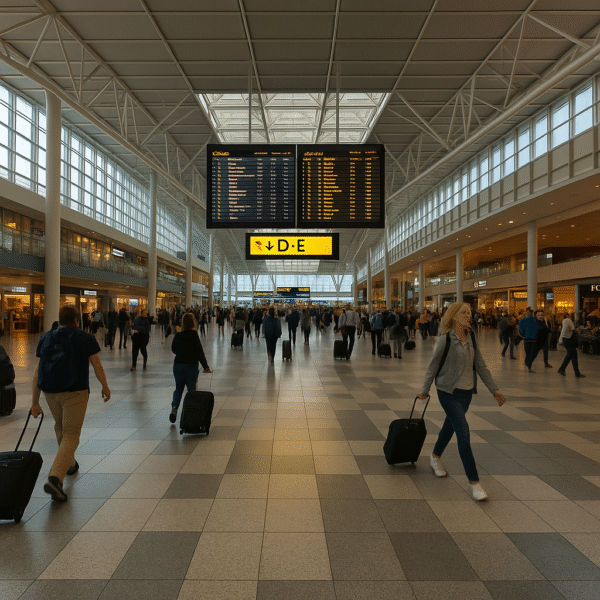
North America’s airports may be busier than ever, but passenger satisfaction is rising sharply thanks to upgraded amenities, better dining options, and improved terminal experiences. The latest 2025 North America Airport Satisfaction Study reveals major progress across multiple airport categories, with Minneapolis-Saint Paul International Airport, John Wayne Airport, and Indianapolis International Airport emerging as standout performers.
Despite ongoing challenges—including swelling passenger volumes, periods of congestion, and tighter security protocols—travelers are reporting improved comfort and overall satisfaction. Enhanced food, beverage, and retail offerings are key contributors, along with redesigned spaces that make navigation easier and more efficient for millions of flyers each year.
Minneapolis-Saint Paul International Tops Mega Airports
Minneapolis-Saint Paul International Airport (MSP) continues to dominate the mega airport category, which represents the continent’s busiest hubs serving more than 33 million passengers annually. MSP scored 660 out of 1,000, placing it firmly at the top of its category for 2025.
Travelers praise MSP for its:
- Well-designed terminals
- Efficient wayfinding
- Friendly and helpful staff
- Exceptional dining options focused on local flavors
The airport’s investments in showcasing regional food and beverage vendors have created a memorable and authentic travel experience. By prioritizing strong customer service and streamlined operations, MSP maintains a reputation as one of the most traveler-friendly mega airports in North America.
John Wayne and Indianapolis Shine in Smaller Airport Categories
In the large airport category—handling between 10 and 32.9 million passengers annually—John Wayne Airport (SNA) in Orange County takes first place with a score of 730. Known for its convenient layout, clean facilities, and modernized infrastructure, John Wayne has consistently improved its passenger experience. Long-term upgrades and a focus on comfort have made it a preferred choice for travelers flying into Southern California.
Meanwhile, Indianapolis International Airport (IND) retains its position as the top-ranking medium airport, scoring 713. Serving between 4.5 and 9.9 million passengers per year, IND is recognized for its efficient security processes, easy terminal flow, and thoughtfully designed amenities. Its strong retail mix, upgraded dining options, and welcoming environment continue to set it apart from airports of similar size.
Both airports demonstrate how mid-sized aviation hubs can excel by focusing on operational efficiency and customer-centric design.
Airport Upgrades Drive Higher Satisfaction Scores
Across North America, airports investing in quality food, retail, and upgraded terminals are seeing the greatest jumps in satisfaction. According to the study, travelers who rate dining and shopping options highly are significantly more likely to report a positive airport experience.
Airports embracing local cuisine, regional brands, and immersive retail concepts recorded an average increase of 190 points in satisfaction. This reflects a broader industry shift toward making airports destinations in their own right, rather than simply transit points.
Additionally, improved ease of travel—particularly in check-in, security, and transfers—continues to play a crucial role. Enhanced signage, expanded security lanes, and redesigned checkpoints have helped reduce stress at several major hubs.
Some Major Airports Still Face Operational Challenges
Despite overall progress, not all airports experienced positive outcomes. Several large hubs continue to struggle with congestion, construction disruptions, and outdated infrastructure.
- Newark Liberty International Airport (EWR) remains at the bottom of the mega airport rankings with a score of 565, although it did post a modest improvement compared to 2024. Ongoing construction, including a Terminal B overhaul and inter-terminal train restoration, is expected to eventually improve the traveler experience.
- O’Hare International Airport (ORD) and Seattle-Tacoma International Airport (SEA) also scored low due to crowding, long lines, and infrastructure strain.
These airports are undergoing major multi-year improvement programs, and analysts predict that significant progress will be visible in future ranking cycles as upgrades are completed.
Rising Importance of Trust and Comfort in Traveler Satisfaction
The 2025 study highlights a new trend: traveler trust has become a major determinant of satisfaction. With higher passenger volumes and evolving security measures, travelers increasingly value transparency, predictability, and friendly service.
Airports that build trust through:
- Clear communication
- Knowledgeable staff
- Efficient operations
- Consistent service quality
are seeing substantial improvements in rankings. This shift reflects a broader expectation among travelers for airports to act not just as logistical hubs, but as service-centered environments.
A Positive Future for North American Airport Experiences
The 2025 airport satisfaction results offer an optimistic outlook for travelers. Many North American airports are embracing substantial renovations, technological upgrades, and customer-focused strategies that promise even smoother journeys in the years ahead.
Airports prioritizing:
- Local food culture
- Modernized retail
- Streamlined passenger flows
- Enhanced comfort spaces
- Better communication
are already seeing measurable boosts in satisfaction.
Travelers can expect ongoing improvements, from updated terminals to faster processing systems, positioning North American airports for a more competitive and traveler-friendly future.
As Minneapolis, John Wayne, and Indianapolis continue to lead the way, the entire region is moving toward a more efficient, enjoyable, and customer-focused travel experience for millions across the continent.
For more travel news like this, keep reading Global Travel Wire