Nepal’s tourism sector is once again at the center of a national policy debate as the Hotel Association Pokhara intensifies its call for tourism to be granted equal status with the industrial sector. The appeal highlights growing frustration within the hospitality industry over delayed reforms, unmet budget promises, and the mounting pressures facing one of the country’s most vital economic pillars.
Tourism has long been a backbone of Nepal’s economy, generating employment, supporting small businesses, and attracting international visibility. Yet industry leaders argue that despite its importance, tourism continues to be treated as a secondary sector in policy formulation, financing, and long-term planning. The Hotel Association Pokhara believes that aligning tourism with industry in legal and policy frameworks is critical for recovery and sustained growth.
A Renewed Call for Policy Parity
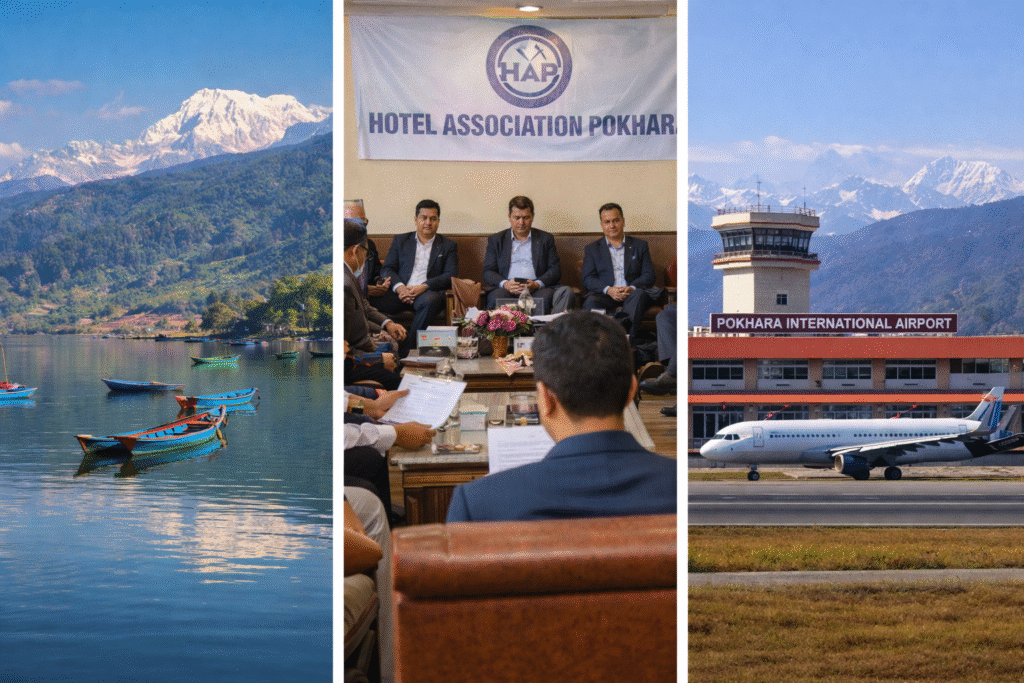
The association recently submitted a memorandum to the Ministry of Culture, Tourism, and Civil Aviation, urging the government to honor its commitment from the current fiscal year’s budget to treat tourism and industry equally. According to hotel operators, that announcement raised expectations across the sector, but tangible progress has remained limited.
Granting tourism equal status would allow hospitality businesses to access similar incentives, financial relief mechanisms, and institutional support enjoyed by industrial enterprises. Stakeholders argue that this parity is essential, especially as tourism faces unique vulnerabilities such as political instability, global travel disruptions, and seasonal fluctuations.
Pokhara, one of Nepal’s most prominent tourism hubs, has felt these pressures acutely. Known for its lakeside charm, adventure tourism, and proximity to the Annapurna region, the city relies heavily on steady tourist inflows. Any policy imbalance, hoteliers warn, directly affects livelihoods across the region.
Air Connectivity Seen as a Game Changer
One of the association’s most urgent demands is the expansion of air connectivity, particularly through Pokhara International Airport. Despite the airport’s strategic importance, regular international flight operations remain limited. Hoteliers believe this has constrained Pokhara’s potential to attract tourists from nearby markets.
The association has strongly advocated for direct international flights linking Pokhara with major cities in neighboring countries such as India and China. These markets are seen as critical for short-haul tourism growth, offering opportunities for weekend travelers, pilgrimage tourism, and cross-border cultural exchange.
Improved air links would significantly reduce travel time and costs, making Pokhara more competitive with other regional destinations. Industry leaders also emphasize the importance of expanding domestic air routes to connect provincial cities, border regions, and emerging tourism destinations within Nepal. Strengthening domestic connectivity would not only disperse tourist traffic more evenly but also stimulate local economies beyond established hotspots.
Addressing the Impact of Recent Disruptions
The memorandum also draws attention to the economic fallout faced by the hospitality sector due to recent political unrest and youth-led movements that disrupted normal travel patterns. Protests, cancellations, and uncertainty resulted in a sharp decline in bookings, particularly during peak travel periods.
Hotels, restaurants, and tour operators in Pokhara reported significant revenue losses, with many businesses struggling to meet operational costs. The association has urged the government to recognize these losses and provide compensation or relief measures to affected businesses, similar to support extended to other sectors during times of crisis.
Such measures, hoteliers argue, would not only help businesses recover but also restore confidence among investors and tourism entrepreneurs who play a crucial role in sustaining Nepal’s travel ecosystem.
Government Response and Ongoing Dialogue
In response to the memorandum, government representatives have acknowledged the concerns raised by the Hotel Association Pokhara. Officials reiterated their commitment to improving policy alignment between tourism and industry and confirmed that discussions are underway regarding international flight operations from Pokhara.
The government’s engagement with provincial authorities, tourism boards, and private-sector stakeholders has been welcomed as a positive step. Representatives from Gandaki Province and tourism-related institutions were present during discussions, signaling a growing recognition of the need for collaborative solutions.
However, industry leaders stress that dialogue must translate into timely action. With regional competition intensifying and traveler expectations evolving, delays in policy implementation could cost Nepal valuable opportunities in the global tourism market.
Tourism’s Strategic Role in Nepal’s Economy
Tourism in Nepal extends far beyond leisure travel. It supports employment in hospitality, transport, handicrafts, agriculture, and adventure services, particularly in rural and mountainous regions. Elevating tourism to equal status with industry would send a strong signal that the sector is central to national development, not merely a supplementary contributor.
Countries across Asia have increasingly positioned tourism as a strategic industry, integrating it with infrastructure development, aviation policy, and investment promotion. Nepal’s tourism stakeholders believe similar recognition is essential if the country is to fully leverage its natural beauty, cultural heritage, and adventure offerings.
Looking Ahead: A Critical Moment for Reform
The Hotel Association Pokhara remains optimistic that sustained advocacy and government engagement will lead to meaningful reforms. While recent years have tested the resilience of Nepal’s tourism sector, industry leaders believe that with supportive policies, improved connectivity, and targeted financial measures, tourism can rebound stronger than before.
Elevating tourism to equal status with industry is seen not merely as a symbolic move, but as a practical necessity. It would empower businesses, attract investment, and enhance Nepal’s competitiveness as a travel destination.
As policymakers weigh their next steps, the decisions made in the coming months could shape the future of Nepal’s tourism industry for decades. With the right alignment between policy and potential, Nepal stands poised to transform tourism into a powerful engine of inclusive economic growth and international engagement.
For more travel news like this, keep reading Global Travel Wire