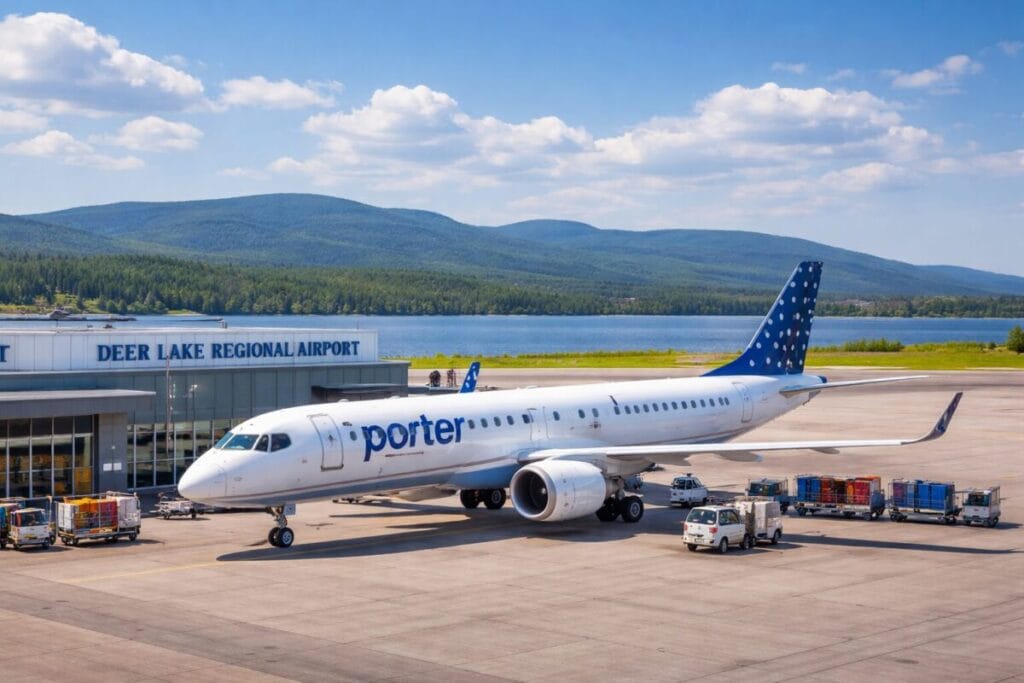
Porter Airlines is strengthening its presence at Deer Lake Regional Airport, introducing new routes, increasing flight frequency, and supporting major infrastructure growth. The expansion positions Western Newfoundland and Labrador as an emerging travel hub in Atlantic Canada. The move promises improved connectivity for residents while opening easier access for domestic and international visitors seeking nature, culture, and adventure.
New Ottawa–Deer Lake Route Enhances Direct Access
A new Ottawa–Deer Lake route is scheduled to launch in June, operating five days a week using Porter’s Embraer E195-E2 jet aircraft. The service marks the first direct link between Canada’s federal capital and Western Newfoundland.
For years, travellers from Ottawa faced long travel times and multiple connections to reach the region. The direct service removes a major barrier by eliminating the need to transfer through Toronto. Shorter journey times could attract more weekend travellers and outdoor enthusiasts.
Western Newfoundland offers diverse tourism experiences. Visitors explore dramatic coastlines, UNESCO-listed Gros Morne National Park, Viking history at L’Anse aux Meadows, and scenic fjords shaped by ancient glaciers. Improved access is expected to drive higher visitor numbers during peak travel seasons.
Toronto Flights Increase to Meet Rising Demand
Porter Airlines is also expanding its Toronto Pearson–Deer Lake service. Beginning in summer 2026, the airline will increase operations from three weekly round trips to five flights per week.
The frequency boost reflects growing passenger demand for direct travel between Ontario and Newfoundland’s west coast. Increased capacity gives travellers more flexibility with travel dates and improves options for business and leisure travel.
Tourism stakeholders anticipate that more frequent flights from Toronto will attract first-time visitors who previously considered the destination difficult to reach. The added availability also helps support seasonal tourism events, adventure travel, and cruise-related excursions.
Halifax Service Returns With Expanded Schedule
The airline’s Halifax–Deer Lake route will resume operations on March 2, 2026. Initially, flights will run three times per week before expanding to daily service during April and May.
This regional connection plays a critical role in linking Atlantic Canada’s travel network. Operated using the De Havilland Dash 8-400 turboprop aircraft, the route offers convenient connections for travellers moving between Newfoundland, Nova Scotia, and other destinations served by Porter.
The success of earlier Halifax flights demonstrated strong regional demand. The returning service strengthens travel options for both residents and visitors while supporting tourism flows across Atlantic provinces.
Airport Expansion Plans Signal Long-Term Growth
Porter Airlines’ growth aligns with major infrastructure plans at Deer Lake Regional Airport. Airport authorities have announced a significant terminal expansion project valued at approximately $60 million.
The development will increase terminal space by more than 2,000 square metres. Planned upgrades include expanded passenger hold areas, additional check-in counters, improved baggage handling facilities, and enhanced pre-board security screening.
Construction is expected to begin in spring 2027. Funding will come from federal aviation programs along with passenger facility charges. Once complete, the upgraded terminal will improve passenger comfort, increase efficiency, and prepare the airport for higher traffic volumes.
Strategic Importance for Atlantic Canada Aviation
Deer Lake Regional Airport ranks among the busiest airports in Newfoundland and Labrador. It plays a key role in supporting regional connectivity and economic activity.
Expanded airline services can strengthen local economies by increasing visitor spending, supporting hospitality businesses, and creating employment opportunities. Tourism operators expect improved flight access to boost bookings for guided tours, hiking adventures, cultural experiences, and outdoor recreation.
Porter Airlines’ broader strategy focuses on building a strong Atlantic Canada network. By connecting Deer Lake with major cities such as Ottawa, Toronto, and Halifax, the airline aims to create seamless travel itineraries within a single network.
Western Newfoundland Moves Into the Spotlight
Western Newfoundland has long offered spectacular landscapes yet remained relatively under-visited compared to other Canadian destinations. Limited air access often discouraged travellers who wanted shorter or more convenient journeys.
The new routes and expanded schedules change that narrative. Easier access allows travellers to plan shorter trips while maintaining flexibility in arrival and departure times. The region’s combination of rugged wilderness, cultural heritage, and coastal scenery positions it as an appealing alternative to more crowded destinations.
Outdoor tourism continues to grow across Canada. Western Newfoundland stands to benefit from this trend as travellers seek national parks, hiking trails, wildlife experiences, and authentic local communities.
Improved Travel Experience for Residents and Visitors
Local residents will also benefit from expanded flight options. Increased connectivity improves access to major Canadian cities for business, education, healthcare, and family travel.
For visitors, the simplified journey reduces logistical challenges. Travellers can now consider spontaneous weekend escapes or extended exploration without lengthy transfers. This convenience could encourage repeat visits and longer stays.
Outlook for Tourism Growth
The combination of airline investment and airport infrastructure development signals strong confidence in Western Newfoundland’s tourism future. With more flights, modern aircraft, and improved facilities, the region is becoming easier to reach than ever before.
As travel demand continues to evolve, Deer Lake Regional Airport appears poised to play a larger role in Atlantic Canada’s aviation landscape. The expanded network not only strengthens regional connectivity but also positions Western Newfoundland as a must-visit destination for travellers seeking natural beauty and cultural heritage.
For more travel news like this, keep reading Global Travel Wire