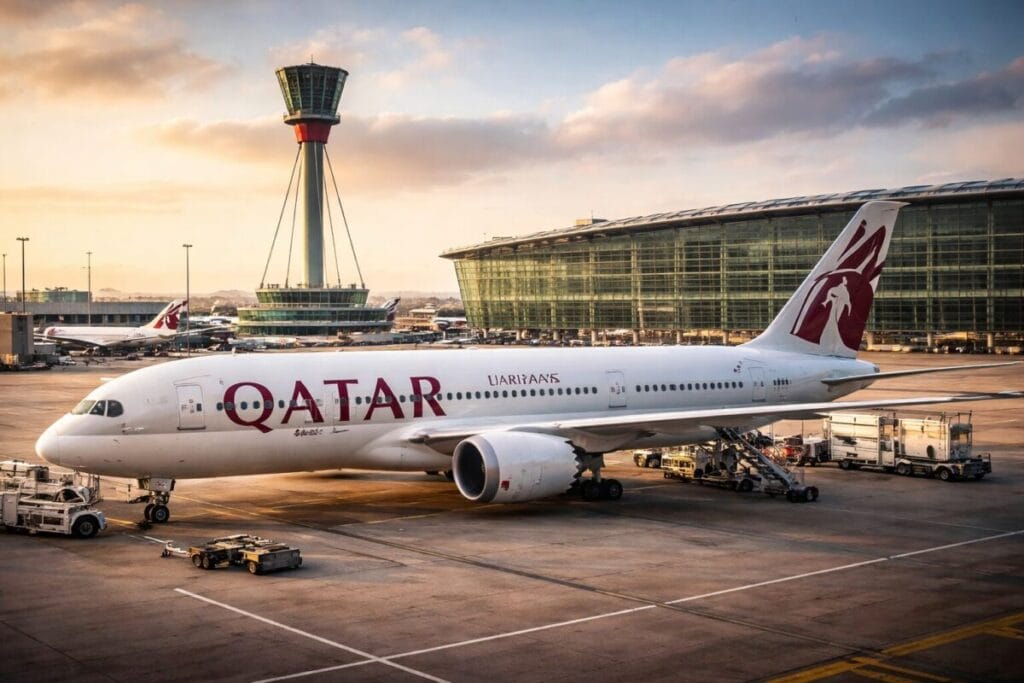
Qatar Airways has announced significant adjustments to its Spring 2026 flight schedule, reducing more than 100 flights on routes connecting London Heathrow and London Gatwick with Doha. The changes will affect travel between April and June 2026, a period that usually sees steady demand from both business and leisure passengers.
The airline aims to reshape its operations during the busy spring season. While services will continue, travelers may notice fewer departure options and tighter seat availability on certain dates.
Major Drop in Weekly Flights from London Airports
The revised schedule shows a notable decrease in weekly departures from London to Doha. The total number of outbound flights from Heathrow and Gatwick will fall from 951 to 818 during the spring schedule window. This reduction highlights a strategic shift in capacity management rather than a complete route suspension.
One of the most visible changes will occur during early May 2026. For the week starting May 1, the airline plans to operate only 59 flights compared with 70 flights during the same period the previous year. Gatwick will see the sharpest drop, with scheduled flights reduced from double daily services to roughly half that number.
Heathrow will remain the primary hub for Qatar Airways operations in London. However, even Heathrow flights may experience adjusted departure times or aircraft changes as the airline streamlines its operations.
Why Airlines Adjust Seasonal Flight Schedules
Airlines frequently modify schedules to balance demand, operational efficiency, and cost control. Seasonal travel patterns play a key role in determining how many flights operate on each route. Spring often sits between the high winter holiday season and the busy summer peak, making it a period when airlines reassess capacity.
Several factors may influence such changes:
- Aircraft availability and maintenance schedules
- Staffing levels and operational efficiency goals
- Fuel costs and financial performance targets
- Airport slot management and congestion
- Evolving passenger demand trends
Airlines must also consider long-haul connectivity through major hubs. Doha serves as a central transit point for travelers heading to Asia, Africa, Australia, and the Middle East. Adjusting London flights may help align arrival and departure waves at Hamad International Airport, improving network efficiency.
Impact on Travelers and Booking Strategies
Passengers planning to travel between London and Doha during Spring 2026 may face fewer departure choices. Reduced flight frequency can lead to increased competition for seats, especially during weekends or peak travel dates.
Travelers should expect:
- Limited flexibility in choosing departure times
- Higher demand on remaining flights
- Possible schedule adjustments after booking
Business travelers who rely on frequent daily departures may need to plan earlier or adjust meeting schedules. Leisure travelers should consider booking in advance to secure preferred travel dates.
Despite the reductions, Qatar Airways continues to offer daily connectivity between London and Doha. The airline has indicated that affected passengers receive notifications and alternative travel options, including rebooking on other flights within the network.
London’s Role in Qatar Airways’ Global Network
London remains one of the airline’s most important European markets. Heathrow, in particular, functions as a premium long-haul gateway with strong demand from corporate travelers. The presence of multiple daily services has historically allowed flexible connections to destinations across Asia and Oceania.
Reducing flights does not signal a withdrawal from the UK market. Instead, it suggests a temporary recalibration aimed at maintaining profitability while preserving key routes. Airlines often use seasonal schedule adjustments to test demand patterns and optimize aircraft utilization.
Broader Trends in Airline Capacity Management
The aviation industry continues to evolve as airlines adapt to shifting travel habits. Post-pandemic recovery brought fluctuating demand patterns, with some markets rebounding faster than others. Premium leisure travel has grown, while corporate travel recovery remains uneven in some regions.
Many airlines now prioritize efficiency over sheer volume. Rather than maintaining high-frequency schedules year-round, carriers deploy capacity where demand remains strongest. This approach helps stabilize ticket pricing, reduce empty seats, and improve overall operational resilience.
Government regulations, airspace restrictions, and airport capacity limits can also influence schedule decisions. Airlines must regularly coordinate with aviation authorities and airport operators when revising flight frequencies.
Customer Service Measures and Rebooking Options
Qatar Airways has emphasized passenger support during the transition. Travelers whose flights are affected by schedule changes typically receive direct communication from the airline. Options may include:
- Free rebooking onto alternative flights
- Schedule adjustments without additional fees
- Assistance through customer support channels
Passengers should monitor booking emails and manage reservations through official airline platforms. Keeping contact details updated ensures timely notifications about changes.
Travel Planning Tips for Spring 2026
With fewer flights available, travelers can reduce stress by planning ahead. Consider these strategies:
- Book tickets early to secure preferred schedules.
- Check flight updates regularly before departure.
- Allow extra connection time when traveling through Doha.
- Remain flexible with travel dates if possible.
Spring remains a popular time for travel to the Middle East due to pleasant weather conditions and cultural events. Demand for connecting flights to Asia and Australia may also drive higher seat occupancy.
Outlook for the London–Doha Route
The reduction of 131 flights signals a cautious operational strategy rather than a permanent shift. Airlines often adjust schedules several times throughout the year based on evolving demand forecasts. Additional changes could occur as summer approaches and travel volumes rise.
For now, passengers traveling between London and Doha should prepare for fewer departures but continued reliable connectivity. Staying informed and planning ahead will help ensure a smoother journey during the Spring 2026 travel season.
For more travel news like this, keep reading Global Travel Wire