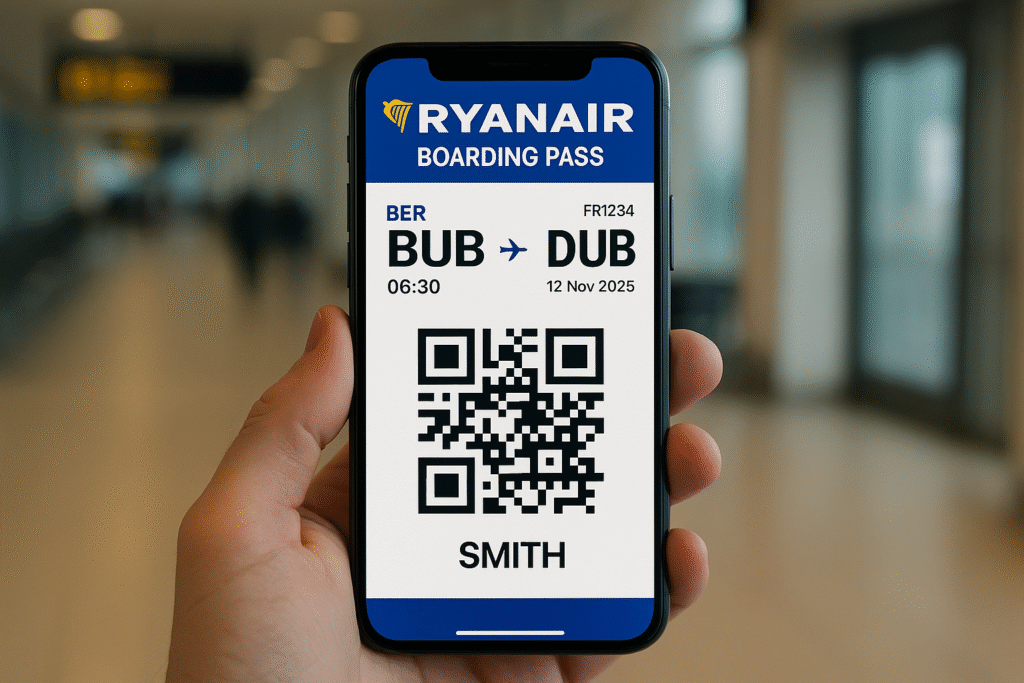
The Europe-based budget airline Ryanair has officially rolled out its new paperless boarding pass system across its network from 12 November 2025, meaning travellers on its flights are now required to use a digital boarding pass via the Ryanair mobile app in place of the traditional printed ticket. This marks a major shift in how the airline handles check-in and boarding, and has significant implications for passengers, tech access and sustainability in modern air travel.
Why the Move to Digital Only?
Ryanair says the transition to digital boarding passes is part of a broader strategy to streamline operations, reduce costs and lower the airline’s environmental footprint. Internal figures show that already over 80 % of passengers used app-based boarding passes even before the change. The carrier noted that eliminating printed passes will save an estimated 300 tonnes of paper annually, while the new digital process aims to speed up boarding, improve customer service in disruption events and reduce airport handling overheads.
From a strategic standpoint, the move aligns with Ryanair’s push to embed more features in its app—such as live flight updates, seat-services, food orders and gate notifications. The paperless boarding policy reinforces its model of mobile-first travel and cost-efficient operations.
What This Means for Passengers
For travellers flying with Ryanair, here’s how the new system works:
- Download the Ryanair app ahead of travel: The airline now mandates using its “myRyanair” app, which generates the digital boarding pass after online check-in.
- Check in online as normal, preferably as soon as your booking permits, because the digital boarding pass will only be issued after completing check-in through the app.
- Printed boarding passes are no longer accepted: From 12 November, you cannot rely on a home-printed boarding pass; only the digital version in the app is valid (except in specific exemptions).
- Arrive at the airport with your digital pass ready: When you reach airport security and the boarding gate, you’ll need to present the boarding pass on your smartphone screen.
- Travel without a smartphone? Ryanair says that if you have checked in online but arrive at the airport without access to your phone (battery dead, lost device etc.), the system will still recognise you and staff will assist you at the gate—provided you completed check-in in advance.
Exceptions and Key Considerations
While the shift is nearly universal, there are important caveats:
- Some destinations still require printed boarding passes due to local government regulations. These include certain airports such as in Morocco, where passengers must still present a physical boarding pass for check-in.
- For passengers who do not own a smartphone or are uncomfortable with mobile apps, Ryanair insists the key requirement is online check-in before arriving at the airport; in those cases staff will issue a printed pass at the gate if needed, though services like app-based flight disruption alerts may not be available.
- The airline warns that failure to check-in online or arrive without the digital pass may trigger additional fees or airport check-in charges, so passengers should adapt to the new system well ahead of travel.
Mixed Reactions from Travellers
The reaction among passengers has been mixed. Frequent flyers and tech-savvy travellers welcomed the move as modern and efficient, praising the convenience of digital check-in and the time-savings at the airport. One flew early on Day 1 and said the transition was seamless.
However, concerns have arisen around inclusivity and access—especially for older travellers, those without smartphones or with limited digital literacy. Some have voiced worries about what happens when phones break down, run out of battery, or get lost en route to the airport. In response, Ryanair emphasises that as long as check-in is completed online and the booking exists, boarding assistance will be provided—even if the phone fails.
What Travellers Should Do Now
To ensure a smooth experience under the new paperless boarding pass system, travellers should:
- Install or update the Ryanair app on their smartphone before travelling.
- Complete online check-in as early as allowed for your flight.
- Download the issued digital boarding pass and ensure it appears in your app—save it offline or take a screenshot if network issues are likely.
- Ensure your phone is sufficiently charged and bring a portable charger if needed; treat the app-boarding pass as your travel document at airport checkpoints.
- If you do not own a smartphone, inform the airline ahead of time or arrive at the airport early so staff can assist with issuing a pass.
- Monitor any destination-specific requirements (e.g., airports still mandating paper passes) and adapt accordingly.
The Bigger Picture: Aviation Trends and Sustainability
Ryanair’s move is part of a broader aviation-industry trend towards digitalisation and sustainability. By eliminating paper boarding passes, the carrier is reducing material waste, lowering cost-drivers and pushing passengers into a mobile-driven ecosystem. This transformation is in line with airlines globally exploring mobile identity, digital credentials and app-centric boarding.
For budget airlines in particular, reducing overhead and improving operational efficiency are constant imperatives. The digital boarding pass initiative enables faster passenger flows, fewer pre-printed documents, fewer staff resources for manual check-in and more integration of additional mobile services (ancillary sales, real-time updates, customer self-service).
Conclusion
With the launch of 100 percent digital boarding passes from 12 November 2025, Ryanair is making a bold step into what it calls a faster, smarter, greener travel experience. For passengers comfortable with smartphones and the airline’s app ecosystem, the change promises enhanced convenience and streamlined boarding. For those less digitally inclined, the key message is clear: adapt now, download the app, complete check-in early—and you’ll be ready for travel in this new era of paper-free flying. The move signals not just a policy shift for one airline, but a wider shift in how air travel handles check-in, boarding and passenger flow—a shift that is now very much underway.
For more travel news like this, keep reading Global Travel Wire