
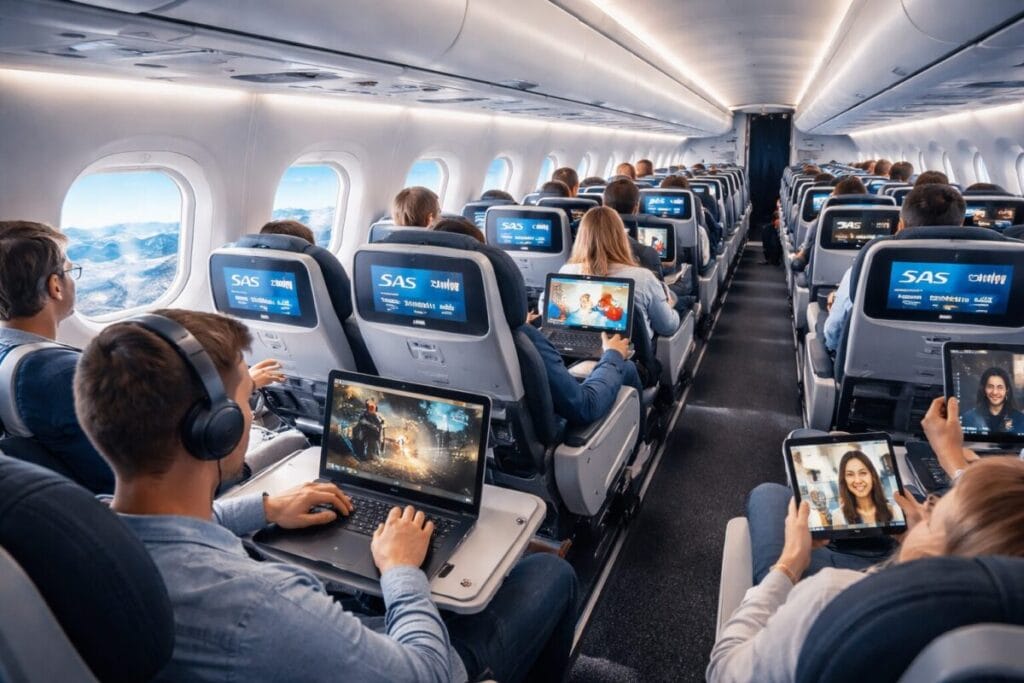
Denmark has taken a bold step in merging aviation technology with travel experiences. Scandinavian Airlines (SAS) debuted its new Starlink inflight Wi-Fi service on January 15, 2026, during a special demonstration flight departing from Copenhagen. This exclusive “flight to nowhere” highlighted how high-speed, low-latency internet can transform the modern travel experience for both tourists and business flyers.
A Turning Point for Connected Tourism
The showcase underscored Denmark’s ambition to remain at the forefront of digital infrastructure. Government tourism authorities have emphasized the role of reliable connectivity in making travel more seamless, especially for international visitors who now expect continuous online access during their journeys. This aligns with broader European tourism strategies that promote innovation, digital mobility, and enhanced user experiences.
The demonstration flight used an Airbus A320neo, marking the first SAS narrowbody aircraft fitted with the Starlink system. Onboard were 80 guests, including travel journalists, aviation specialists, and professional eSports players. The aircraft flew north toward the Arctic Circle to test network stability in regions known for weak satellite coverage.
Live Gaming and Streaming at 35,000 Feet
A highlight of the event was a live eSports match of Counter-Strike played between gamers onboard and a ground team in Copenhagen. The onboard group won the match, showing how Starlink’s low latency allows complex online gaming without disruptions. The feat also showed that inflight networks can now support data-heavy activities once considered impossible in air travel.
Streaming also ran uninterrupted during the flight. Guests watched live video, posted on social media, and joined video calls in real time. These activities demonstrated that inflight Wi-Fi is shifting from basic browsing to full digital engagement.
Technology Behind the Upgrade
Typical aviation internet services rely on geostationary satellites positioned far above Earth. These systems often cause slow browsing speeds and high latency, especially in polar and oceanic airspace. Starlink, developed by SpaceX, uses thousands of low Earth orbit satellites. Their proximity allows faster data transfers and more stable performance.
This technical leap is crucial for tourism markets. Many long-haul flights cross remote regions. Travelers heading to destinations such as Greenland, Iceland, and Northern Scandinavia benefit from better access to communication tools during transport.
Benefits for Tourists and Travel Operators
The demonstration flight signaled wider applications beyond entertainment. Modern tourists document and share their experiences instantly. Reliable inflight connectivity allows them to stream content, post travel updates, manage bookings, and communicate with family without delays.
Tourism organizations benefit as well. Real-time connectivity enables improved promotion for destinations previously considered difficult to market. Travel influencers and online content creators can share videos while traveling, reaching audiences instantly and increasing destination visibility.
For business tourism, the changes are equally significant. Executives can join virtual meetings, upload files, and maintain workflows while airborne. This reduces productivity loss and makes long-haul travel more efficient.
Airline Expansion Plans Ahead
The success of the Copenhagen demonstration flight accelerated SAS’s timelines. The airline plans to deploy Starlink Wi-Fi across its A320 family fleet during 2026. As more aircraft become equipped, the system will roll out across both short-haul and medium-haul European routes. SAS has also signaled interest in evaluating the technology for its long-haul widebody aircraft, where the benefits would be amplified.
This rollout coincides with broader tourism recovery trends. Passenger traffic across Europe continues to rebound, and demand for premium experiences is increasing. Enhanced connectivity helps airlines remain competitive while improving passenger satisfaction ratings.
Global Implications for Aviation and Tourism
The introduction of low-latency inflight Wi-Fi is expected to reshape global travel standards. Other carriers worldwide have begun evaluating similar satellite-based systems. As adoption spreads, continuous digital connectivity may become a baseline expectation for international travelers.
Remote tourism destinations stand to benefit the most. Regions like the Arctic, the North Atlantic, and other sparsely connected areas attract adventure tourists who often require real-time navigation tools, weather data, or emergency communication access. Starlink enables these functions even while en route.
There are also broader digital equity implications. Continuous connectivity helps bridge the digital divide during travel, ensuring passengers are not cut off from essential communication services.
Denmark’s Strategy for Smart Tourism
For Denmark, the demonstration aligns with government initiatives promoting smart tourism infrastructure. These strategies highlight digital services, sustainable mobility, and innovative visitor experiences as key competitive advantages. Copenhagen airport authorities have also expressed interest in improving passenger services through digital tools, expanded data networks, and real-time customer information.
A New Standard in Air Travel
The SAS flight proved that inflight connectivity has evolved from an add-on luxury to an essential travel service. Activities like streaming, high-definition calling, and competitive gaming are now possible at cruising altitude. This shift marks a new standard for air travel as airlines worldwide prepare for more connected cabins.
Conclusion
The Starlink inflight Wi-Fi debut signals a new era for aviation and tourism. It enhances the traveler journey, supports business productivity, and boosts destination promotion. As SAS expands installation across its fleet, Denmark positions itself as a leader in connected tourism experiences. For passengers, staying online at 35,000 feet is moving from novelty to expectation, changing how the world travels.
For more travel news like this, keep reading Global Travel Wire