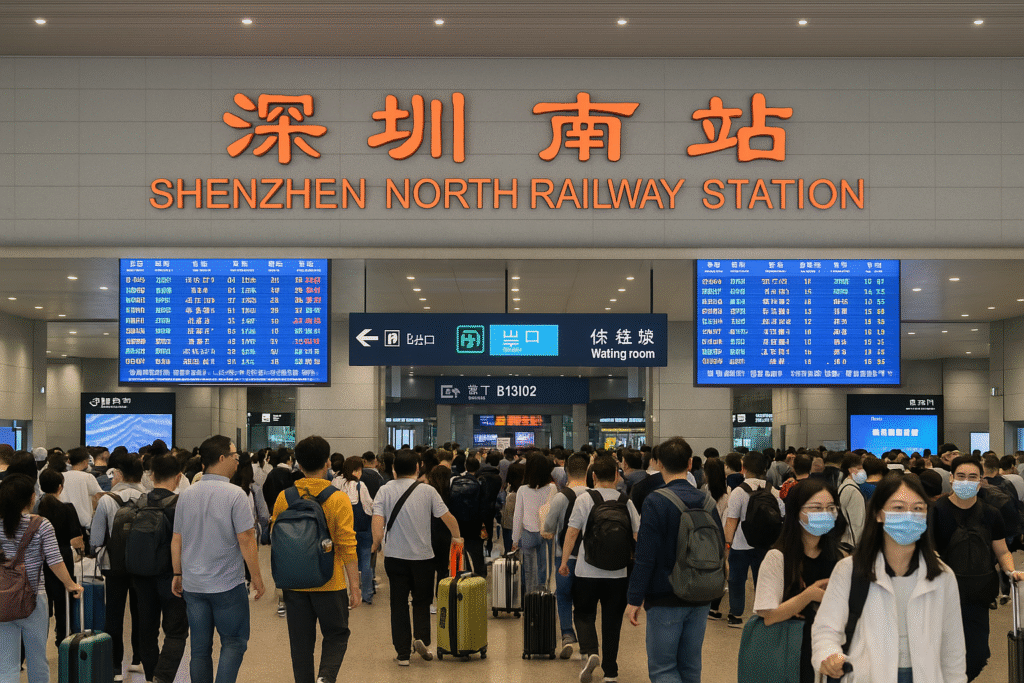
Shenzhen, one of China’s most dynamic cities, is making headlines with record-breaking passenger volumes in both rail and air travel. In 2025, the city’s transportation infrastructure reached unprecedented milestones, reflecting a dramatic surge in cross-border movement between mainland China and Hong Kong. From Shenzhen North Railway Station’s skyrocketing train traffic to Baoan International Airport’s all-time high in air passengers, the southern metropolis is experiencing a boom fueled by regional connectivity, economic integration, and relaxed travel policies.
With over 116.6 million railway passengers and more than 61.5 million air travelers handled this year, Shenzhen has solidified its position as one of Asia’s busiest transport hubs—facing both the rewards and the challenges that come with rapid growth.
Shenzhen North Railway Station: A Regional Rail Titan
As a core node of China’s high-speed railway network, Shenzhen North Railway Station has emerged as a top performer in 2025. Handling 116.6 million passengers in just 11 months, the station saw an 8.8% increase from 2024—cementing its importance in the national transport system.
Strategically located near the Hong Kong border, Shenzhen North is a vital connector between Hong Kong and major Chinese cities like Guangzhou, Shanghai, Chengdu, Wuhan, and Chongqing. As part of the Guangzhou–Shenzhen–Hong Kong Express Rail Link, the station provides swift, reliable access to Hong Kong’s West Kowloon terminus, with travel times as short as 18 minutes.
Peak periods such as National Day Golden Week and Lunar New Year saw daily passenger numbers exceeding 400,000, putting immense pressure on station infrastructure and staff. Yet, the continued preference for high-speed rail demonstrates the public’s growing confidence in rail travel’s efficiency, punctuality, and comfort.
Baoan International Airport: Record-Breaking Year for Air Travel
On the aviation front, Shenzhen Baoan International Airport also achieved new heights. By early December 2025, the airport had already surpassed its total passenger traffic from the previous year, reaching 61.5 million travelers.
The opening of a third runway in November 2025 marked a major milestone in the airport’s expansion strategy. This addition not only increases flight capacity but also supports growing air cargo demand. Shenzhen’s airport now serves as a critical link for both domestic and international travelers, particularly those heading to or from Hong Kong, which shares airspace and travel demand with the neighboring mainland city.
The airport’s location—offering proximity to both Shenzhen and Hong Kong—has made it a practical and preferred option for travelers seeking flexibility, speed, and growing flight options across Asia and beyond.
Hong Kong’s Influence on Shenzhen’s Transport Growth
A key driver of Shenzhen’s travel boom is its close relationship with Hong Kong. With travel restrictions eased and cross-border integration improving, the number of Hong Kong residents visiting mainland China has skyrocketed. Over 81.9 million cross-border trips were recorded in 2024 alone, a number expected to increase further in 2025.
For many Hongkongers, Shenzhen North serves as a launching point for high-speed rail journeys deeper into the mainland. The city’s affordability, infrastructure, and accessibility make it an attractive entryway to other provinces and tourist destinations in China.
The trend reflects a broader shift, with rail travel becoming the preferred mode for short-haul journeys between Hong Kong and cities like Guangzhou and Changsha. The speed, frequency, and comfort of high-speed rail services continue to draw travelers away from regional flights and long road trips.
Capacity Challenges and Infrastructure Solutions
Despite its success, Shenzhen’s transport network is under immense pressure. Shenzhen North Railway Station frequently operates beyond its intended capacity, especially during national holidays. Passengers often face overcrowding and congestion, prompting calls for facility upgrades and operational enhancements.
In response, the government has launched an ambitious infrastructure project: the Shenzhen Xili Railway Station, a 37.1 billion yuan investment. Expected to be completed in stages by 2028, Xili Station will include 13 platforms and 25 tracks, providing a much-needed alternative to Shenzhen North and increasing overall rail capacity.
Situated closer to the Hong Kong border, the new station is poised to alleviate congestion and serve as a second gateway for cross-border and intercity travel.
A Vision of Seamless Future Connectivity
Looking ahead, Shenzhen is set to undergo a sweeping transformation of its transport landscape. Projects like the Xili rail hub, expanded metro networks, and further airport terminal upgrades will ensure the city keeps pace with surging demand.
As regional integration under the Greater Bay Area plan accelerates, Shenzhen is well-positioned to become a leading example of what future-ready cities can achieve through strategic transport planning and infrastructure investment.
With high-speed trains and flights now linking more people than ever, the region is evolving into a highly connected zone for tourism, commerce, and daily life. The improvements not only benefit mainland residents but also bring Hong Kong and mainland China closer together—socially, economically, and physically.
Conclusion: Shenzhen’s Transport Boom Ushers in a New Era
Shenzhen’s impressive transportation growth in 2025 is a reflection of its rising global prominence and central role in cross-border connectivity. With record passenger flows, new infrastructure projects, and deepening integration with Hong Kong, the city is no longer just a tech and manufacturing giant—it’s a pivotal travel gateway for millions.
The high-speed rail network and Baoan Airport are setting new standards for convenience and accessibility in Asia. And as long-term development continues, Shenzhen is on track to become one of the most efficient, dynamic, and connected cities in the world for both domestic and international travelers.
For more travel news like this, keep reading Global Travel Wire