
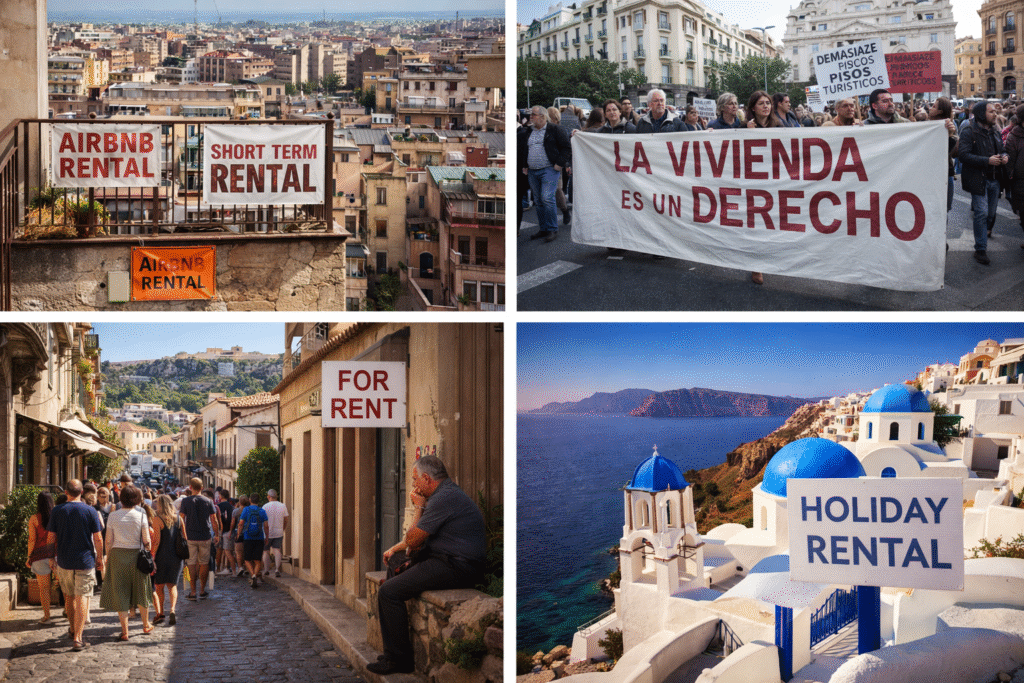
Spain is confronting a deepening housing crisis as the rapid expansion of short-term rentals reshapes its tourism landscape and places unprecedented pressure on local communities. Across major cities and popular coastal destinations, the number of holiday rentals has surged beyond hotel capacity, driving up property prices and rents while limiting access to long-term housing. Greece, another Mediterranean tourism powerhouse, is facing strikingly similar challenges as both countries grapple with the social costs of record-breaking visitor numbers.
The rise of short-term rental platforms has transformed how travelers experience Spain. What was once a hotel-led accommodation model has shifted dramatically toward private apartments and holiday homes, especially in urban centers and historic districts. While this evolution has boosted tourism revenues and offered travelers more choice, it has also intensified competition for housing in areas already struggling with affordability.
Housing Pressures Mount Across Spain
Spain’s housing market has felt the effects of tourism growth most acutely in cities such as Barcelona, Madrid, Valencia, Seville, Málaga, and the Balearic and Canary Islands. In many neighborhoods, properties that once housed local families are being converted into tourist rentals, reducing the supply of long-term housing. As availability shrinks, rents rise, making it increasingly difficult for residents, young professionals, and service workers to remain in their communities.
Industry data shows that Spain now has significantly more beds in holiday rentals than in traditional hotels. Short-term rental growth has far outpaced hotel expansion, reflecting shifting traveler preferences but also exposing regulatory gaps. While hotels operate under strict zoning, labor, and safety rules, many short-term rentals have expanded faster than oversight mechanisms, creating uneven competition and social tension.
Local governments have responded with stricter regulations, including licensing caps, zoning restrictions, and increased inspections. Several Spanish cities have announced limits on new short-term rental permits, while others are reviewing tax structures to ensure tourism revenues contribute to housing and infrastructure needs.
Greece Mirrors Spain’s Tourism Dilemma
Greece is experiencing a parallel transformation. The country’s tourism boom has fueled a dramatic rise in vacation rentals, particularly in Athens and popular island destinations. In several urban neighborhoods, short-term rental listings now outnumber hotel beds, signaling a major shift in accommodation patterns.
This growth has been especially visible in central Athens districts, where demand from international visitors has driven property values higher and displaced long-term tenants. As apartments are converted into holiday lets, residents face rising rents and reduced housing options, sparking public debate about the future of city living.
In response, Greek authorities have introduced targeted measures to curb unchecked expansion. New restrictions have been placed on issuing licenses in high-pressure zones, mandatory registration has been enforced, and penalties for illegal rentals have increased. At the same time, incentives are being offered to property owners willing to return homes to the long-term rental market.
Tourism Growth Versus Community Stability
Both Spain and Greece now stand at a crossroads. Tourism remains a vital pillar of their economies, supporting millions of jobs and contributing significantly to national income. However, the pace and concentration of growth have raised concerns about sustainability, social equity, and quality of life for residents.
Short-term rentals have proven attractive to travelers seeking space, flexibility, and local experiences. Yet without effective regulation, their expansion risks hollowing out neighborhoods, eroding community cohesion, and pushing essential workers farther from city centers. These pressures are particularly visible in destinations where tourism demand is highly seasonal but housing needs are permanent.
Spain’s challenge lies in balancing its global appeal with the protection of residential life. Policymakers are increasingly focused on distributing tourism more evenly across regions, promoting off-season travel, and reinforcing rules that prioritize housing for residents. Similar strategies are being explored in Greece, where authorities aim to preserve urban livability while sustaining tourism momentum.
The Broader Mediterranean Context
The situations in Spain and Greece reflect a wider Mediterranean trend. Popular destinations across Southern Europe are reassessing their tourism models as visitor numbers rebound strongly. Governments are recognizing that unmanaged growth can undermine the very cultural and social fabric that attracts travelers in the first place.
As tourism patterns evolve, housing policy has become central to destination management. Measures such as data-driven licensing systems, local caps on short-term rentals, and stronger enforcement are increasingly viewed as essential tools rather than barriers to growth.
A Defining Moment for Tourism Policy
The coming years will be critical for Spain and Greece as they refine their responses to overtourism and housing scarcity. Success will depend on coordinated policies that align tourism development with social needs, ensuring that economic benefits do not come at the expense of residents’ wellbeing.
If effective balance can be achieved, both countries have the opportunity to lead by example, demonstrating how world-class tourism destinations can remain vibrant places to live. The outcome of these efforts may well shape tourism policy across Europe, offering lessons for cities worldwide facing similar pressures from the rise of short-term rentals.
For more travel news like this, keep reading Global Travel Wire