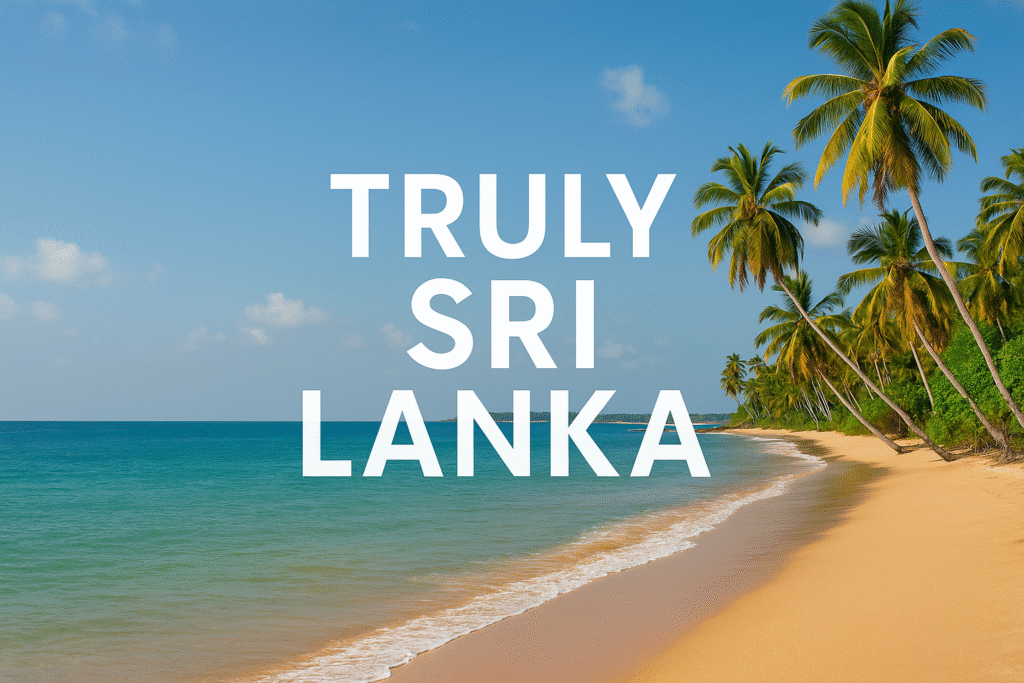
Sri Lanka’s hotel industry has taken a bold step forward in marketing the country as a premium travel destination, as the national destination-branding effort continues to be delayed. In a dynamic move, the Hotels Association of Sri Lanka (THASL) has launched an industry-led digital campaign branded “Truly Sri Lanka,” aimed at attracting high-spending travellers from key East Asian and Middle Eastern markets. This initiative underscores how the private sector is stepping in to fill a branding gap and reposition Sri Lanka for the next wave of tourism growth.
Strategic Focus on Year-Round, High-Yield Source Markets
The campaign, which rolled out in late October, targets markets including Saudi Arabia, Jordan, Oman, Thailand, Malaysia and Singapore. These markets were strategically chosen because they offer year-round outbound travel and shorter-haul connections to Sri Lanka, making them suited for luxury tourism. Rather than aiming purely at volume, the campaign emphasises direct bookings and high-value visitors, with the goal of attracting tourists who stay longer and spend more.
The campaign’s digital platform allows participating hotels to showcase tailored offers to these markets, enabling better conversion, reduced reliance on intermediaries and stronger guest tracking. The focus on direct booking links with global trends that show hotels gaining higher margins when travellers book directly rather than through online travel agencies.
Why the Hotel Industry Took the Lead
Behind this initiative lies a sense of urgency within the hotel industry. The national tourism branding campaign, which would ordinarily be driven by the government, has faced delays, prompting THASL and its members to act independently. By mobilising hotels directly, the industry aims to regain momentum, shape its own narrative and reach key international source markets without waiting for broader destination campaigns.
With Sri Lanka striving to rebuild its tourism business after recent economic and pandemic-related challenges, hotels have recognised that they cannot afford to wait. The “Truly Sri Lanka” campaign thus serves both as a stop-gap and as a strategic move to reposition the country’s tourism image in the global marketplace.
Campaign Scale, Funding and Participation
At the moment, approximately 60 of THASL’s 300 member hotels have signed up for this first phase of the campaign. The initial budget is around LKR 25 million (roughly US $82,000) for a three-to-six-month pilot. Given the modest budget and significant goals, the campaign is expected to rely heavily on creative digital content, targeted media and partnership marketing in the selected source markets. If successful, the campaign may be extended or scaled up and could expand to include additional markets and more hotels.
The modest start reflects the reality of limited resources in a competitive global environment. However, the industry view is that any forward movement is better than waiting.
Digital Platform, Direct Booking and Luxury Positioning
Central to the campaign’s strategy is a dedicated digital platform where participating hotels are featured under the “Truly Sri Lanka” brand. Travellers from the targeted markets are guided to the platform where they can view hotel offers and proceed to direct bookings. The approach places emphasis on luxury stays, repeated guest visits and longer stays rather than mass tourism.
The advantage of this model is clear: hotels retain a greater share of revenue, gain direct relationships with high-value guests and can offer tailored experiences that align with spending patterns of affluent travellers. For Sri Lanka, this shift signals a strategic move from purely volume-driven growth to value-driven tourism.
Broader Implications for Sri Lanka’s Tourism Sector
This private-sector led campaign has several broader implications. Firstly, it shows hotels’ growing willingness to act independently when public branding lags. Secondly, it signals a pivot to higher-value destinations and travellers, rather than simply chasing large numbers of budget visitors. Thirdly, by prioritising source markets beyond the traditional Western feeders, the campaign acknowledges the increasingly global spread of outbound travel and the rising buying power across Asia and the Middle East. Finally, the campaign represents a shift toward more direct control by hotels over their marketing, guest acquisition and service differentiation — a trend seen globally in luxury hospitality.
Challenges and Risk Factors
However, the campaign faces substantive hurdles. The budget is modest when compared with the scale required to build global destination awareness. Localising content, translating messages, understanding cultural nuances and choosing the right digital channels for each market will be vital. Without the government’s broader destination branding backing, the hotels’ initiative may struggle with scale and reach. Additionally, targeting high-spend travellers puts pressure on the entire value chain: accommodation quality, service standards, ancillary experiences and hospitality infrastructure must meet elevated expectations. Should any part of the offering fall short, the country could suffer reputational setbacks.
Potential Benefits for Travellers and Hoteliers
For travellers from the Middle East and East Asia, the campaign means a more customised and direct booking experience, with offers created specifically for their markets and preferences. Increased focus on premium stays and longer visits suggests a richer travel experience. For hoteliers, the campaign presents an opportunity to diversify away from seasonal Western markets, improve direct-booking margins, and connect with guests more meaningfully. The initiative also opens doors to leveraging advanced analytics, guest profiling and personalised service that aligns with affluence-driven travel behaviours.
Looking Ahead: Scale, Analytics and Integration
If the pilot proves successful, THASL and its members may expand the campaign to additional hotels, integrate further source markets and adopt more granular analytics to tailor offerings by guest segment. Over time, the private-sector digital campaign could evolve to complement or even precede a fully integrated destination branding programme once government machinery is mobilised. For Sri Lanka, the next two-to-three years may define its repositioning in the luxury travel market — not just as a tropical destination, but as a destination of choice for affluent travellers seeking authenticity, lengthier stays and direct hotel relationships.
Final Word
In launching the “Truly Sri Lanka” campaign, Sri Lanka’s hotel industry has acted not only to fill a branding gap, but to reshape its tourism strategy. Rather than waiting on public-sector processes, the hotels have taken the initiative, targeting high-value travellers, focusing on direct bookings and signalling a shift toward luxury and year-round readiness. For Sri Lanka, the move is timely: as international travel rebounds and competition intensifies, destinations that can deliver personalised, premium experiences will emerge ahead. The hotels’ campaign could prove to be the bridge between the past era of volume tourism and a new era of value, experience and direct guest engagement.
For more travel news like this, keep reading Global Travel Wire