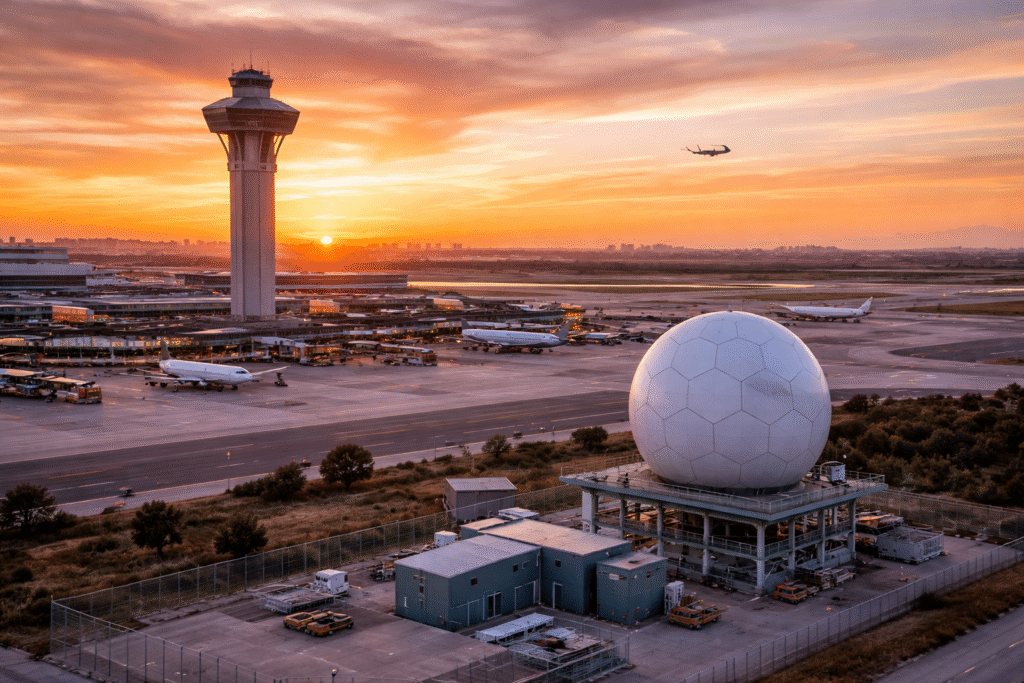
The United States air travel system is entering a new era of modernization as the federal government launches an extensive plan to upgrade the nation’s primary radar infrastructure. The initiative, led by the U.S. Department of Transportation (DOT) and the Federal Aviation Administration (FAA), aims to replace decades-old radar technology with advanced, more reliable and more efficient systems. For travelers, this marks one of the most significant improvements to national aviation since the rollout of satellite-based navigation technologies earlier this century.
A National System Ready for Renewal
For many years, the U.S. has operated one of the world’s safest aviation networks. However, officials have acknowledged that the radar systems responsible for directing commercial, cargo and private aircraft have been operating well beyond their intended life cycle. Some radar units in service today date back to the 1980s, long before the explosion in passenger volume, commercial fleets and modern air traffic requirements. Maintaining these aging systems has become increasingly costly, prompting the government to pursue a comprehensive replacement strategy.
The radar modernization plan will update the surveillance backbone of the National Airspace System, a critical network that enables aircraft to be tracked and managed from takeoff through landing. According to federal transportation officials, the replacement program will cover more than 600 radar units across the country, with installations expected to continue through mid-2028. The upgraded equipment will rely on modern, commercially available technology that can support higher performance standards, quicker maintenance and better system resilience.
Enhancing Efficiency, Capacity and Safety
While radar upgrades may not be visible to the average traveler, the impact will be far-reaching. As demand for air travel continues to climb—driven by both tourism and the expanding logistics sector—air traffic controllers must manage a more complex airspace. Modern aviation includes unmanned aircraft systems, new generation commercial jets, expanding cargo operations and, in the future, advanced air mobility vehicles. Updated radar technology is essential not only for safety but also for accommodating growth without adding travel delays.
Officials have emphasized that the modernization program will increase the system’s ability to respond quickly to operational challenges, weather disruptions and emergency situations. Faster data processing, clearer aircraft detection and more reliable communication with controllers will help reduce delays, improve routing and enhance situational awareness. For travelers, these improvements translate into more predictable flight schedules, fewer missed connections and better overall travel experiences.
Part of a Broader Modernization Vision
The radar initiative is a major component of a larger push to modernize U.S. aviation infrastructure. Federal transportation leaders have outlined a long-term vision that includes upgrading communications infrastructure, introducing fiber-optic connections at key aviation facilities, deploying new tower and runway technologies and advancing digital systems for airports nationwide. Partnerships with leading aerospace and defense engineering companies will help accelerate these efforts and ensure that new systems are integrated smoothly into the existing network.
Another significant aspect of the modernization strategy is consolidation. Today, the FAA operates more than a dozen different configurations of radar systems. Over time, this complexity has increased maintenance costs and slowed repairs. The new program will streamline these configurations into a unified approach that simplifies support logistics and reduces the burden on federal maintenance teams. Fewer system variations mean faster repairs, more available replacement parts and improved training pipelines for future aviation technicians.
Boosting Competitiveness in Global Aviation
The modernization effort also strengthens the United States’ position in global aviation competitiveness. Many international travel hubs have been investing heavily in next-generation air traffic systems, including Europe’s Single European Sky initiative and similar modernization programs underway in Asia and the Middle East. A modernized U.S. system ensures that airports continue to operate efficiently in the face of surging traveler counts, new airline routes and rising tourism demand.
In addition, the upgraded radar network will support emerging technologies such as low-altitude drone traffic, airport surface detection systems, advanced meteorological forecasting and, eventually, electric air taxis. Tourism economists see these innovations as vital to unlocking new forms of regional mobility and expanding access to secondary travel destinations within the United States.
What Travelers Can Expect
Travelers are unlikely to encounter direct disruptions during the installation phase, as upgrades will be phased to avoid system outages. Over the next several years, however, improvements should become noticeable in the form of smoother air traffic operations, fewer delays and more reliable routing during peak vacation periods, severe weather events and holiday travel surges.
The modernization plan is expected to continue shaping the future of U.S. air travel long after installation concludes, providing infrastructure capable of supporting new aviation technologies well into the 2040s.
For more travel news like this, keep reading Global Travel Wire