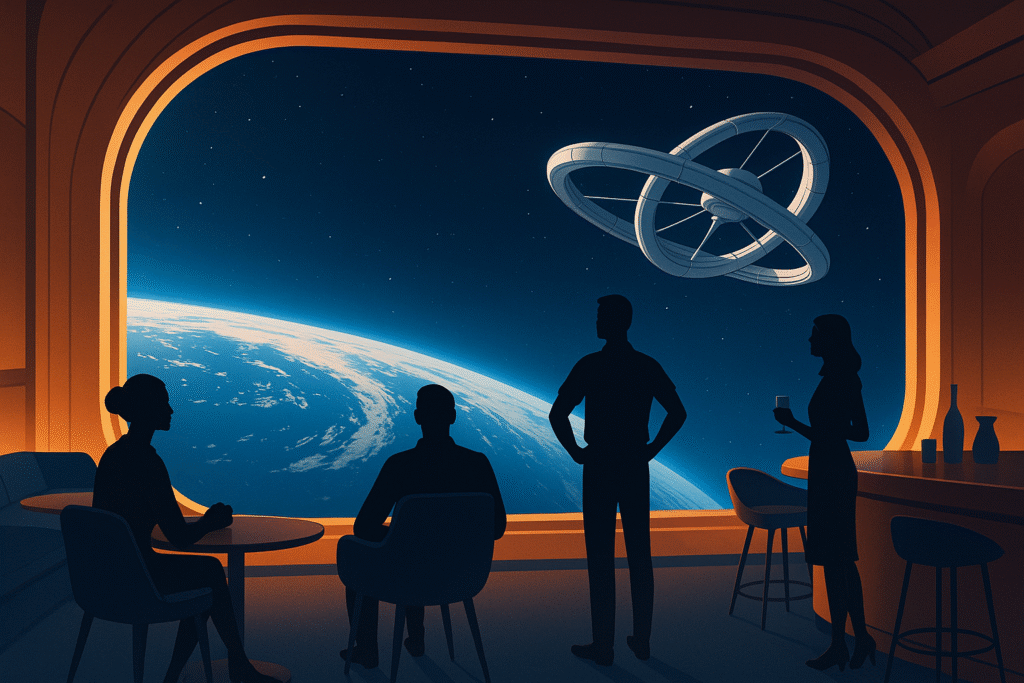
The University of Central Florida (UCF) is making history as it pioneers the next frontier in travel: space hospitality. Through its world-renowned Rosen College of Hospitality Management, UCF is preparing students to redefine the future of tourism beyond Earth. As private space companies like SpaceX, Blue Origin, and Virgin Galactic accelerate commercial space travel, UCF is ensuring that future hospitality leaders are equipped to meet the demands of a new generation of explorers — those who will dine, sleep, and relax in orbit.
Preparing for the Next Era of Tourism
Space tourism, once a dream confined to science fiction, is rapidly becoming reality. The U.S. commercial space sector is growing at a record pace, and analysts predict that by 2030, suborbital and orbital tourism could generate billions in annual revenue. Recognizing this monumental shift, UCF’s Rosen College has introduced academic programs and research initiatives aimed at preparing students for careers in space hospitality — a discipline that blends advanced hospitality principles with aerospace science.
Dr. Youcheng Wang, Dean of Rosen College, has emphasized that hospitality will play a crucial role in shaping human experiences beyond Earth. As people begin to travel to orbiting hotels or lunar bases, comfort, safety, and service will be as essential as engineering precision. UCF’s curriculum is designed to help students understand how to create meaningful experiences even in the most extreme environments.
From Hotels in Orbit to Zero-Gravity Dining
Rosen College students are studying concepts once reserved for astronauts and engineers — including life-support systems, radiation safety, and space architecture — and applying them to hospitality design. One of the most exciting projects involves conceptualizing orbital hotels, where guests will experience Earth from 400 kilometers above the surface.
Students collaborate with aerospace experts to envision hotel layouts that optimize comfort in microgravity. They are exploring how to design cabins with flexible furnishings, floating recreational areas, and panoramic viewing windows that offer breathtaking views of our planet. These designs take into account energy efficiency, atmospheric regulation, and safety in orbit — while maintaining the elegance expected from five-star properties.
Dining in space presents another challenge and opportunity. Traditional space food has always been functional, but the future of luxury space tourism demands creativity and flavor. Rosen College’s culinary students are conducting microgravity dining experiments, exploring how textures, aromas, and plating change in a weightless environment. They are testing how to serve and consume gourmet meals without gravity — from floating hors d’oeuvres to drinks contained in magnetic cups. The goal is to combine the wonder of space with the pleasure of fine dining.
Partnering with the Aerospace Industry
UCF’s location in Florida, near NASA’s Kennedy Space Center and Cape Canaveral Space Force Station, places it at the heart of the global space economy. This geographic advantage allows Rosen College to partner with aerospace organizations, engineers, and tourism entrepreneurs. Students benefit from guest lectures by astronauts, industry professionals, and executives from major space companies.
These collaborations bridge two industries — aerospace and hospitality — to create a new academic and professional field. As suborbital flights become more accessible, spaceports will soon resemble airports, and space hotels will need teams trained in guest relations, logistics, safety, and sustainability.
Airlines and Spaceports: The Future of Travel
Airlines are also preparing for the age of commercial space travel. Carriers such as Emirates, American Airlines, and Virgin Atlantic have expressed interest in integrating suborbital flight experiences as luxury add-ons for elite travelers. UCF students study these developments to understand how airline and spaceport operations will evolve — from passenger onboarding and training to in-flight hospitality in zero gravity.
In the near future, tourists may board a commercial jet at an airport, transfer to a spaceport, and continue their journey into orbit. This seamless connection between air travel and space tourism will require professionals skilled in both aviation and hospitality. UCF’s training programs are designed to fill that gap.
The Hospitality Industry’s Leap into Space
Major hotel brands are already exploring opportunities beyond Earth. Companies such as Hilton and Marriott have publicly expressed interest in working with space agencies and private firms to develop orbital accommodations. Hilton, for instance, has collaborated on conceptual designs for a future space station hotel.
UCF’s research supports these efforts by helping define what space hospitality means — not just in terms of infrastructure but also guest experience. From creating sustainable menus using hydroponic systems to designing modular sleeping quarters, UCF students are pushing the boundaries of imagination and practicality.
Challenges and Opportunities in Space Hospitality
Operating hotels and restaurants in orbit presents unique challenges: radiation exposure, microgravity living conditions, food preservation, and waste management. Yet each challenge also offers innovation opportunities. UCF’s students are exploring eco-friendly systems, including closed-loop water recycling and renewable energy use in orbital structures. These ideas contribute to making space tourism sustainable — an essential step as humanity expands beyond Earth.
As the space tourism market matures, hospitality professionals will need to adapt to serve high-value clients expecting premium comfort. From concierge services for astronauts to curated experiences in orbit, the hospitality industry’s creativity will shape the emotional connection people have with space travel.
The Future Is Closer Than You Think
While ticket prices for suborbital flights currently range between $250,000 and $450,000, advancements in technology and growing competition are expected to reduce costs over time. Within a decade, space tourism could become a niche but thriving market for luxury travelers, adventure seekers, and researchers. UCF’s investment in education ensures that when the first orbital resorts open, its graduates will be among the professionals running them.
Conclusion: UCF and the Dawn of Space Tourism
The University of Central Florida’s Rosen College of Hospitality Management is redefining what it means to serve guests — not just on Earth but in orbit. By integrating innovation, science, and luxury, UCF is preparing a new generation of leaders ready to shape the experiences of tomorrow’s space tourists.
As the boundaries between science fiction and reality blur, one thing is certain: the future of hospitality is no longer limited to our planet. And with UCF at the helm, humanity’s first true space hotels and zero-gravity dining rooms are closer than ever to becoming a reality.
For more travel news like this, keep reading Global Travel Wire