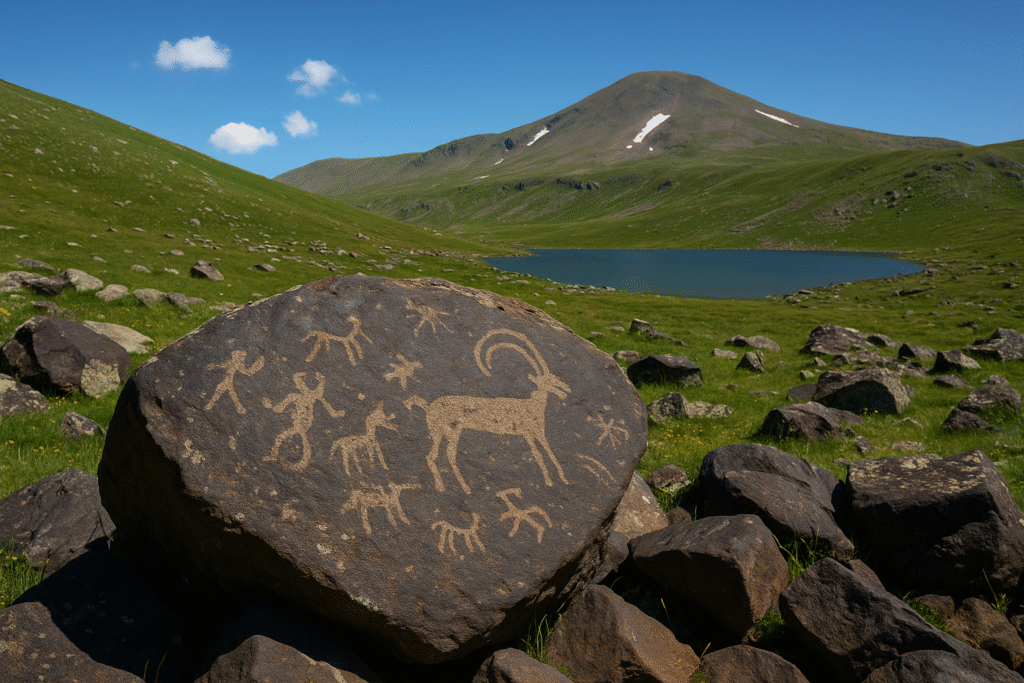
Perched deep within the Syunik Highlands, the Ughtasar Petroglyphs remain one of Armenia’s most atmospheric archaeological landscapes. Set around an ancient crater lake at roughly 3,300 meters above sea level, this open-air stone gallery brings visitors face-to-face with thousands of engravings created between the 6th and 1st millennium BCE. While the site is only accessible in summer due to heavy snowfall, interest in this remarkable destination continues to grow as global travelers seek meaningful cultural experiences paired with scenic adventure.
Ughtasar offers an unusual blend of untouched mountain terrain, prehistoric artistry, and immersive storytelling. Each carving provides a glimpse into the rituals, beliefs, and seasonal rhythms of Armenia’s earliest high-altitude communities. With modern tourism placing increased emphasis on sustainability, authenticity, and archaeological depth, Ughtasar stands out as a destination that delivers powerful heritage without commercialisation.
Tracing the Origins of Armenia’s Ancient Artists
The petroglyphs at Ughtasar—etched into dark volcanic stones scattered across the slopes—represent one of the most significant archives of prehistoric expression in the Armenian Highlands. Archaeologists date the earliest engravings to the 6th millennium BCE, with peak activity occurring between the 3rd and 1st millennium BCE. These long-lasting artistic traditions reflect pastoral lifestyles shaped by the mountains, as well as early symbolic systems that reveal how ancient societies understood their world.
Carvings depict human figures engaged in hunting, ritual ceremonies, herding, and communal activities. Stylised goats, deer, leopards, and mythical creatures appear across the stones, often arranged in narrative sequences. Geometric symbols and star-like patterns suggest early cosmological thinking, while scenes of seasonal migration point to the highland communities’ deep connection with nature. For cultural travellers, Ughtasar functions like an open-air museum where prehistoric stories remain preserved exactly where they were created.
Syunik’s Majestic Highlands: A Landscape That Shapes History
Ughtasar is situated near the town of Sisian in Armenia’s southern Syunik Province, a region celebrated for its volcanic terrain, alpine meadows, and dramatic ridges. The petroglyphs are concentrated around the shores of a glacier-fed crater lake, where summer reveals thousands of engraved stones glistening beneath the mountain sun. The area’s panoramic views and crisp air create a powerful contrast to lowland Armenia’s warmer climate.
This rugged environment played a crucial role in shaping early artistic traditions. High-altitude meadows supported pastoral migration routes, while volcanic stone fragments provided ideal surfaces for carving. Today, the landscape remains largely untouched, allowing visitors to experience the site much as ancient communities did—surrounded by silence, wind, and sweeping views of the Armenian Highlands.
A Growing Destination in International Tourism
As global tourism shifts toward cultural exploration and environmentally conscious travel, Ughtasar has gained recognition for its ability to offer both scientific value and natural beauty. The destination appeals to multiple tourism sectors:
- Archaeological Tourism: Scholars, students, and cultural travelers arrive to study ancient symbolism and artistic development.
- Adventure Tourism: The high-altitude ascent and off-road travel appeal to outdoor enthusiasts.
- Eco-Tourism: With minimal infrastructure and preserved nature, the site aligns with sustainable travel priorities.
- Cultural Tourism: Ughtasar strengthens Armenia’s international reputation as a country rich in early human heritage.
While remote, the site’s uniqueness positions it as a standout attraction for visitors seeking authentic and immersive experiences beyond traditional sightseeing routes.
Reaching Ughtasar: A Journey of Adventure and Discovery
Accessing Ughtasar requires preparation, as the high-altitude route remains rugged and snowbound for much of the year. However, the journey itself is part of the experience.
How to Get There
- 4×4 Jeep Tours: The most popular and practical method. Experienced local drivers navigate rocky paths from Sisian to the site.
- Guided Expeditions: Adventure companies offer full-day tours combining archaeological interpretation, photography stops, and nature walks.
- Seasonal Hiking: Fit and experienced hikers may opt to trek, though changing weather conditions must be carefully monitored.
Seasonal Accessibility
Due to heavy snowfall, the site is only open to travellers from mid-June to late September. Outside this window, the trails become inaccessible. Visitors should expect high-altitude conditions and prepare for cooler temperatures even in midsummer.
Who Should Visit Ughtasar?
Ughtasar offers a meaningful experience for a range of traveller profiles:
- Cultural and archaeological enthusiasts eager to explore prehistoric art
- Adventure travellers who enjoy high-altitude landscapes
- Photographers drawn to dramatic mountain settings and ancient carvings
- Nature lovers exploring Armenia’s wilderness regions
- Educational groups studying early human societies
Families with young children are encouraged to opt for jeep tours rather than long hikes, ensuring a safe and comfortable visit.
The Best Time to Travel to Ughtasar
The recommended visiting season remains limited to late spring and summer, when the snow has melted and trails are safe. During this period:
- Visibility is excellent for photography
- The crater lake and surrounding meadows reveal their full beauty
- Weather conditions remain stable
- Thousands of petroglyphs become accessible
Visitors should avoid early spring and late autumn, when unexpected snowstorms can close access routes quickly.
A Timeless Encounter With Armenia’s Earliest Voices
A journey to Ughtasar Petroglyphs offers more than a scenic excursion—it connects travelers with a deep artistic legacy shaped by ancient mountain communities. The combination of pristine nature, archaeological significance, and adventurous exploration makes Ughtasar one of Armenia’s most extraordinary highland destinations.
For travellers seeking authenticity, discovery, and a rare glimpse into prehistoric creativity, Ughtasar remains an unforgettable chapter in any Armenian travel experience.
For more travel news like this, keep reading Global Travel Wire