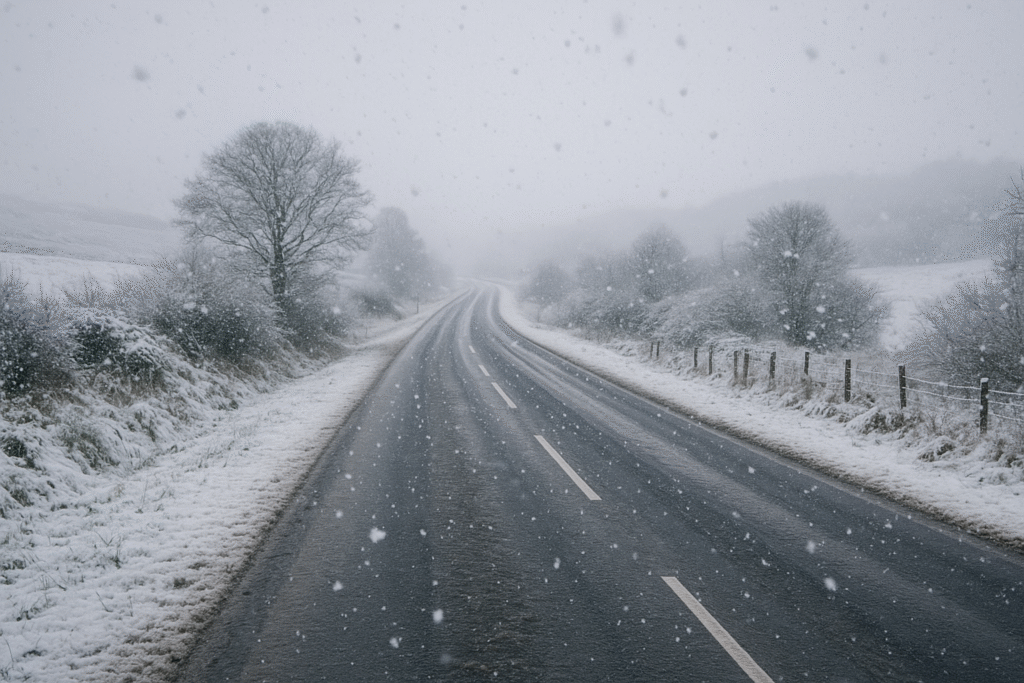
The UK is entering a dramatic weather change as the aftermath of Storm Claudia clears. A surge of Arctic air is sweeping across the country, with the most impact expected in the Midlands, North West and North East of England. Travel plans may face disruption as snow and freezing conditions set in.
Freezing Temperatures on Their Way
After an unusually mild November peaked with temperatures upwards of 18 °C in parts of southern England, the country is now braced for a sharp drop. Several regions may see temperatures fall by up to 8 °C, as cold air moves in from the north and settles over the land.
The national forecast signals a clear transition from benign autumn weather to true winter chill.
Snow Risk Extends from Highlands to Midlands
The Met Office warns snow is most likely in the higher ground of northern Scotland and Northern Ireland. As the week progresses, sleet and snow may spread down into the North West and North East of England — and possibly into the Midlands, East Anglia and South East by Wednesday.
In inland areas, especially those exposed to northerly winds, rain is likely to turn to sleet or snow overnight. Icy conditions are also expected to worsen as untreated roads freeze.
Why the Weather Flipped so Fast
The shift comes as the jet stream redirects, allowing Arctic maritime air to push southwards. Previously, southerly winds had delivered warm, moist air from the Canary Islands, keeping the UK milder than usual. With that pattern reversing, the UK now lies on the colder side of the jet stream, opening the door for wintry conditions.
Travel Warnings – What You Must Know
- If you’re planning to travel in the north or inland UK this week, expect delays. Snow, sleet and frost may disrupt roads and rail.
- Motorists should be extra cautious: icy roads and poor visibility ahead. Check your vehicle’s readiness—tyres, antifreeze and emergency kit all matter.
- If travelling by train or bus, check schedules in advance. High winds and snow will impact hillier regions first.
- For holidays or short breaks northwards or to upland areas, allow extra time or consider postponing.
Health Alert for Vulnerable Groups
The UK Health Security Agency (UKHSA) has raised a yellow cold-health alert for regions including the North East, North West, Yorkshire & the Humber, East Midlands and West Midlands. The alert covers 8 am Monday to 8 am Friday.
This means the colder weather is likely to pose increased risk to people aged 65 and over, children, and those with existing health conditions.
Authorities urge households to keep warm, help vulnerable neighbours and monitor indoor temperatures—aiming for at least 18 °C in living spaces where possible.
Snow and Ice: Key Areas of Concern
- Northern Scotland and Northern Ireland will feel the wintry blast first and hardest — snow accumulation and ice are expected.
- In England, the North West and North East are at high risk of sleet and down‐to‐low-level snow as cold air spreads.
- The Midlands may follow by mid-week. Even if major snow doesn’t eventuate, icy roads and disrupted travel remain very likely.
Practical Travel and Safety Tips
- Regularly check weather updates from official sources ahead of any journey.
- Carry winter essentials if heading into higher ground: warm layers, blankets, water and a mobile phone charger.
- If driving: reduce speed, leave extra distance, and avoid unnecessary travel in icy conditions.
- For public transport: check for cancellations or altered services before setting out.
- At home: use layers of clothing rather than relying on a single heavy piece. Keep rooms you use most warm.
- Look in on older neighbours or relatives—cold indoor temperatures increase risks of chest infections, heart issues and strokes.
Stay Alert, Stay Prepared
While it’s too early to predict the exact depth of snow or how far south it will push, all signs point to a significant shift in the UK’s weather. Snow, sleet and ice could cause widespread travel disruptions, especially across northern England and the Midlands.
Travellers and residents alike should prepare now: monitor forecasts, revise travel plans if needed, and make sure both transport readiness and personal safety are addressed. The disruption may not match the major storms of past years — but in the freeze, even modest amounts of snow can cause big delays.
For more travel news like this, keep reading Global Travel Wire