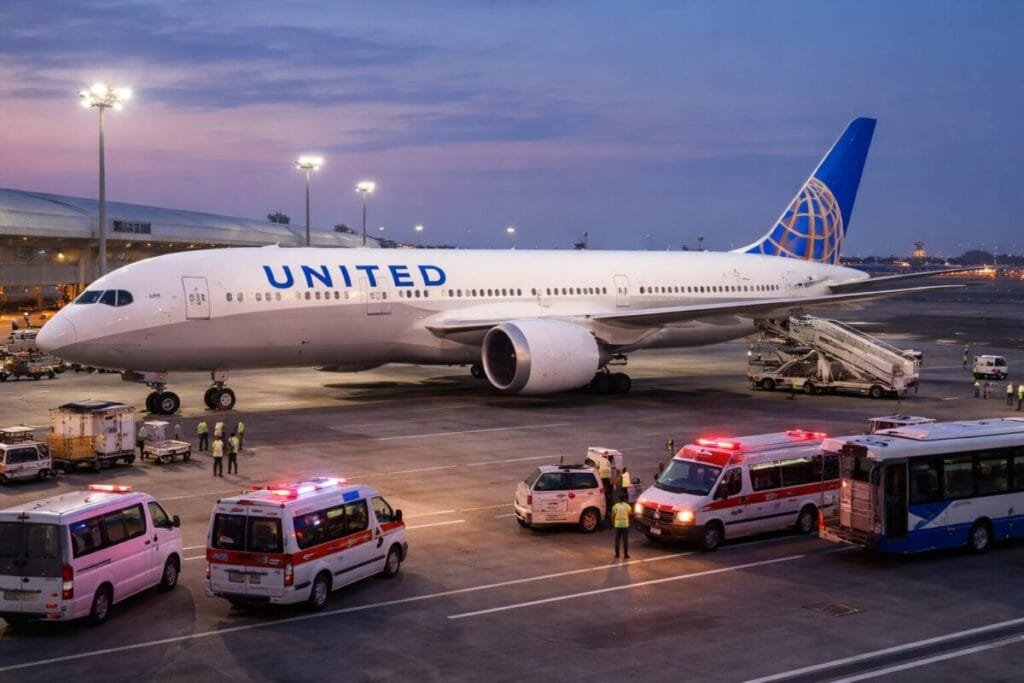
Global long-haul travel between North America and Southeast Asia faced a brief disruption after a United Airlines Dreamliner operating from San Francisco to Singapore diverted to Manila due to a medical emergency. The incident highlighted the resilience of international aviation systems and the interconnected nature of travel, tourism, and airport operations across the Asia-Pacific region.
Rising Demand for Ultra-Long Routes
The flight, scheduled to operate nearly seventeen hours nonstop, is part of a growing network of ultra-long-haul services linking major economic hubs. These routes have become vital for business travelers, diaspora communities, and tourism markets. The United States remains a key outbound tourism source market for Singapore and the Philippines, while Singapore Changi Airport has become a leading global transit hub with extensive connectivity into Southeast Asia.
Ultra-long flights require thorough operational planning. Airlines factor in crew rest, weather patterns, medical contingencies, and airport diversion options before departure. The Boeing 787-9 Dreamliner used for the service was designed for endurance, fuel efficiency, and improved cabin comfort. Its range allows carriers to maintain direct services that reduce stopovers and shorten overall travel time for passengers.
Medical Emergency Triggers Manila Diversion
Midway through the journey over the Pacific, a passenger became unresponsive. Cabin crew began emergency medical support. A doctor and a nurse among the travelers assisted. With over 190 people on board, the crew opted to divert to Manila, where major hospitals and international aviation services were available. The decision highlighted how airlines prioritize health and safety over schedule pressures.
Aviation authorities maintain procedures for medical diversions on long-haul flights. Pilots coordinate with dispatch centers and air traffic controllers to evaluate alternate airports based on distance, runway capacity, and medical infrastructure. Manila serves as a key diversion point for transpacific flights due to its strategic location and global airport classification.
Coordinated Response in the Philippines
The Dreamliner landed safely at Ninoy Aquino International Airport. Emergency responders were ready at the gate to support medical handover and evaluation. While authorities did not release details about the passenger’s condition, the swift ground response reflected national airport preparedness and inter-agency coordination.
For many travelers, Manila became an unexpected stopover. The city is one of Southeast Asia’s busiest air gateways and a rising tourism entry point, with growing hotel capacity, modernized terminals, and improving visitor services. This operational reality shows how tourism and aviation networks can expand beyond scheduled travel flows during disruption events.
Crew Duty Limits Prompt Overnight Stay
After landing, the airline assessed whether the flight could continue to Singapore the same day. The operating crew had reached regulatory duty limits. These limits exist to reduce fatigue, which can affect safety during critical phases of flight. International flight time regulations often mandate controlled rest periods for long-haul operations.
Passengers were provided hotel accommodation, transport, and meals during the overnight delay. Many had to adjust onward connections and hotel bookings in Singapore. Although inconvenient, the experience reinforced the importance of safety-led decision-making in aviation planning.
Impact on Tourism and Travel Logistics
The diversion led to the cancellation of the original arrival slot in Singapore. The disruption affected leisure tourists arriving for cruises, regional flights, and MICE events — a major economic segment for Singapore. MICE stands for Meetings, Incentives, Conferences, and Exhibitions, which contribute significantly to tourism receipts in the city-state.
Travel experts note that medical diversions, while rare, impact the broader travel ecosystem. Airlines, hotels, transport providers, and insurance companies often become interconnected in such situations. Comprehensive travel insurance has become increasingly relevant for long-haul passengers, especially for itineraries with non-refundable components such as tours or event tickets.
Other Recent Incidents Illustrate Global Patterns
Earlier in the month, a similar diversion occurred on a Frankfurt–Miami service operated by a European carrier after a medical event onboard. Aviation analysts point out that medical emergencies are among the most common causes of unscheduled landings. They represent a small percentage of total flights, yet they require precise coordination and trained crew to manage.
Commercial airlines routinely train cabin personnel in CPR, first aid, and the use of onboard medical kits. Many carriers also support remote medical consultation services from ground-based professionals during emergencies.
Strengthening Aviation Safety and Passenger Confidence
As global tourism continues to recover and expand, safety and preparedness remain crucial pillars of long-haul travel. The Asia-Pacific region is projected to become the world’s largest aviation market within the decade. Routes linking the U.S., Philippines, and Singapore will continue supporting economic, cultural, and tourism exchanges.
The United Airlines diversion highlighted how safety systems, international cooperation, and human expertise work together to maintain passenger confidence. Despite disruptions, travelers ultimately reached their final destination safely, reaffirming that in aviation, security and health remain paramount.
For more travel news like this, keep reading Global Travel Wire