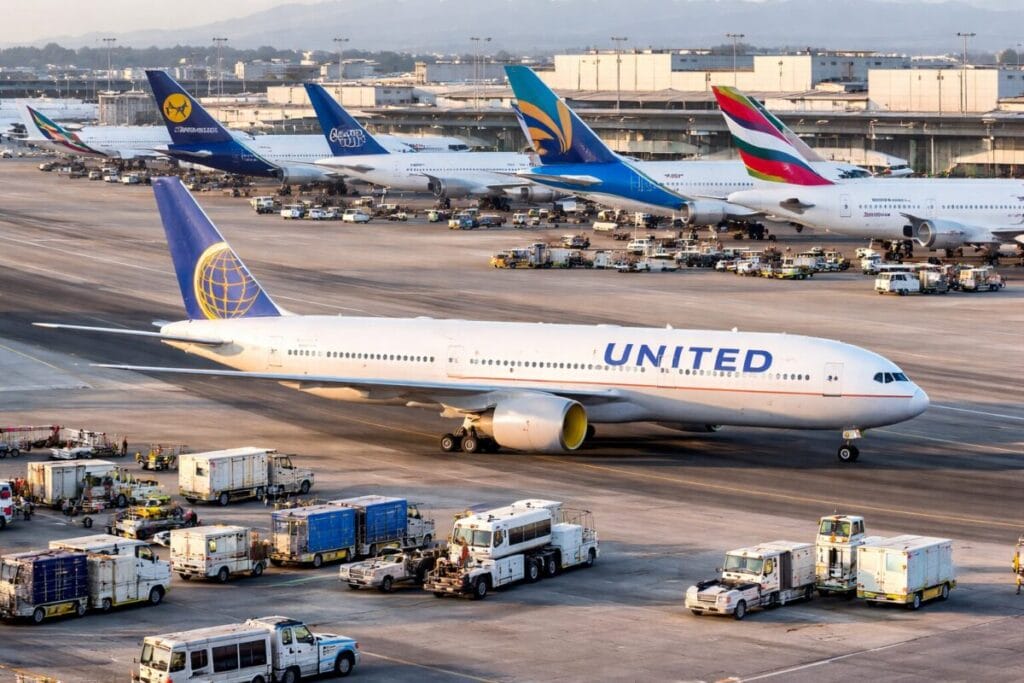
United Airlines has pulled dozens of Boeing 777 aircraft from its long-haul operation, sparking turbulence across the global travel market and creating fresh strain on transpacific and transatlantic tourism demand. The move escalates an ongoing aviation reliability crisis and raises new concerns about international travel supply just as seasonal bookings gain momentum.
Grounded Widebody Fleet Hits Global Routes
The decision centers on Boeing 777 jets powered by Pratt & Whitney PW4000 engines. Many have now entered storage facilities in the California desert. Their return timelines remain unclear due to complex inspection requirements, long maintenance queues, and parts shortages.
United Airlines is currently the only U.S. carrier flying this engine variant, which intensifies exposure to disruption. With long-haul aircraft in short supply across the industry, the grounding swiftly reached the tourism sector, where carriers, governments, and booking platforms scrambled to assess route stability.
Ripple Effects on Transpacific and Transatlantic Tourism
The Boeing 777 serves as the backbone of United’s international network. It carries high seat counts, strong range, and cargo capacity that supports tourism and trade. Without them, several long-haul corridors face reduced frequencies, up-gauging challenges, or outright cancellations.
Demand remains elevated. U.S. outbound travel to Europe and Asia has surged as leisure travelers pursue bucket-list destinations after years of pandemic-era disruption. Inbound travel is climbing as well, supported by tourism campaigns, visa policy adjustments, and a strong dollar.
The sudden shortage of aircraft introduces new bottlenecks. Travelers to Japan, South Korea, France, Germany, and the United Kingdom now encounter tighter inventory and fluctuating fares, especially surrounding summer holiday peaks. Hawaii and Guam also feel pressure, given their heavy reliance on long-haul connections from the continental United States and Asia.
Tourism Boards Prepare for Capacity Constraints
Tourism officials across multiple regions have flagged airlift capacity as a decisive factor in recovery. Many markets rely on U.S. carriers to drive seasonal inflows. Reduced aircraft availability weakens this dynamic just as tourism boards invest in campaigns aimed at attracting U.S. travelers.
Some destinations may pivot to codeshare partnerships or more aggressive engagement with Gulf and Asian airlines to compensate for lost seats. However, these transitions take time and depend on bilateral air service agreements, airport slot availability, and fleet allocations within foreign carriers.
Aging Fleet Meets Regulatory Pressure
United’s 777-200 and 777-200ER models average more than two decades in service. Older widebodies require intensive inspections and specialized components. Engine shop capacity has struggled to keep pace.
Federal regulators imposed stricter oversight after earlier fan blade failures triggered emergency directives. New inspection technology improved safety margins but extended maintenance intervals. Each cycle removes jets from operation, further reducing seat inventory on long-haul tourism routes.
This chain of events shows how technical policy decisions in aviation can quickly spill into tourism economics.
Outbound Travelers Face Reduced Choice
For American travelers heading abroad, the grounding means fewer nonstop options and tighter scheduling windows. Some routes now rely on smaller aircraft like the Boeing 787 or 767. Those swaps cut total seat supply and premium cabin inventory, two factors that influence fare levels and booking behavior.
Travel advisors report higher fare volatility on long-haul bookings departing from major U.S. hubs such as Newark, Chicago, Washington, Los Angeles, and San Francisco. Peak travel periods are especially exposed, including spring break, Golden Week, Christmas-New Year, and European summer.
Inbound Tourism Also Feels the Shockwave
Foreign tourists entering the United States encounter parallel issues. Reduced flight frequencies mean fewer arrival slots, less distribution across secondary U.S. gateways, and greater stress on airports serving as primary hubs.
Some travelers now transit through Canada or the Middle East to avoid itinerary disruptions. Travel sellers in Asia and Europe note growing demand for alternative routings and shifting loyalty patterns, which may persist if fleet modernization timelines stretch into multiple seasons.
Operational Fallout Escalates Fleet Modernization Pressure
Aviation analysts expect the disruption to accelerate long-term fleet renewal plans. Widebody aircraft deliveries from major manufacturers remain constrained. Airlines must compete for production slots amid global demand for fuel-efficient long-haul jets.
If regulatory modifications on the PW4000-powered 777s extend beyond 2028, many aircraft could retire earlier than planned. That would reshape United Airlines’ international network and alter tourism connectivity between the world’s largest travel markets.
Government Agencies Monitor Transportation Impact
Tourism is a significant export sector for the United States. Reduced airlift can impact hospitality spending, visitor arrivals, and regional tourism economies. State and federal agencies continue to monitor capacity imbalances while tourism boards refine forecasts for inbound and outbound traffic.
While safety remains the top priority, economic considerations are rising as market disruptions prolong.
Outlook: Travelers Should Expect Continued Volatility
Travelers should anticipate tighter inventory on international routes and plan earlier for long-haul itineraries. Alternate routings and multi-stop travel may play a larger role this year. Dynamic pricing will likely follow as airlines manage constrained seat supply against strong demand.
The grounding of a single long-haul fleet type has now evolved into a tourism story with global consequences—one that underscores how deeply aviation reliability is tied to international mobility in both directions.
For more travel news like this, keep reading Global Travel Wire