International travel continues to rebound in 2026, but safety concerns remain central for American travelers. The US government has updated its travel advisories, placing eight African countries under the strictest warning level. These updates reflect rising security risks, political instability, and limited emergency support for foreign nationals.
The advisory aims to protect US citizens from life-threatening situations. It also signals serious challenges within parts of the African continent, especially across conflict-affected regions.
What Is a Level 4 “Do Not Travel” Advisory?
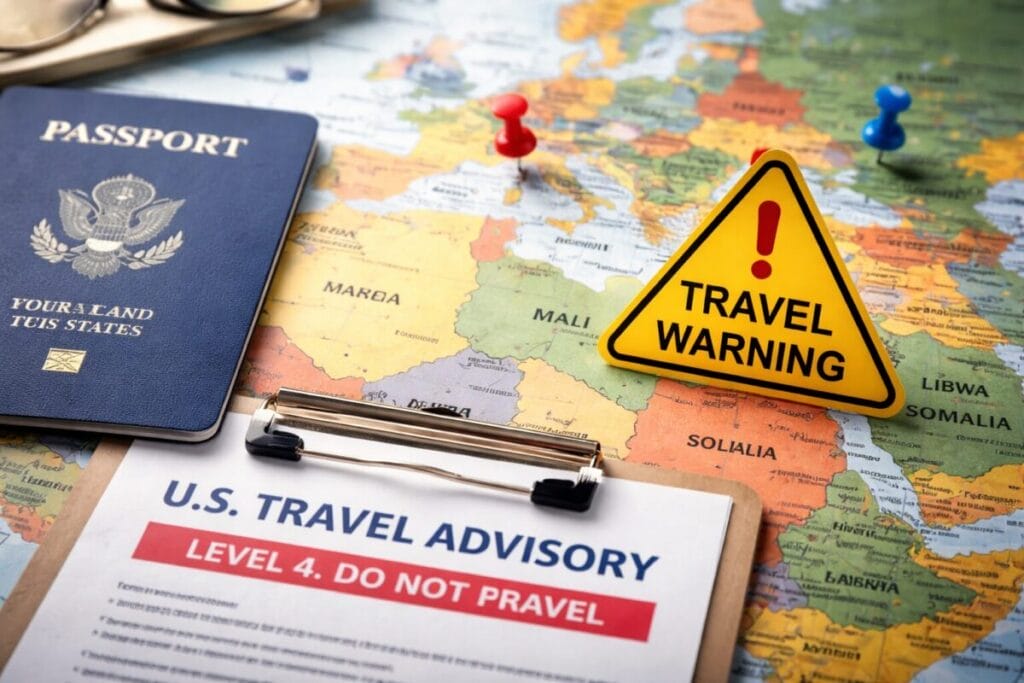
A Level 4 advisory is the highest warning issued by the US government. It urges Americans to avoid all travel to the listed country. The risks often include terrorism, armed conflict, kidnapping, violent crime, and civil unrest.
In Level 4 destinations, the US government has little or no ability to provide emergency assistance. Embassies may operate with reduced staff. Movement for diplomats is often restricted and heavily guarded.
For travelers, this means help may not arrive when needed.
Niger Added to the Level 4 List
In early 2026, Niger became the latest African country placed under a Level 4 advisory. The decision followed a sharp decline in national security and governance.
Militant violence has increased across the country. Terror groups linked to global extremist networks remain active. Kidnappings and armed attacks now pose daily risks.
A recent assault near the international airport in the capital raised major concerns. Airports usually represent the most secure zones in any country. When violence reaches these spaces, it reflects deep security failures.
Outside the capital city, emergency support for Americans is nearly impossible. Travel between regions carries severe risk.
The Eight African Countries Under Level 4 Advisory
The current list includes eight nations where security conditions remain extremely dangerous:
Libya
Armed conflict continues across several regions. Rival factions and militias control large areas. Kidnappings and attacks occur without warning.
Mali
Extremist groups operate in northern and central zones. Terror attacks target civilians, foreigners, and security forces. Road travel is highly unsafe.
Burkina Faso
Insurgent violence has surged in recent years. Political instability and armed attacks affect both cities and rural areas.
Central African Republic
Armed groups control much of the countryside. Civil unrest, violent crime, and weak law enforcement persist.
South Sudan
Ongoing ethnic violence and political tension continue to destabilize the country. Crime and armed clashes remain common.
Sudan
Civil war has caused widespread humanitarian collapse. Fighting between rival forces affects major cities and border areas.
Somalia
Militant attacks remain frequent. Threats include terrorism, piracy, and kidnapping. Security conditions remain unpredictable.
Niger
The newest addition faces growing militant activity, weakened state control, and limited foreign assistance.
Why These Advisories Matter to Travelers
Travel advisories are not symbolic. They directly affect insurance coverage, airline decisions, and embassy operations.
Many travel insurers refuse coverage in Level 4 countries. Airlines often reduce or cancel routes. Tour operators suspend services.
For Americans already in these countries, evacuation options may be limited or unavailable. Emergency medical care can also be difficult to access.
Impact on Tourism and Local Economies
These advisories carry heavy consequences beyond travelers. Tourism often collapses soon after Level 4 warnings are issued. Hotels, guides, transport providers, and local businesses lose income.
Foreign investment also slows. International conferences and cultural exchanges are canceled. Diplomatic missions scale back their presence.
For local communities, this isolation deepens economic hardship and limits global engagement.
Africa Remains Diverse and Largely Safe Elsewhere
It is important to note that these advisories do not apply to the entire continent. Many African countries continue to welcome tourists safely in 2026.
Popular destinations across North, East, and Southern Africa remain stable and well-prepared for international visitors. Safari tourism, cultural travel, and beach holidays continue to thrive in several regions.
Travelers should assess each country individually rather than generalizing the continent.
How Travelers Can Stay Informed in 2026
Travel conditions can change rapidly. Staying informed is essential.
• Review official travel advisories before booking
• Monitor local security developments
• Maintain flexible travel plans
• Register travel details with official alert systems
• Follow local laws and security guidance
In high-risk regions, even short trips can become dangerous within hours.
Final Outlook for 2026 Travelers
The updated US Travel Advisory for 2026 highlights ongoing instability across parts of Africa’s Sahel and conflict zones. The addition of Niger underscores how quickly security situations can deteriorate.
While global travel offers incredible opportunities, safety must remain the top priority. Careful planning, real-time awareness, and informed decisions help ensure that travel remains enriching rather than risky.
For now, Americans are strongly advised to avoid these eight countries and explore safer destinations instead.
For more travel news like this, keep reading Global Travel Wire