Uttar Pradesh, one of India’s most culturally and spiritually significant states, has stepped up health monitoring measures for Chinese tourists and other international visitors as pilgrimage travel intensifies. The move reflects a broader effort to balance the growing demand for religious tourism with proactive public health preparedness, ensuring that sacred destinations remain safe, orderly, and welcoming during peak travel periods.
With millions of pilgrims visiting the state each year, particularly during the winter tourism season, authorities have adopted a structured and preventive approach. The focus is not on restriction but on preparedness, transparency, and visitor well-being, reinforcing the state’s reputation as a responsible global tourism destination.
Heightened Vigilance Across Uttar Pradesh
The health department in Uttar Pradesh has introduced a comprehensive framework to monitor the movement and health status of visitors arriving from regions requiring closer observation. This includes enhanced screening, coordinated data sharing, and clearly defined response mechanisms should any health concerns arise.
Officials emphasize that the measures are precautionary and aligned with international health standards. By strengthening systems at entry points, hotels, and pilgrimage zones, the state aims to protect both visitors and local communities without disrupting the spiritual experience that draws travelers from around the world.
Structured Health Protocols in Varanasi
The historic city of Varanasi, often described as the spiritual capital of India, remains a focal point of these enhanced protocols. As one of the world’s oldest continuously inhabited cities, Varanasi attracts a steady flow of foreign tourists and pilgrims throughout the year, including large numbers during winter festivals.
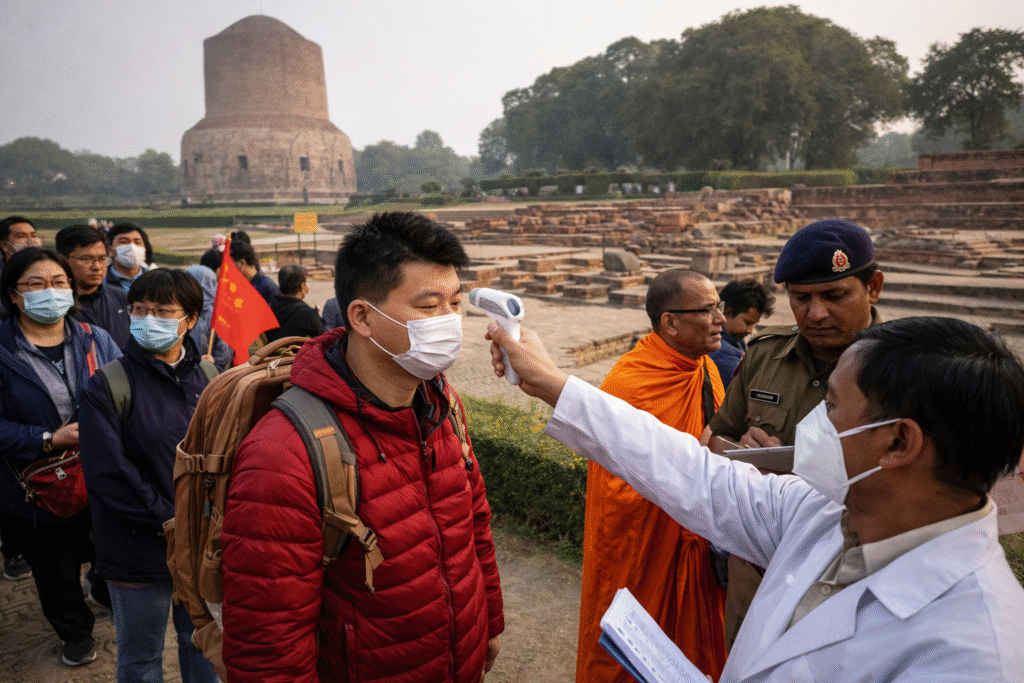
Local authorities have implemented a systematic registration process for international visitors arriving through designated travel corridors. Medical teams stationed at transit points conduct health screenings, with particular attention to respiratory symptoms and general wellness indicators. The process is designed to be efficient, respectful, and minimally intrusive, allowing tourists to proceed with their pilgrimage plans smoothly.
Coordination between district health officials, law enforcement, and tourism administrators ensures real-time information sharing. This integrated approach allows authorities to maintain an accurate overview of visitor movement while remaining ready to respond quickly if medical assistance is required.
Hospitality Sector Plays a Key Role
Hotels, guesthouses, and dharamshalas across pilgrimage areas have been actively included in the monitoring framework. Accommodation providers are maintaining detailed records of international guest arrivals and departures, which are shared with relevant local departments. This system allows for timely communication and rapid support in case a visitor experiences health-related issues during their stay.
Tourism officials note that the hospitality sector’s cooperation has been strong, reflecting a shared commitment to guest safety. Training sessions and briefings have helped hotel staff understand protocols, cultural sensitivities, and the importance of clear communication with foreign guests.
Sarnath Identified as a Priority Monitoring Zone
Just outside Varanasi, Sarnath has been identified as a priority area for enhanced health oversight. As a site of immense importance to Buddhists worldwide, Sarnath draws pilgrims from China and other East Asian countries throughout the year.
Visitors to key landmarks such as the Dhamek Stupa and surrounding monasteries are provided with clear information on health guidelines upon arrival. Mobile health units have been deployed in the area to offer basic check-ups and immediate assistance, ensuring that support is available without disrupting the spiritual environment.
Local monks, monastery administrators, and tour coordinators have been engaged to help communicate health measures in a culturally sensitive manner. This collaborative approach has helped foster trust and cooperation, reinforcing the idea that safety and spirituality can coexist harmoniously.
Clear Administrative Directives and Preparedness
State-level directives have been issued to airports, border checkpoints, and major transit hubs serving Uttar Pradesh. These guidelines require the collection of recent travel history from international arrivals and the secure management of this information within a centralized monitoring system.
In situations where a visitor displays signs of illness, predefined isolation and care protocols are activated. Designated medical facilities have reserved capacity for international patients, supported by trained staff familiar with cross-cultural communication. Officials stress that these arrangements are preventive in nature and intended to provide reassurance rather than cause concern.
Strengthening Global Confidence in Indian Tourism
Tourism authorities believe that transparent health measures ultimately enhance global traveler confidence. By demonstrating preparedness and responsibility, Uttar Pradesh aims to position itself as a safe and dependable destination for spiritual and cultural tourism.
Community engagement has also played a vital role. Local residents, tourism workers, and religious institutions have been encouraged to view these measures as part of a collective effort to protect livelihoods, heritage sites, and visitor experiences.
Looking Ahead to Peak Pilgrimage Season
As winter travel continues to peak, authorities expect high volumes of international pilgrims, particularly at major religious centers. The enhanced monitoring systems are designed to remain flexible, allowing adjustments based on visitor trends and evolving health guidance.
By combining tradition with modern governance, Uttar Pradesh is showing how iconic destinations can welcome the world while prioritizing safety. The approach underscores a broader message: thoughtful planning and cooperation are essential to sustaining tourism in an increasingly interconnected global landscape.
For more travel news like this, keep reading Global Travel Wire