Vietnam’s central coastal region is facing one of its worst flood seasons in recent memory. Cities like Hue, Hoi An and Da Nang—known for their rich cultural heritage and tourism appeal—are now grappling with relentless rainfall, historic flooding and major disruption. Rivers have burst their banks. Roads have vanished under water. Whole communities stand cut off from help. Tourism infrastructure has taken a hit.
Hue: Ancient Capital Battles Rising Waters
In Hue—the former imperial capital famed for its royal architecture—the flooding has struck deep. Historic quarters and riverside districts lie underwater. Many cultural sites face prolonged exposure to water damage. Hundreds of households were evacuated. Rescue teams are navigating flooded alleys by boat to deliver aid. Though the shakes of the city’s heritage landmarks remain strong, assessment teams are readying damage evaluations once waters subside.
Hoi An: Heritage Town Becomes Waterway
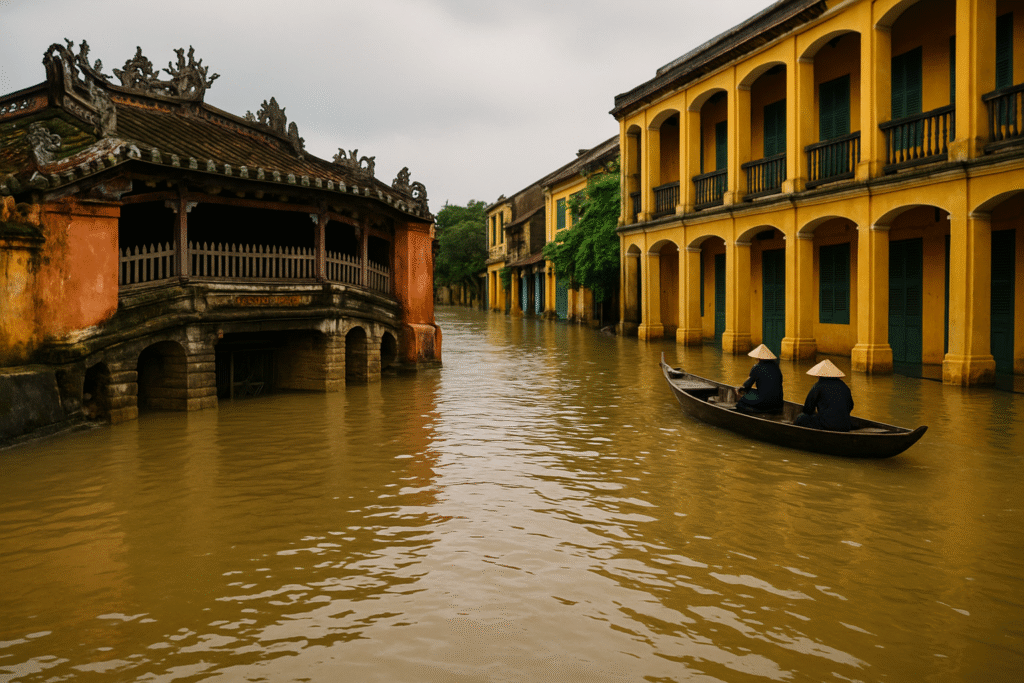
Further south in Hoi An’s UNESCO-listed ancient town, the typically cobbled lanes look like canal streets. The Thu Bon River has overflowed and turned pedestrian zones into floating conduits. Visitors and residents in low-lying zones were evacuated. Hotels and guesthouses offered shelter to those stranded. Widespread power cuts forced businesses to shut. Local tourism operators are prioritising safety. They’re preparing for heritage-building inspections, drainage cleans and disinfection once the flood peak ends.
Da Nang & Quang Tri: Coastal Power Disruptions and Rail Shutdowns
In Da Nang, heavy rain triggered large-scale power failures, crippling tourism services. Nearby Quang Tri province reported similar damage. Tens of thousands of households across these provinces remain without electricity as repair teams work around the clock. The national north–south railway line has already halted operations until safety checks finish. Airports in Hue and Da Nang remain open but travellers are warned of delays and scheduling changes as weather conditions stay volatile.
Travel Advisory: Stay Alert & Flexible
If you currently are in or planning travel to central Vietnam, follow local updates and official guidance carefully. Avoid travel in heavy rain, stay away from rivers and low-lying zones, and steer clear of mountainous areas prone to landslides. For future trip plans, build flexibility into your itinerary and check your travel insurance for natural-disaster coverage. Although no national travel restrictions are in place, the government emphasises caution during the storm season from June to November.
Heritage Under Threat, Resilience in Motion
This event shines a harsh light on how vulnerable central Vietnam is to extreme weather. Low-lying terrain, seasonal storms and rising rainfall patterns combine to raise flood risk. Yet amid the crisis the resilience of local communities is evident. Across Hue, Hoi An and Da Nang residents are already clearing debris, pumping water, and rebuilding. Restoration teams are standing by to protect heritage monuments and tourism assets as soon as conditions allow.
Tourism Recovery: The Road Ahead
Tourism is a major pillar of the regional economy in this part of Vietnam. The flood disruption has dealt a heavy blow, but recovery is underway. Once floodwaters retreat and infrastructure is secured, destinations like Hue’s royal citadel, Hoi An’s lantern-lit streets and Da Nang’s golden beaches are poised to reopen. Local authorities are working to fast-track clean-up and safety checks to restore visitor confidence.
Climate Signals: More Than A Seasonal Storm
Experts say this flooding is more than an isolated event—it underscores a bigger trend tied to climate change. Intensified rainfall, rising sea levels and more frequent extreme weather make coastal tourism zones like central Vietnam more at risk. The current crisis may drive investment in stronger drainage systems, reinforced heritage protection and climate adaptation strategies for the tourism sector.
Conclusion
For travellers and tourism operators alike, this is a crucial moment. The central Vietnamese coast is under pressure, but the recovery spirit remains strong. As waters recede and restoration begins, Hue, Hoi An and Da Nang aim to bounce back—ready to welcome visitors once more to their heritage trails, beach resorts and timeless charm.
For more travel news like this, keep reading Global Travel Wire