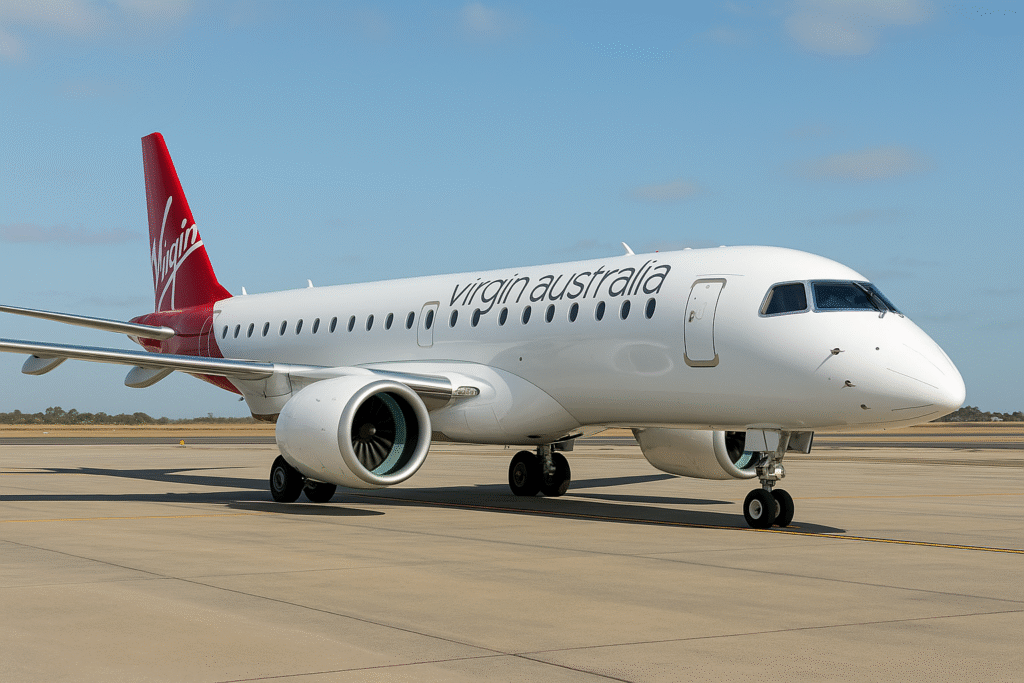
Virgin Australia has officially entered a new chapter by launching the Embraer E190‑E2 aircraft into service. This move marks a major shift in regional aviation across Australia, particularly in Western Australia’s remote mining and charter markets. The aircraft delivers enhanced comfort, efficiency and sustainability.
Inaugural Flight and Fleet Roll-out
The first of eight E190-E2 jets, named “Coral Bay”, completed its inaugural commercial flight from Perth to Boolgeeda, departing at 7:15 AM and arriving at 9:05 AM AWST. The aircraft is operated by Virgin Australia Regional Airlines (VARA) and is destined to modernise domestic and regional operations.
Over the next two to three years, the remaining seven aircraft will be delivered, with full retirement of the older fleet slated for early 2026.
Tailored for the Demands of Western Australia
The E190-E2 is well suited to the unique challenges of WA’s regional aviation landscape. It has the capability to handle shorter runways, higher ambient temperatures and intensive charter operations common to mining and fly-in-fly-out (FIFO) routes. Its performance gives Virgin Australia a competitive edge in this specialised market.
Passenger Experience Gets a Major Upgrade
Inside the cabin, Virgin Australia has raised the bar for regional comfort. The aircraft features a dual-class configuration (Business and Economy) — a first for WA’s charter market. Economy seats are arranged in a 2+2 layout with no middle seats, providing more space and comfort. Wider seats, increased overhead bin capacity, in-seat power and Wi-Fi connectivity (to be fitted in early 2026) enhance the travel experience.
Efficiency and Sustainability at the Forefront
The E190-E2 brings significant gains in fuel efficiency and emissions reduction. Compared with the older Fokker 100 fleet, it offers up to 30 % lower fuel burn and a quieter cabin and operations profile. These performance gains align with Virgin Australia’s broader commitment to a more eco-friendly future in aviation.
Strategic Fleet Renewal and Route Flexibility
This aircraft introduction is part of a broader strategy by Virgin Australia to modernise its fleet and expand beyond its core charter role. Initially focused on regional WA charter services, the E190-E2 is also configured for regular passenger operations when charter demand eases. This flexibility allows the airline to deploy the jet on domestic leisure routes too, supporting growth in both regional and mainstream markets.
Replacing the Old with the New
With the arrival of the E190-E2 jets, Virgin Australia will begin phasing out its ageing Fokker 100 fleet. The older aircraft have served the airline well but no longer deliver the performance, comfort or environmental credentials required for the next stage of growth. The transition will finalise around early 2026.
Implications for Regional Communities
For regional communities and charter clients in Western Australia, the launch of this aircraft signals improved connectivity, higher service standards and more reliable operations. In remote areas where travel can be challenging, these upgrades matter. The quieter operations from the E190-E2 also carry benefits for local airport environments and nearby communities.
Looking Ahead: Growth and Innovation
As the new jets join the fleet, Virgin Australia will be better placed to expand its regional footprint. With eight firm orders for the E190-E2 and the capacity to deploy these across charter, regional and commercial routes, the airline is positioning itself for future growth. The modern fleet will help meet increasing demand for premium, efficient travel while supporting the company’s sustainability ambitions.
Summary
The launch of the Embraer E190-E2 by Virgin Australia represents a major milestone for regional aviation in Australia. With superior comfort, efficiency and environmental performance, the aircraft is set to redefine domestic air travel outcomes. The fleet’s introduction strengthens regional connectivity, enhances passenger experience and supports a transition toward a more sustainable future for the airline and the communities it serves.
For more travel news like this, keep reading Global Travel Wire