
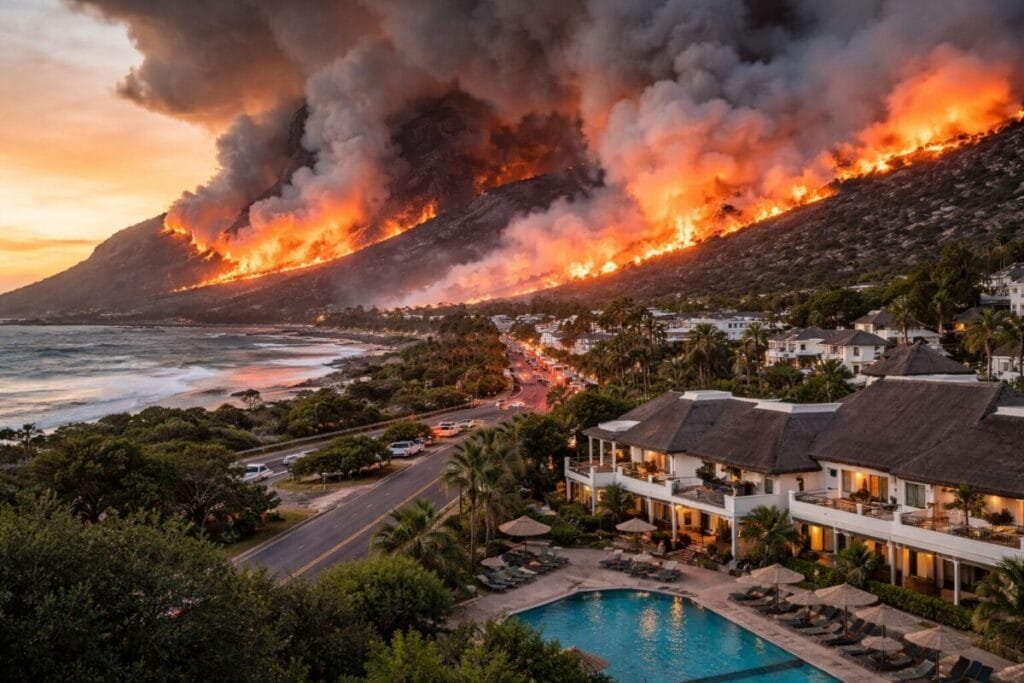
Wildfires have dealt a heavy blow to tourism in South Africa’s Western Cape as the Overstrand region battles severe blazes during the peak holiday travel season. The coastal municipality, known for its whale-watching spots, beaches and outdoor adventure attractions, has been forced to confront an emergency that has disrupted one of its most important economic pillars.
A Region Under Fire
Fire crews have been responding to multiple flare-ups across the Overstrand area for days. Hot, dry conditions and powerful winds have made containment difficult. Many locals reported reduced visibility and smoke drifting into residential and commercial zones. Authorities issued evacuation notices in select communities while emergency teams worked to safeguard properties and reopen critical routes.
The Overstrand region typically sees a large inflow of domestic and international visitors between December and January. Families travel from across the country for summer beach holidays, while foreign tourists arrive to explore coastal trails, shark cage diving experiences, marine cruises and nature reserves. This year’s fires have upended that routine.
Tourism Interrupted During Peak Season
The Western Cape’s holiday season generates a sizeable share of annual tourism revenue for the province. Resorts, guesthouses, tour companies, restaurants and outdoor operators usually report full bookings and high spending levels. The fires arrived at the worst possible moment, forcing establishments to cancel reservations or operate with reduced capacity. Several resorts reported guests cutting trips short due to smoke exposure concerns or blocked access routes.
Road closures created a ripple effect. Travellers struggled to reach coastal towns, prompting many to change itineraries or postpone visits. Shuttle operators, tour guides and local car hire companies also felt the impact. For a region that relies heavily on seasonal tourism, the drop in visitor movement has been immediate and painful.
Financial Strain on Local Tourism Businesses
Business owners in the hospitality sector describe the event as both financially and emotionally draining. Instead of the usual festive rush, managers found themselves negotiating cancellations, issuing refunds and coordinating emergency plans for guest safety. Smaller accommodation providers, which depend on summer profits to sustain operations throughout the year, expressed concern about the long-term effects.
Restaurant owners reported a decline in foot traffic, while waterfront operators who rely on favourable weather conditions saw entire holiday tour schedules disrupted. Staff hours were reduced in several establishments as businesses sought to limit expenses amid falling income.
Industry analysts note that tourism accounts for a notable share of Western Cape employment. When visitor numbers drop, employment vulnerability rises across accommodation, transport and entertainment segments. In Overstrand’s case, many residents work seasonally, making the timing even more difficult.
Community Resilience and Emergency Coordination
Despite the challenges, local residents demonstrated strong community spirit. Volunteers helped relocate animals, distribute masks and assist families affected by temporary evacuations. Guesthouses offered emergency shelter to those displaced, while residents shared resources and supported firefighters with supplies.
Emergency teams worked around the clock to protect key tourism zones and reopen transport corridors. Local tourism boards issued regular updates to travellers on access routes and safety guidance, aiming to prevent panic while encouraging responsible travel planning. The sense of unity has provided comfort during uncertain days.
Environmental and Tourism Impacts
The fires have raised broader questions around environmental resilience and tourism sustainability in the Western Cape. Wildfire seasons have become more frequent and more intense in several parts of South Africa due to prolonged drought periods and shifting weather patterns. Natural reserves, hiking trails and marine ecosystems are key tourism assets in Overstrand, making climate-related threats an emerging concern for long-term industry planning.
Environmental teams expect to assess the full ecological impact once the fires are under control. Vegetation recovery will likely take months in affected areas, and some outdoor attractions may require phased reopening to ensure visitor safety.
Government Response and Recovery Initiatives
Local and provincial authorities have continued to monitor the situation and coordinate emergency resources. Discussions within government and tourism bodies are centred around potential support packages for affected enterprises. Relief measures under consideration include financial assistance for hospitality businesses, temporary employment support and marketing efforts to restore visitor confidence once conditions improve.
Tourism experts anticipate that recovery will depend on clear communication and strong promotional efforts. Once the fires are contained and travel routes reopen, a campaign to showcase the region’s readiness for visitors will play a key role in rehabilitation. Collaboration between private operators, government and tourism boards will shape the recovery strategy.
Outlook for the Western Cape Tourism Season
While uncertainty remains, authorities and business owners are optimistic about the region’s resilience. The Overstrand coastline has endured storms, economic shocks and past fire seasons, yet tourism has historically rebounded due to its natural beauty, wildlife offerings and strong brand appeal as a summer destination.
The immediate priority is safety. Once stability is restored, attention will shift toward rebuilding bookings and reassuring travellers. Industry observers expect that domestic tourists may return first, followed by international travellers in later months.
Conclusion
The ongoing wildfires in Overstrand have reminded the tourism industry of its vulnerability to environmental shocks. Yet they have also highlighted the region’s resilience, unity and determination to rebuild. With coordinated recovery efforts and renewed confidence, the Western Cape expects to welcome holidaymakers again and reclaim its place as one of South Africa’s most iconic coastal destinations.
For more travel news like this, keep reading Global Travel Wire