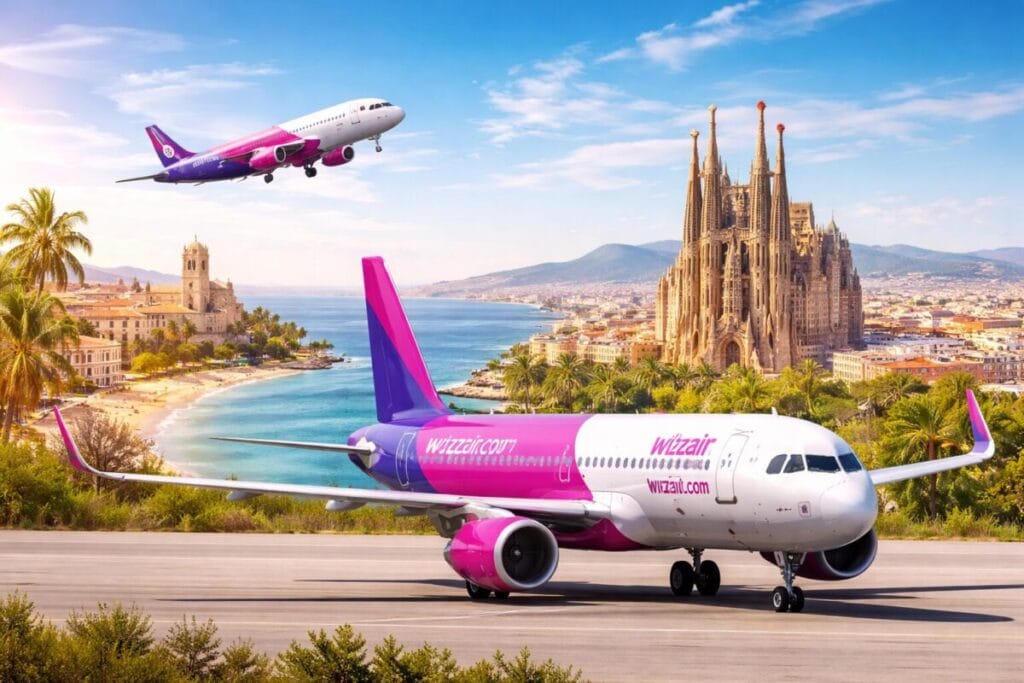
Low-cost carrier Wizz Air will expand its services between Larnaka and Barcelona starting summer 2026. The move signals a major shift in Mediterranean air connectivity. It strengthens travel ties between Cyprus and Spain and opens new opportunities for tourism and business.
The additional flights respond to rising demand for direct and affordable routes across Southern Europe. Industry observers expect strong passenger growth on this corridor once operations increase.
Why the Larnaka–Barcelona Route Matters
The Larnaka–Barcelona route connects two powerful Mediterranean destinations. Both cities attract millions of visitors each year. Both also serve as economic and cultural hubs.
Larnaka acts as a key gateway to Cyprus. The city offers access to Blue Flag beaches, UNESCO-listed heritage sites, and year-round sunshine. Tourism officials continue to position Cyprus as a safe and diverse destination. Visitors can explore ancient ruins, coastal resorts, and mountain villages within short distances.
Barcelona remains one of Europe’s most visited urban destinations. The city draws travelers with its architecture, beaches, gastronomy, and cultural festivals. Direct access from Cyprus makes city breaks and extended holidays easier than ever.
Stronger air links create smoother travel flows. They reduce reliance on connecting flights. They also improve overall travel efficiency.
Tourism Growth Expected on Both Sides
Tourism authorities in both countries aim to diversify visitor markets. Spain represents a growing outbound market for Cyprus. Direct flights make the island more visible and accessible to Spanish travelers.
Cypriot travelers will also gain better access to Spain. Barcelona serves as a gateway to Catalonia and other Spanish regions. Improved air links may encourage multi-city trips across the Iberian Peninsula.
Hotels, restaurants, tour operators, and local attractions in both destinations stand to benefit. Increased seat capacity often translates into higher visitor spending. The hospitality sector expects stronger occupancy rates during peak seasons.
Government tourism strategies in both countries focus on extending the travel season. More flights support off-season tourism. This helps stabilize revenue beyond the summer months.
Economic Impact Beyond Tourism
The benefits extend beyond leisure travel. Cyprus continues to develop as a regional business and technology hub. Spain remains one of the European Union’s largest economies.
More frequent flights allow faster business travel between the two markets. Companies can build partnerships with greater ease. Trade missions and investment forums also become more accessible.
Air connectivity often influences foreign investment decisions. Improved links between Larnaka and Barcelona may attract new collaborations in shipping, fintech, education, and renewable energy.
Airports will also see gains. Increased passenger traffic supports retail concessions, ground services, and aviation employment.
What This Means for Travelers
Travelers will see clear advantages. More flights bring more scheduling options. This flexibility helps short-break visitors and long-stay tourists alike.
Low-cost competition often leads to more attractive fares. Budget-conscious travelers may find better deals. Families, students, and digital nomads could benefit from reduced ticket prices.
Direct routes shorten total journey times. Travelers avoid layovers in other European hubs. That convenience improves the overall travel experience.
The expanded service may also encourage multi-destination itineraries. Visitors can combine Cyprus and Spain in one Mediterranean holiday. Cruise passengers and tour operators may develop new packages around the route.
A Wider Mediterranean Travel Trend
The expansion reflects a broader shift in European travel patterns. Airlines increasingly focus on point-to-point routes between leisure destinations. Demand for direct Mediterranean connections continues to grow.
Travelers now prioritize convenience and cost efficiency. Short-haul flights between coastal cities fit this trend. Southern Europe remains one of the world’s most popular travel regions.
Improved connectivity also strengthens Europe’s appeal to long-haul visitors. Tourists from North America, Asia, and Australia often build multi-country itineraries. Better air links between Cyprus and Spain make trip planning easier.
Infrastructure and Capacity Readiness
Airports in Larnaka and Barcelona have invested heavily in infrastructure upgrades in recent years. Modern terminals, expanded passenger services, and digital systems support higher traffic volumes.
Cyprus continues to enhance its tourism infrastructure. Authorities promote sustainable tourism practices and year-round cultural programming. Spain follows similar strategies, focusing on smart tourism and destination management.
The new flights align with these national goals. They encourage balanced growth while maintaining service quality.
Looking Ahead to Summer 2026
The summer 2026 launch marks a strategic moment for Mediterranean travel. Airlines prepare for strong seasonal demand. Tour operators will likely introduce early booking campaigns linked to the route.
Industry analysts expect steady passenger growth during the first operational year. If demand remains strong, further frequency increases may follow.
For travelers, the message is clear. Cyprus and Spain will become easier to explore together. Shorter travel times, competitive fares, and expanded schedules reshape the travel map of Southern Europe.
The Larnaka–Barcelona expansion signals more than just added flights. It highlights the growing importance of regional connectivity in shaping the future of Mediterranean tourism.
Summer 2026 could mark the start of a new chapter for Cyprus-Spain travel.
For more travel news like this, keep reading Global Travel Wire