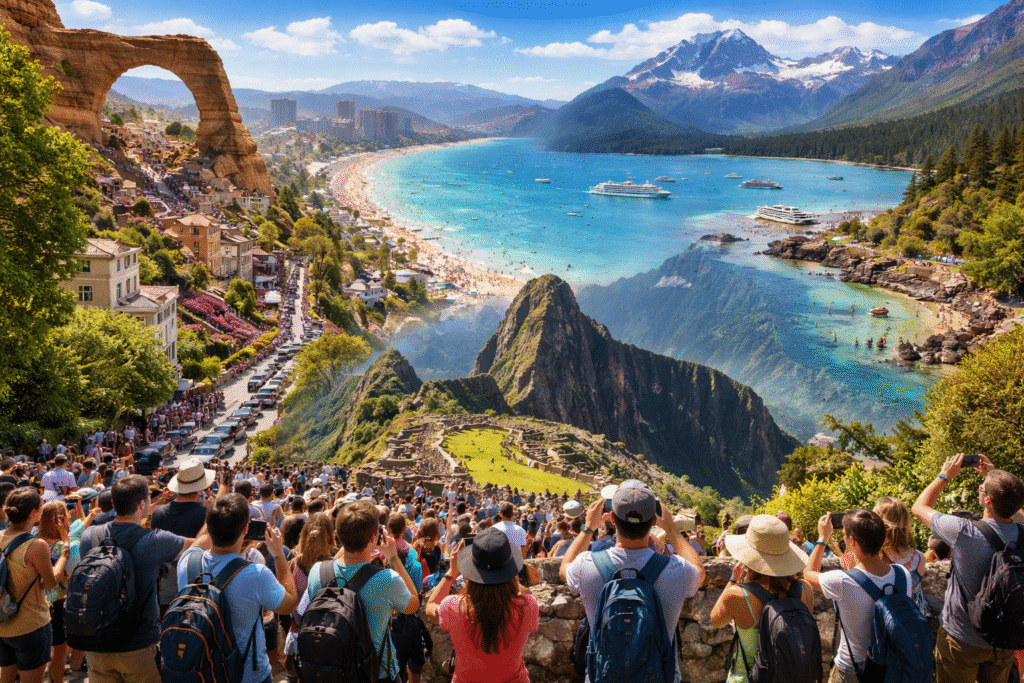
Tourism has rebounded strongly across the globe. Visitor numbers now exceed pre-pandemic levels in many destinations. This recovery has boosted local economies. It has also intensified overtourism.
Cities, beaches, national parks, and heritage sites now face severe pressure. Crowds strain infrastructure. Nature suffers visible damage. Residents report declining quality of life.
From the United States to South America, governments are rushing to control visitor flows. Reservation systems, visitor caps, and stricter rules are no longer optional. They are becoming essential.
US National Parks Feel the Weight of Demand
America’s national parks sit at the center of the overtourism debate. A small group of parks receives most visits. Peak seasons now stretch across most of the year.
Popular parks face packed roads, full parking lots, and overwhelmed facilities. Trails erode faster. Wildlife encounters rise. Emergency responses slow down.
To cope, park managers use timed entry systems and permit requirements. Vehicle reservations now limit access to scenic routes and popular hikes. These measures aim to protect fragile ecosystems while improving visitor safety.
Without continued controls, congestion will likely worsen through 2026.
Sedona’s Social Media Boom Fuels Strain
Sedona’s red rock scenery has exploded across social media. Visitor numbers now exceed what the town was designed to handle.
Parking shortages plague trailheads. Rescue calls rise as unprepared hikers venture into extreme heat. Litter and graffiti threaten sensitive landscapes.
Short-term rentals have reduced housing availability for residents. Local planning efforts now focus on sustainable tourism and visitor education. Officials stress respect for neighborhoods and nature.
Sedona’s challenge reflects a growing issue. Digital exposure drives travel faster than infrastructure can adapt.
Historic Charleston Balances Tourism and Livability
Charleston’s charm attracts millions each year. Cobblestone streets and historic homes define the city’s appeal. They also limit its capacity.
Tour buses, cruise passengers, and carriage tours crowd narrow streets. Traffic congestion frustrates residents. Daily life competes with visitor demand.
City leaders now prioritize balance. Plans focus on reducing congestion, managing tour traffic, and protecting residential areas. Charleston’s future depends on maintaining authenticity without sacrificing community well-being.
Lombard Street’s Daily Gridlock
San Francisco’s Lombard Street sits in a quiet residential area. Yet millions visit its winding curves every year.
Traffic congestion lasts most of the day. Noise and emissions disrupt daily life for locals. Pedestrian safety remains a concern.
City officials continue to debate reservation systems and pricing tools. Without action, crowding will persist as travel demand grows.
Miami Beach Treats Overtourism as a Safety Issue
Miami Beach faces intense seasonal surges. Spring break brings extreme crowding and serious safety concerns.
City leaders have responded with strict enforcement. Measures include restricted access zones, bag checks, higher parking fees, and towing policies. The goal is clear. Deter reckless behavior and protect residents.
These actions show how overtourism can escalate beyond inconvenience. Public safety now drives tourism management decisions.
Hawaii Shifts Toward Regenerative Tourism
Hawaii’s natural beauty has long attracted global travelers. Decades of heavy visitation have taken a toll on reefs, beaches, and water resources.
The state now promotes regenerative tourism. This approach focuses on giving back more than tourism takes. Communities gain stronger authority to protect culturally and environmentally sensitive areas.
The shift signals a major change. Hawaii aims to reduce volume while increasing value and responsibility.
State Parks Turn to Reservations
State parks across the US face record visitation. Outdoor recreation surged after the pandemic and never slowed down.
Maryland introduced advance day-use reservations at popular parks. The system prevents road backups and ensures access for those who plan ahead.
Connecticut adopted parking reservations to manage crowding at high-demand lakes and beaches. Capacity limits now trigger closures before chaos sets in.
These systems provide predictability for visitors and relief for surrounding communities.
Yellowstone Faces Long-Term Pressure
Yellowstone remains one of the world’s most visited parks. Most visits occur during summer months, creating intense seasonal pressure.
Staffing shortages, aging infrastructure, and crowded hotspots challenge park operations. Managers now test targeted strategies in high-use areas.
Collaboration with nearby towns has become essential. Traffic, housing, and utilities extend the impact beyond park boundaries.
Banff and Lake Louise Confront Record Crowds
Banff National Park continues to break visitation records. Lake Louise sits at the epicenter of congestion.
Traffic jams delay emergency services. Parking fills before sunrise. Visitor frustration grows.
Canadian authorities now rely on shuttles, reservations, and paid parking. Long-term plans aim to cap demand while preserving access. Implementation will expand from 2026 onward.
Machu Picchu Protects an Ancient Wonder
Machu Picchu has rebounded to record-breaking demand. Visitor caps remain in place to protect the site.
Daily limits control crowd size. Timed entry routes help distribute foot traffic. Ticketing systems continue to evolve to improve fairness and access.
Even with caps, pressure remains high. Authorities may need stricter quotas or expanded alternative routes to protect the citadel.
Galápagos Warns of Unsustainable Growth
The Galápagos Islands face a fragile future. Tourism growth has concentrated around populated areas, stressing water, waste, and energy systems.
Popular sites already exceed capacity. Visitor satisfaction declines as crowding increases.
Officials advocate a shift toward low-impact eco-tourism. Without firm caps, projections show visitor numbers reaching unsustainable levels within decades.
The Road Ahead for Global Tourism
Overtourism is no longer a warning. It is a reality shaping policy worldwide.
Governments now accept that unlimited growth is not sustainable. Reservation systems, visitor caps, and regenerative models are becoming standard tools.
Travelers will also need to adapt. Responsible choices and flexible expectations will play a role in protecting destinations.
The future of tourism depends on balance. Without it, the world’s most loved places risk losing what made them special in the first place.
For more travel news like this, keep reading Global Travel Wire