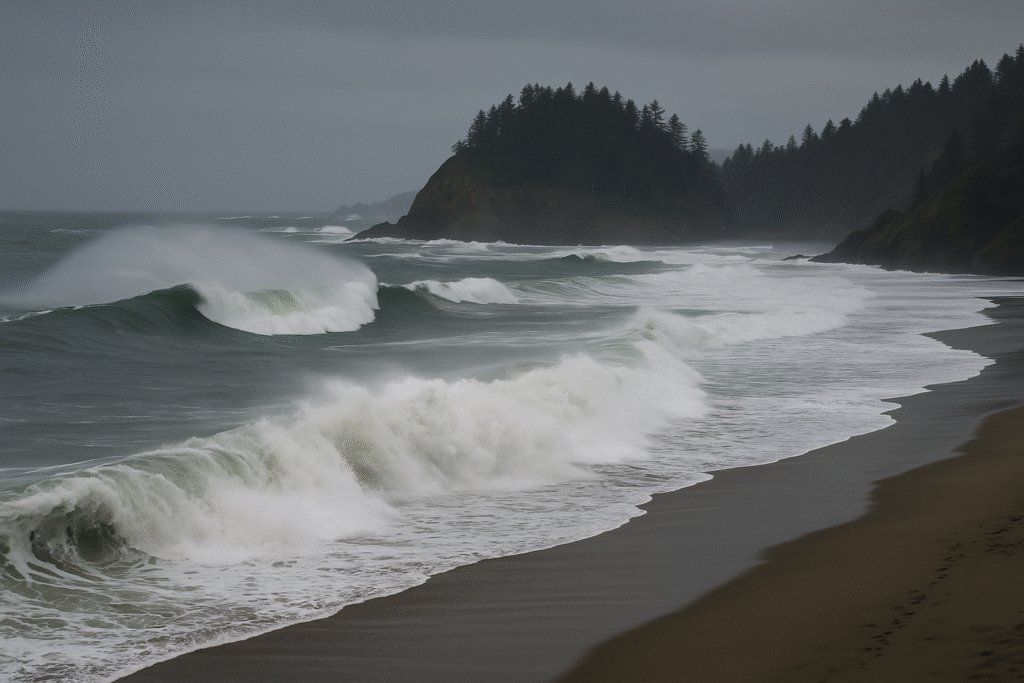
The picturesque beaches of southern Oregon are under a serious travel caution. According to the National Weather Service’s Medford office, a High Surf Advisory and Beach Hazard Statement have been issued for the coastlines of Douglas, Coos and Curry counties. Arriving after a long-period swell builds over open waters, the affected region now faces large surf, steep seas and unexpected sneaker waves.
From now through early Monday morning, visitors should reconsider beachside plans. The swell is expected to peak late Sunday into Monday morning with waves in the 20–25 foot range. These tough marine conditions can turn any scenic beach stroll into a dangerous situation.
What’s Happening on the Water
Deep-ocean swell energy is pushing toward the Oregon coast, and forecast models show high seas and steep surf. The Marine Forecast warns: “northwest swell will build to the waters Sunday afternoon into Monday, resulting in a potential for very high and very steep northwest seas.”
Initially surf heights reach double-digit feet; then, by Sunday night, breaking waves around 20–25 feet will hit the surf zone. Alongside the big waves, there is a moderate but dangerous risk of sneaker waves—rare but sudden surges of water that run much farther up the beach than normal.
These sneaker waves are particularly hazardous because they strike without warning, can carry driftwood or boulders, and can knock even experienced beachgoers off-balance. Given the increased surf energy, rocks, jetties, and the immediate shoreline become unsafe zones.
Impacted Tourist Areas
Beautiful coastal destinations that draw many travellers are now in the high-hazard zone:
- Bandon Beach — famous for dramatic sea-stacks and tidal vistas, but now facing powerful surf settings.
- Gold Beach — where the Rogue River meets the Pacific; the mouth and shoreline will experience extreme wave action.
- Brookings — the mild climate town will nonetheless feel the full force of the swell along its shoreline and jetties.
- Shore Acres State Park — normally a serene spot for ocean views; now exposed to waves capable of cresting high on its coastal cliffs.
- Cape Blanco State Park — with its lighthouse and rugged coast, this area faces elevated risk of unexpectedly strong wash-ups.
Because these locations are popular with tourists for their scenery and coastal hikes, it’s essential to adjust travel expectations until conditions improve.
Safety Protocols for Visitors
To stay safe while the advisory is in effect, visitors should follow these firm guidelines:
- Avoid entering the ocean. Swimming, wading or surfing is highly dangerous under these conditions. Stay out of the surf zone.
- Keep your distance from rocks and jetties. Sneaker waves can sweep across normally safe ledges. Don’t turn your back on the ocean.
- Stay well back from the water’s edge. Even standard tides may bring an unexpected surge of water far up the beach.
- Supervise children and pets closely. They are most vulnerable. Stay within sight and away from unstable zones.
- Monitor local weather updates and signage. Conditions can change rapidly. Heed all warnings from park rangers and coastal officials.
- Reconsider beach timing. The highest danger window is late Sunday into Monday morning. Plan alternative activities or delay your seaside visit.
Travel Planning Considerations
If you have seaside plans between now and Monday morning, it’s wise to revise them. Coastal trails and viewpoint platforms remain beautiful but avoid spots close to the water. For now, focus on inland scenic drives, rainforest walks or other regional attractions. When beach time returns, it will be safer and more relaxing.
This wave event serves as a reminder that the Oregon coast can shift from tranquil to treacherous in a matter of hours. Amazing as the vistas are, they demand respect when nature puts on its powerful display. Visitors are urged to put safety first, follow warnings and avoid risking what should be an enjoyable travel experience.
Stay alert, stay safe, and hold off your beach visit until the advisory lifts at 11 a.m. Monday. The coast will still welcome you—just with a little more caution this time around.
For more travel news like this, keep reading Global Travel Wire