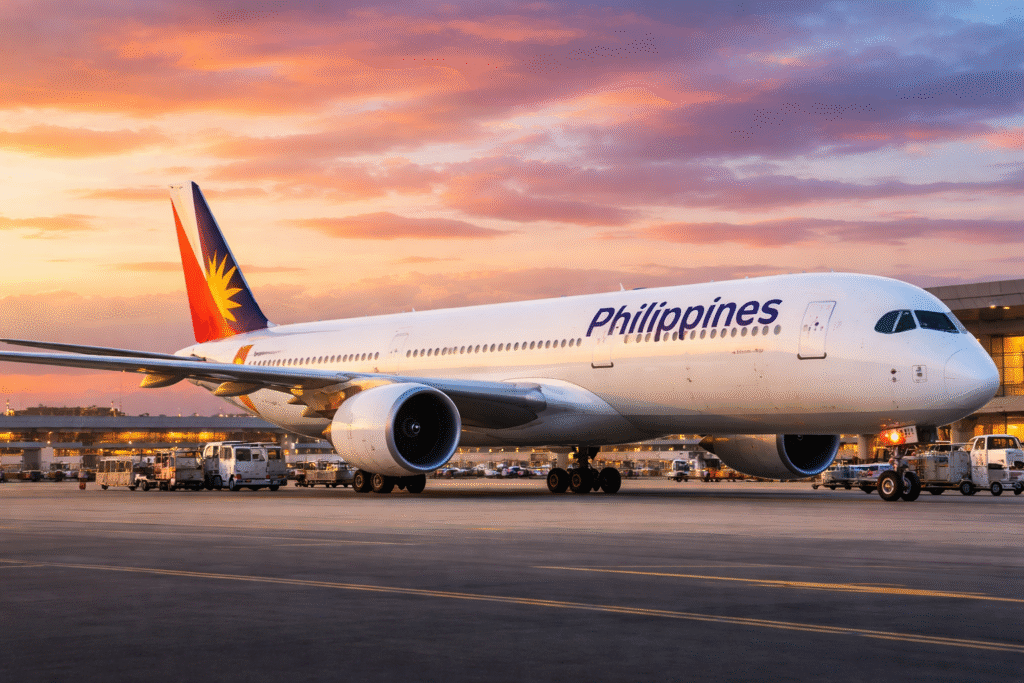
Philippine Airlines has reached a major aviation milestone. The flag carrier has officially become the first airline in Southeast Asia to operate the Airbus A350-1000. This achievement signals a bold shift in the region’s long-haul travel landscape.
The arrival of this next-generation aircraft strengthens the airline’s global ambitions. It also reinforces its focus on premium comfort, operational efficiency, and environmental responsibility. For travelers, it means a more refined and future-ready flying experience.
A Landmark Moment for Regional Aviation
The introduction of the Airbus A350-1000 places Philippine Airlines in an elite global group of carriers operating this advanced wide-body jet. While several international airlines already fly the type, no other Southeast Asian airline has taken this step until now.
This move sends a strong message. Philippine Airlines is ready to compete at the highest level on ultra-long-haul routes. It also highlights the Philippines’ growing role in global air connectivity.
Why the Airbus A350-1000 Stands Apart
The Airbus A350-1000 is built for long-distance efficiency and comfort. It offers higher capacity while maintaining lower fuel burn per seat. That balance is critical for modern airlines operating intercontinental routes.
The aircraft uses advanced materials, including a high percentage of carbon-fiber composites. These materials reduce weight and improve durability. The result is lower fuel consumption and reduced emissions.
New-generation engines further enhance performance. They deliver strong thrust with quieter operations. This benefits both passengers and airport communities.
A New Level of Passenger Comfort
Passenger experience sits at the heart of the A350-1000 design. The cabin feels wider and more open. Higher ceilings and larger windows add to the sense of space.
Air quality also improves significantly. Advanced systems regulate humidity and refresh cabin air more frequently. This helps reduce fatigue on long flights.
Noise levels inside the cabin are noticeably lower. Combined with smoother flight performance, this creates a calmer journey from takeoff to landing.
Philippine Airlines plans to use these features to elevate its premium service standards across all cabin classes.
Strengthening Long-Haul Routes
The A350-1000 will primarily serve long-haul destinations. These include key markets in North America and Europe. The aircraft’s range allows nonstop flights over vast distances with strong payload capability.
This opens new possibilities for route planning. It also supports higher passenger demand without increasing frequency. For travelers, this means more seat availability and improved scheduling options.
For the airline, it brings better cost control and route sustainability.
Fleet Modernization Takes Center Stage
The addition of the A350-1000 forms part of a broader fleet renewal strategy. Philippine Airlines has committed to multiple units of this aircraft type, with deliveries planned over the coming years.
This strategy focuses on replacing older wide-body jets with more efficient models. The goal is to improve reliability, reduce maintenance costs, and lower environmental impact.
A modern fleet also supports consistent service quality. Passengers benefit from newer cabins, updated inflight systems, and improved on-time performance.
Sustainability Gains with Real Impact
Environmental performance plays a major role in the A350-1000 program. The aircraft produces significantly lower carbon emissions per passenger compared to older models.
It also meets the latest international noise and emissions standards. This aligns with global aviation goals to reduce environmental impact while supporting growth.
Philippine Airlines continues to expand its sustainability efforts. These include fuel efficiency programs, waste reduction initiatives, and operational improvements. The A350-1000 acts as a cornerstone of this long-term vision.
Competitive Edge in Southeast Asia
Many airlines in the region operate smaller variants of the A350 family. However, the A350-1000 offers higher capacity and longer range. This gives Philippine Airlines a clear advantage on dense, long-haul routes.
The aircraft allows the airline to serve premium and leisure travelers alike. It also supports strong cargo capability, adding another revenue stream.
This strategic choice strengthens the airline’s position as a full-service global carrier.
What Travelers Can Expect Next
The arrival of the A350-1000 marks only the beginning. Philippine Airlines plans to enhance onboard products, digital services, and customer touchpoints.
Passengers can expect continued improvements in inflight entertainment, seating comfort, and overall service flow. The airline also aims to refine its ground experience through smoother connections and upgraded lounges.
These efforts support a clear goal: delivering a world-class journey from start to finish.
A Defining Step into the Future
Philippine Airlines’ decision to operate the Airbus A350-1000 reshapes expectations in Southeast Asian aviation. It reflects confidence, ambition, and a forward-looking mindset.
By combining advanced technology with a renewed focus on passenger experience, the airline sets a new benchmark for long-haul travel in the region.
As more aircraft join the fleet in the coming years, travelers can look forward to a stronger, smarter, and more sustainable Philippine Airlines on the global stage.
For more travel news like this, keep reading Global Travel Wire