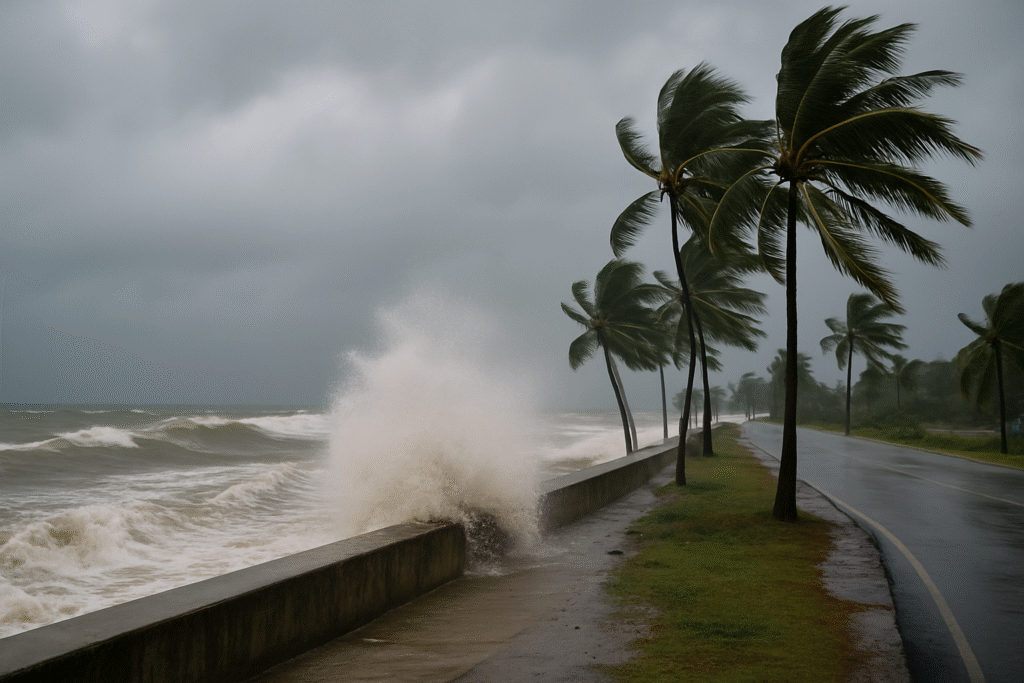
The Philippines is once again preparing for weather changes as Tropical Storm Nakri enters the Philippine Area of Responsibility (PAR) this Thursday, October 9. Locally, the storm will be called Quedan, following the naming convention of the Philippine Atmospheric, Geophysical and Astronomical Services Administration (PAGASA).
While Nakri is expected to stay near the northeastern boundary of the PAR, the storm will not cause a direct landfall. This means the tourism sector, local communities, and major transport hubs will not experience heavy disruption. However, scattered rains and localized thunderstorms will still affect various regions, reminding both travelers and residents of the importance of vigilance during the rainy season.
Storm Path and Current Position
Tropical Storm Nakri is currently located more than 1,500 kilometers east of Northern Luzon. Forecasts show that it will skirt the northeastern boundary of the PAR. Because of this path, the storm will not directly cross Philippine landmass. PAGASA emphasizes that no major weather disturbance is expected across the country.
Still, the agency continues to issue updates as precautionary measures. Tourism operators, airlines, and shipping companies remain alert, knowing that sudden shifts in storm paths are always possible.
Weather Impacts on Philippine Regions
Even though Nakri will not heavily influence national weather, the Philippines will still experience scattered rains due to the prevailing southwesterly windflow. Travelers heading to Visayas, Mindanao, Metro Manila, Calabarzon, Mimaropa, and the Bicol Region should anticipate moderate to heavy rainfall at times.
These rains may trigger flash floods and landslides, particularly in flood-prone and mountainous areas. For tourists planning to explore beaches, mountain ranges, or river tours, extra caution is necessary. Localized thunderstorms are also expected across Luzon, bringing brief but intense downpours that could momentarily affect outdoor activities.
Maritime and Air Travel Conditions
One of the most important concerns for tourism during storm season is transportation. Fortunately, PAGASA reports that the storm will not cause rough seas across the Philippine archipelago. Light to moderate winds will prevail, and seas will remain slight to moderately rough.
This means ferries, inter-island travel, and maritime activities can continue without major interruptions. Still, smaller boats, fishing vessels, and island-hopping tours should remain cautious and check weather advisories before sailing.
In airports, operations are expected to continue as scheduled. However, airlines typically issue advisories in case of sudden shifts in weather. Travelers are reminded to stay updated on flight announcements, particularly in regions with frequent thunderstorms.
Tourism Industry Prepares with Precaution
The Philippines, a nation that relies heavily on its tourism sector, knows how important safety messaging is during storm advisories. Local government units and tourism offices are working closely with PAGASA to ensure information is shared with communities and visitors.
Beach resorts in Palawan, Siargao, and Boracay continue to welcome tourists but are issuing safety reminders. Island tours may be temporarily paused during heavy rains, but overall activities remain open. In Metro Manila, popular attractions such as historical sites and shopping hubs are unaffected, though visitors are advised to bring rain gear for sudden showers.
Mountain trekking, waterfall exploration, and eco-tourism destinations in Mindanao and Luzon may be at higher risk due to landslides. Tourism operators in these regions are on alert and ready to cancel activities if weather conditions worsen.
Safety and Preparedness
Though the storm’s direct impact is limited, authorities highlight the importance of preparedness. PAGASA urges residents and visitors in vulnerable areas to remain cautious of flash floods and landslides. Tourists traveling by road should also anticipate delays caused by sudden heavy rainfall.
Local officials continue to monitor river systems, mountain slopes, and coastal areas where flooding is a recurring risk. Hotels and resorts in affected areas have begun updating safety protocols to ensure visitors remain protected if localized weather disruptions occur.
The Bigger Picture: Storm Season and Tourism
October marks a period when tropical storms occasionally enter the Philippines. While many storms do not make landfall, their indirect effects still shape the experience of both locals and tourists. The tourism sector is accustomed to adjusting activities, offering alternatives during rainy days, and ensuring visitors continue to enjoy their stay.
Popular indoor attractions, cultural performances, and food tourism thrive even when outdoor activities are paused. This resilience helps keep the tourism industry active even during the storm season.
What to Expect Moving Forward
As Tropical Storm Nakri, or Quedan, moves along the northeastern boundary of the PAR, forecasts show it will gradually weaken. Its movement further away from the country lessens the chance of severe weather disruption.
Still, weather systems like the southwest monsoon and localized thunderstorms will continue to shape daily conditions. PAGASA will release regular updates to guide both residents and travelers.
Key Reminders for Travelers
- Tropical Storm Nakri enters the PAR on October 9 but will stay at its northeastern boundary.
- Minimal direct impact is expected, but scattered rains may affect Visayas, Mindanao, Metro Manila, Calabarzon, Mimaropa, and Bicol.
- Flood-prone and mountainous areas should prepare for flash floods and landslides.
- Maritime and air travel remain safe, though caution is advised for smaller vessels.
- Tourism operators are on standby with safety measures, ensuring minimal disruptions to activities.
Conclusion
The Philippines remains calm as Tropical Storm Nakri, locally called Quedan, moves into the Philippine Area of Responsibility. While the storm will not cause widespread disruption, its indirect effects—scattered rains and thunderstorms—will still be felt in many regions. For the country’s vibrant tourism industry, preparedness and communication remain key.
Travelers can still enjoy the nation’s destinations, but awareness of local advisories ensures safety. The resilience of Philippine tourism continues to shine, even as storm systems like Nakri pass near the archipelago.
For more travel news like this, keep reading Global Travel Wire